

Domaine de la Romanée-Conti
The vineyard that gave the estate its name has been cultivated for a very long time. In 1232, the Abbey of Saint-Vivant in Vosne acquired a plot of 1.8 hectares, which later became Romanée-Conti. The Kroonemburg family purchased it in 1631, along with the neighbouring plot of La Tâche, and renamed it Romanée for reasons that remained unclear.
History
The most memorable event took place in 1760. André de Kroonemburg put the estate up for sale, and this turned into a bidding war between Madame de Pompadour, Louis XV’s favourite, and Louis François, Prince of Conti. The prince won the bidding, paying 8,000 livres, a sum that was enormous for the time, and named the vineyard after himself. He kept this wine for his own use and served it at private dinners. Thirty years later, during the Revolution, the estate was confiscated from his family and sold at auction.
After being sold several times, it was acquired in 1869 by Jacques-Marie Duvaux-Bloche, who by that time had already bought several plots in Échezeaux, Richebourg and La Tâche. He is the ancestor of both families who own the estate today. The company as it is now, was founded in 1942, and since then the ownership has been shared between the de Villaine and Leroy families.
One vintage needs special attention. In 1945, the estate produced 600 bottles of ‘Romanée-Conti’ from grapes grown on vines planted before the arrival of phylloxera in the vineyard and which had since survived on their own roots. These vines were grubbed up that same year. The replanted vines took time to bear fruit, so between 1946 and 1951, no ‘Romanée-Conti’ was produced at all. Consequently, the 1945 vintage is the last wine from the original vineyard and has become the most legendary bottle of all: one was sold at auction in 2018 for $558,000, and a major tasting database ranks it first among more than three million wines.
Aubert de Villaine had managed the estate since 1974 and became its public face, initially alongside Lalou Bize-Leroy, and later with Henri-Frédéric Roche. In 2022, he stepped back into a supporting role as a consultant. Perrine Fenal joined the team as co-director in 2018, whilst Bertrand de Villen joined the team on behalf of the de Villen family.
Vineyards
The estates comprising this domain share one distinctive feature: all the vineyards they cultivate are classified as ‘Grand Cru’. There are no ‘Village’ or ‘Premier Cru’ plots here on which to rely. Overall, ‘Grand Cru’ vineyards account for barely one per cent of Burgundy’s total vineyard area and less than one per cent of its production.
The sole exception is not a vineyard, but a bottle. In some years, grapes from young vines on ‘Grand Cru’ plots, as well as batches not included in the final blends, are used to produce a separate wine, which is sold as a ‘Vosne-Romanée Premier Cru’ under the name ‘Cuvée Duvault-Blochet’, in honour of the man who founded this estate in the 19th century. It first appeared in 1999 and has been produced only occasionally since then.
Two of the vineyards are monopoles, which means that the estate owns them in their entirety and nobody else can make wine with the same name: Romanée-Conti, covering 1.81 hectares, and La Tâche, covering just over six hectares. For the other vineyards, the domaine owns significant shares of the entire area. Romanée-Saint-Vivant comprises just over five hectares out of nine, which had been cultivated under a lease agreement with the Mare-Monge family since 1966 and were purchased in full in 1988. Richebourg, Grand Échezeaux and Échezeaux make up the rest of the red wine vineyards. In Richebourg the domaine is the largest single owner of vineyards.
Two vineyards were acquired quite recently, but neither is owned outright. In November 2008, the estate leased the Corton vineyards belonging to the heirs of the Prince de Merode, on the Bressandes, Clos du Roi and Renardes plots, and the first harvest was gathered in 2009. Ten years later, in November 2018, the estate leased 2.91 hectares of Corton-Charlemagne vineyards near Bonneau-du-Martray, and the first vintage from these plots is scheduled for release in 2022. Both of these vineyards are located in the Côte de Beaune, some distance from Vosne-Romanée.
And there is of course Montrachet, the estate’s flagship white wine and one of the most famous wines worldwide, and also a tiny plot in Bâtard-Montrachet, the harvest from which is never sold and is reserved exclusively for the owners’ families.
The total area of vineyards is around 25 hectares.
Grape varieties
Pinot Noir for the seven red wines, Chardonnay for Montrachet and Corton-Charlemagne.
What is very interesting is that these varieties are based on specific plantings. For decades, the estate has been selecting what it calls ‘an exceptionally refined Pinot Noir’. The vines originate from the historic ‘Romanée-Conti’ vineyard, and the owners regard them as a heritage worth preserving. These vines are so exquisite and diverse that each wine is able to express its own character. Cuttings from ‘Romanée-Conti’ were used when the ‘Richebourg’ vineyard was replanted after the war, so these two wines are now physically linked.
Winemaking
Work in the vineyard is of the highest priority. The soil is tilled by hand or with the aid of horses; synthetic products were phased out already in the 1980s, and in 2007 the estate switched entirely to biodynamic farming. There is however no certification logo on the bottle.
Yield is also of high importance: a maximum of 20 to 30 hectolitres per hectare, compared with the 42 permitted under the Grand Cru regulations. In some years, it even falls below twenty. Romanée-Conti itself produces fewer than 6,000 bottles in most vintages, whilst in an exceptionally productive year such as 1990, the figure stood at 7,446 – a record that stood for two decades.
The domaine takes an unusual approach to these figures: it publishes them. Each of the nine wines has a page listing the bottles produced in every vintage, dating back to the 1950s: 23,104 bottles in 1982. Then 3,832 in 1987. Then 12,163 the following year. For two years, 1960 and 1968, the figures are missing entirely, as the harvest was so meagre that it was not worth taking into account.
In the cellar, the approach is deliberately understated. Whole bunches, natural yeasts, fermentation in open wooden vats, followed by ageing in new oak barrels, and the wines are bottled without filtration. The estate’s stated priorities are by no means about technology, but rather the qualities of the people carrying out the work: rigour, attention to detail, patience and, above all, modesty.
Wines
The list is impressive and worlwide very sought after:
Romanée-Conti. A monopole vineyard covering 1.81 hectares, producing fewer than 6,000 bottles a year. By most measures, it is the most expensive wine in the world. Outstanding vintages include 1945, which some consider to be the finest wine ever produced, as well as vintages as 1966, 1978, 1985, 1990, 1999, 2005, 2015, 2016 and 2022.
La Tâche. A monopole vineyard covering six hectares and, in the opinion of some tasters, the wine that delivers the most consistent pleasure. Around 1,800 cases produced yearly. Some of the best vintages are 1966, 1990, 1991, 1999, 2005, 2010, 2015, 2016 and 2022.
Richebourg. Planted after the war, including cuttings from Romanée-Conti, on 3.51 hectares of the eight occupied by this vineyard. Around 11,000 bottles per year. Some of the best vintages are 1929, 1985, 1999, 2003, 2005, 2009, 2016 and 2022.
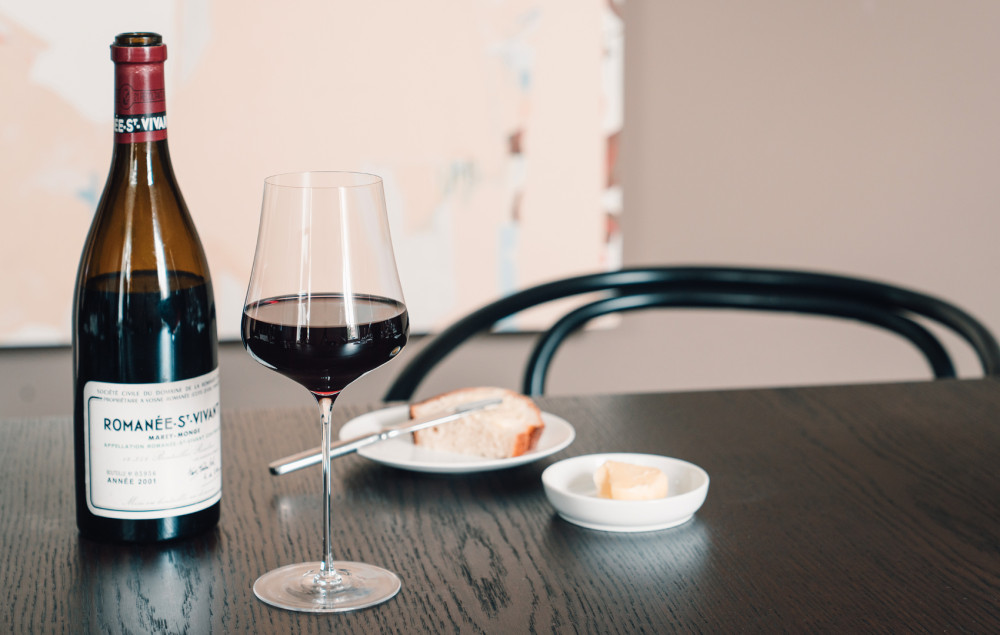
Romane-Saint-Vivant. Five hectares, approximately 1,500 cases, sometimes seen as the most delicate wine in the range and the vineyard located closest to the village. Outstanding vintages are 1966, 1971, 1999, 2003, 2005, 2010, 2019, 2020.
Grand-Echezeaux. The vineyard measures 3.53 hectares and approximately 11,500 bottles are produced, although the estate’s own records show just how much these figures fluctuate: 23,104 bottles in 1982, and just 3,832 in 1987. The best vintages are 1966, 1978, 1979, 1991, 2003, 2005, 2010, 2019, 2022.
Échezeaux. Approximately 4.67 hectares of vineyard within a total area of nearly 38 hectares, owned by around eighty proprietors, meaning the domaine’s plots yield a substantial harvest. Around 15,000 bottles produced, the largest production volume in the range after La Tâche. Exceptional vintages are 1966, 1978, 1979, 1991, 2003, 2005, 2010, 2019, 2022.
Corton. Starting with the 2009 vintage, it took several years for the wine to develop its character. 2.28 hectares, spread across three climats: ‘Le Clos du Roi’, ‘Les Bressandes’ and ‘Les Renardes’, yield around 7,500 bottles. Take note of the 2009, 2015, 2019 and 2020 vintages.
Montrachet. A white wine that is spoken of in the same breath as the reds. Just 0.68 hectares out of nearly eight, with the estate’s oldest vines dating back more than sixty years, and a total of around 3,500 bottles per year. At the highest level are the 1978, 1986, 1989, 1995, 1999, 2002, 2005, 2014, 2017 and 2020.
Corton-Charlemagne. The newest wine, produced from 2.91 hectares leased from Bonno du Martre; the first vintage was 2019, and it will go on sale from 2022. The domaine has not published figures on the number of bottles, and the wine is too new to establish a consistent benchmark. Initial reviews have been high, though it has not yet reached the level of Montrachet.
Vosne-Romanée 1er Cru Cuvée Duvault-Blochet. This is the ‘black sheep’ and the only wine in this selection that does not fall into the ‘Grand Cru’ category. Bottled separately since 1999 and named after the ancestor who founded the estate, it is produced from grapes grown in ‘Grand Cru’ vineyards but is not classified as a ‘Grand Cru’ wine: it is made from young vines, late-ripening plots and batches that did not pass the final selection. It is produced only in certain years, in small quantities.
Three frequently asked questions
Can you simply buy a bottle of the Romanée-Conti? Not directly from the winery. Allocations are distributed amongst a fixed list of importers and distributors, and buyers almost always have to purchase a mixed case containing one bottle of Romanée-Conti alongside other wines. Everything else is sourced through auctions or the secondary market.
Why is the Romanee Conti so expensive? Three factors come into play here. The vineyard covers 1.81 hectares and will never be expanded. Yields are deliberately kept at a very low level. Meanwhile, global demand for this wine knows no bounds. Such scarcity leads to prices that bear virtually no relation to the contents of the glass.
Are counterfeits really a problem? Yes, and it is something that should be taken seriously. The domaine has a dedicated page on its website warning about counterfeits, something most producers never have to do. The maths explains why: in any given year, fewer than 6,000 bottles of Romanée-Conti are produced, each costing a five-figure sum, whilst global demand is so great that supply can't possibly meet it.
Older vintages are usually the target, as fewer people have tasted them, and empty bottles from genuine cases have been in circulation for decades. The winery has added security features to its most recent vintages, but nothing protects a 1971 bottle.
The practical advice is simple but effective: buy from a seller who can tell you where the bottle has been and who vouches for it; treat anything that seems too good to be true with suspicion, and regard a bargain as a warning sign.
