

Champagne
A very long time ago the North of France housed an inner sea. Evidence of this sea and its seabed can be found in the soil of most of this area, where remains of shellfish and fossils are easily tracked. A high concentration of chalk is the result and forms the character of the region we now call Champagne. Champagne wines are considered the ultimate in the world of sparkling wines.
The best wines from Champagne
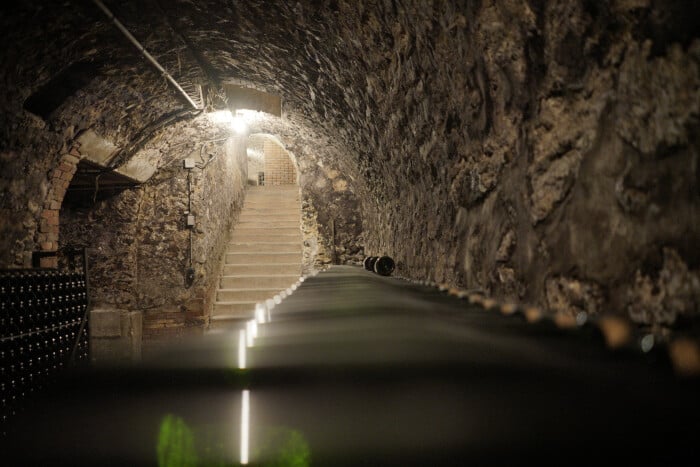
A very long time ago the North of France housed an inner sea. Evidence of this sea and its seabed can be found in the soil of most of this area, where remains of shellfish and fossils are easily tracked. A high concentration of chalk is the result and forms the character of the region we now call Champagne. Because of the chalk, the soil is very permeable to water, so rainwater is easily dissipated and warmth of the sun during the day is released at night. A calcareous subsoil (often chalk-based), absorbs heat and facilitates vine drainage, promoting the balance of the grapes and creating vast underground caves, perfect for ripening wines.
Champagne, however, is not Burgundy. Its climate is not as tolerant, nor is its soil as diverse. Campagne’s chalky soils and unique climate create the perfect conditions for crafting its renowned sparkling wine. Champagne's excellence is determined by the combination of grape excellence and winemaker expertise.
Champagne is a white wine. However, the wines if made from mostly blue grapes: pinot noir en pinot meunier. Chardonnay is also used. A Champagne made from 100% Chardonnay grapes is called Blanc de Blancs, a Champagne made from 100% blue grapes is called Blanc de Noirs. The latter is quite rare.
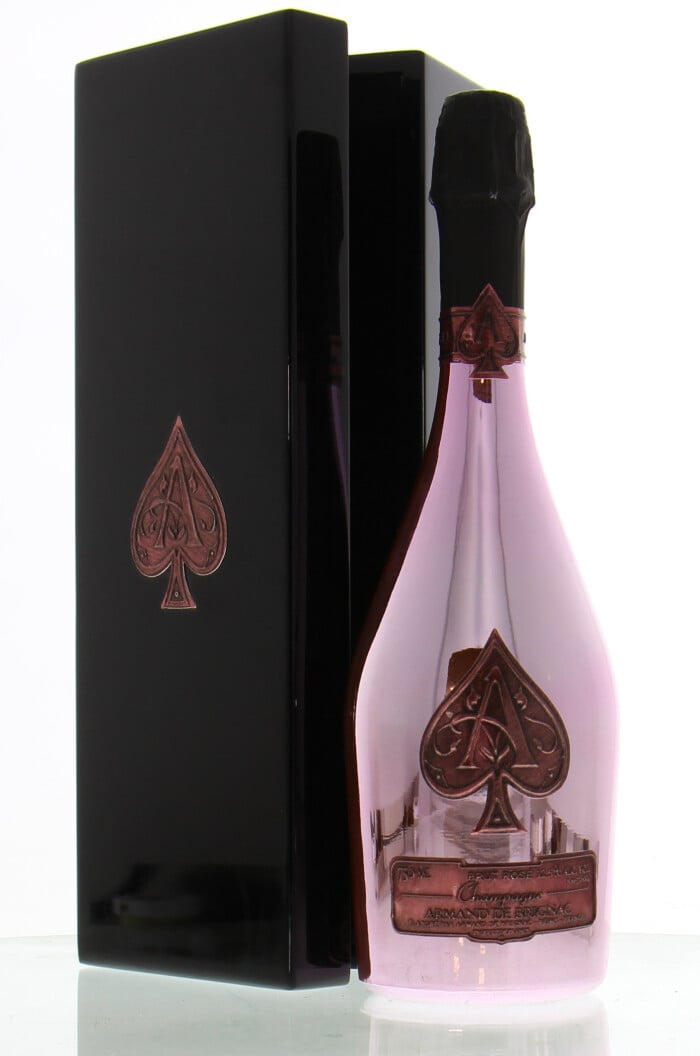
Some of the best Champagnes come from domaines like Selosse, Krug, Bollinger, Veuve Clicquot, Armand de Brignac, Salon, Roederer, Moet et Chandon.
Who invented champagne?
"Come quickly, I'm drinking stars!" This is the exact sentence that the famous Dom Perignon is said to have shouted to a fellow monk after he had invented champagne and tasted the first sip. A nice story, isn't it? Unfortunately, it's not true! Yes, the monk was a cellar master at the Hautvillers monastery near Épernay in the late 17th century. And yes, he is indeed responsible for many achievements. For example, he is credited with the practice of blending grapes from different locations to create a more harmonious wine. Dom Pérignon is said to have been a real quality fanatic. A wine that – for whatever reason – suddenly sparkles would not have pleased him, but rather been a thorn in his side.
The fact that Dom Pérignon is still celebrated today as the inventor of champagne is thanks to his successor, Dom Grossard, who in 1821 embellished and exaggerated the deeds of his predecessor in a letter to the mayor of Aÿ in order to make an impression. Grossard was successful in the long term. To this day, a statue of the monk stands in front of the Maison de Moët et Chandon, which, like the Dom Pérignon champagne brand, belongs to the luxury group Moët Hennessy – Louis Vuitton SE (LVMH), in honour of his heroic deeds. What clever marketing!
In fact, champagne was not the first sparkling wine in history. As early as 1531, monks in Limoux produced the first sparkling wine. So it was in Languedoc! The fact that there was also sparkling wine from Champagne in the 17th century is more a matter of chance. And good trade relations with England. The wines were transported to the island in barrels on ships. One theory is that the wines started to ferment again in the hot hold of the ship due to a certain residual sweetness. However, the second theory is more likely. This is because the English not only had a preference for sweet wines at the time, but also already had glass bottles. The wine from Champagne was bottled in these, refined with sugar and spices and sealed. When the temperature rose, the second fermentation began in the bottle – and the resulting carbon dioxide could not escape. Voilà: champagne. We admit, however, that the story of Dom Pérignon is much more entertaining.
When was the first champagne house founded?
Although the English had already made sparkling wine from Champagne in the 17th century, it was another 100 years before the first champagne house was founded in Reims. Unfortunately, the reason for this is not quite so glamorous. In France, the glass bottle had not yet become widely accepted as a wine container. No wonder! After all, at that time, wine could only be sold to other countries in barrels! This was to make smuggling and thus evading customs duties more difficult. It was not until 1728 that a royal decree allowed the trade in wine bottles. A decree with consequences. As early as 1729 – just one year later – the cloth merchant Nicolas Ruinart founded his Maison in Reims. This makes Ruinart the oldest champagne house in the world.
Why was champagne also called "devil's wine"?
Despite the reputation that champagne enjoyed in France as early as the 17th and 18th centuries, its production was a real gamble. And a dangerous one at that! The quality of the bottles back then was simply abysmal. Of course, they were all mouth-blown. After all, the industrial revolution was still a long way off. The bottles used for the second fermentation were correspondingly thin or uneven, or both. Many of these bottles could not withstand the increasing pressure and burst.
On top of that, of course, nobody knew at the time how the second fermentation in the bottle actually worked chemically, let alone how it could be controlled. Of course, all the houses knew that sugar was needed for this. But how much? Many incorrect dosages ensured that even more bottles burst than would have been the case anyway due to the excessive pressure caused by too much sugar. Champagne was considered unpredictable, even diabolical. That is precisely why it was also referred to as "vin diable" in the 17th and 18th centuries, or "devil's wine". This only changed in the 19th century, when Louis Pasteur helped us to understand how fermentation works in wine. Finally, we were able to consciously control the second fermentation in the bottle.
Where exactly is the Champagne region?
You only have to travel 150 kilometers northeast of Paris to find yourself in the heart of Champagne! What makes it special is that the 34,200-hectare wine-growing region is located exactly between the 48th and 49th parallels. This is just where wine growing is still possible. Most of the vineyards are spread out along the Marne River and its rolling hills. But the Aube and Seine rivers are also important for winegrowing here. Three towns in Champagne are particularly well known: Reims, Épernay, and Aÿ. While Reims is home to the great champagne houses and attracts the most tourists every year, Épernay and Aÿ are considered the major winegrowing centers of the region. If you take a closer look at Champagne, you will notice that it is divided into five different sub-regions.
The best known is undoubtedly the Montagne de Reims, which stretches around the city of the same name. The sub-region is best known for its powerful and well-structured Pinot Noir. Directly opposite, to the west, the Vallée de la Marne stretches along the river of the same name. Here, Meunier is the most widely grown grape, producing fresh and fruity base wines. Acting as a hub between the Montagne de Reims and the Vallée de la Marne, the Côte des Blancs winds its way south from Épernay. Chardonnay is the trump card here. The grape produces elegant and very long-lasting champagnes. Further south, the Côte de Sézanne is located somewhat separately. It is quite similar to the Côte des Blancs, although the soils differ slightly. And in the very south of Champagne, the Côte des Bar is located somewhat apart. It was the last subregion to be added at the beginning of the 20th century. Here, Pinot Noir is the big star.
Is Champagne a protected term?
Actually, yes. Please excuse this vague answer. Unfortunately, it is not quite that simple. Within Europe, champagne is clearly a protected term. And it has been since 1990. Since then, all other sparkling wines with traditional bottle fermentation have no longer been allowed to call themselves that. The Champagne region has also had the term "méthode champenoise" protected by the European Union for this very traditional bottle fermentation.
And the protection of the generic brand Champagne is actually taken very seriously! In Germany, for example, there is a producer who makes a pear sparkling wine. The variety is called Champagne pear. When the pear sparkling wine was launched on the market and proudly displayed the pear variety on the front of the label, a legal dispute with Champagne followed that lasted for years and only ended in 2022 after more than ten years. The result: from now on, the Champagne pear variety may only be mentioned on the back label!
Outside the European Union, however, Champagne is not so easily able to enforce its trademark protection. In the United States, for example, all sparkling wines produced there are also allowed to be called Champagne. Champagne filed a lawsuit. And failed. The reason given was that, due to the geographical distance, it was clear that American sparkling wines could not come from Champagne.
In Switzerland, the very small village Champagne of 750 people with 28 hectares has lost several legal fights with the French. They produce wine since the 10th century, way before the French made Champagne. And they cannot label their are as wine from Champagne.
And there is also a dispute with Russia at the moment. There, Putin has declared by law that only Russian sparkling wines may be called Champagne. And because that too is outside the European Union, it will be very difficult for Champagne to assert its own interests in this case. The outcome of the legal dispute is uncertain.
Why is not only Reims, but also Épernay a champagne stronghold?
Thanks to the coronations and other royal events, it is only logical that many traders settled directly in Reims. Until the 18th century, these were mainly cloth merchants. After all, the nobility wanted to have pretty clothes. However, these cloth merchants usually also traded in wine.
This explains why Reims is a champagne stronghold. Even today, important houses such as Charles Heidsieck, Krug, Pommery, Ruinart and are still based here. Épernay, on the other hand, became the second champagne stronghold thanks to the Marne, a tributary of the Seine. In the 17th century, goods were shipped from here to Paris, which is only 150 kilometres away. Épernay became a very important trading centre in the course of the history of champagne. That is why many important houses, such as Moët & Chandon, Pol Roger and Perrier-Jouët, are also based here.
Climate and soils in Champagne
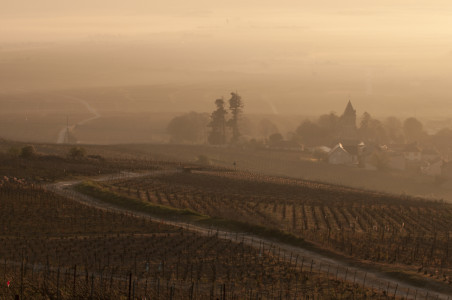
Because Champagne is the northernmost wine-growing region in France, it is also the coolest. It has a consistently continental climate with very cold winters and warm summers. Late frosts at the end of April or beginning of May are not uncommon, even in the southern sub-regions. In addition, many years can also be very rainy. So viticulture here is anything but easy. And yet the winegrowers do not give up. The reason for this can be found in the soils. These are very old – and very chalky.
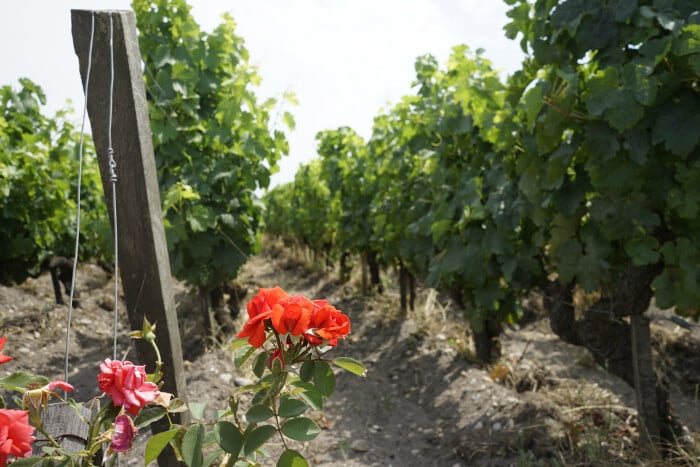
In some places, you can even see the chalk with the naked eye because it lies in chunks between the vines! It is precisely this chalk that gives the wines their enchanting minerality. In some areas, limestone is also present, which adds an extra touch of elegance. Clay and sand can also be found in the soil. When a champagne has more volume and body, the vines that produce the grapes for these sparkling wines are mainly found on such soils.
Grapes in wines from Champagne
Champagne is best known for its two red grape varieties, Pinot Noir and Meunier, and Chardonnay on the white grape side. 38 per cent of the vineyards are planted with Pinot Noir – Meunier and Chardonnay each account for 30 per cent. That leaves exactly one per cent. And this is shared by five other grape varieties that are also permitted but rarely used. These are Pinot Blanc, Pinot Gris, Arbane, Petit Meslier and Vidal Blanc. Incidentally, Vidal Blanc is a fungus-resistant grape variety, a so-called Piwi. It has only been allowed to be grown in Champagne for a few years.
The distribution of vineyards already clearly shows that most sparkling wines in Champagne are made from Pinot Noir, Chardonnay and Meunier. As a rule, they are not used in pure form for a champagne either, but are blended. This way, each grape can contribute its own unique characteristics to the cuvée. This is precisely one of the reasons why champagnes taste so different. Let's take a closer look.
Do the grapes for champagne only come from the Champagne region?
What we can answer with a resounding yes today was not always a matter of course. At the beginning of the 20th century, things were very different. For one thing, the borders of Champagne were different back then. Aube – and thus also the famous commune of Montgeux with its pure chalk terroir – did not yet belong to Champagne. But that didn't stop the champagne houses from buying grapes from there, especially for their prestige wines, and from secretly calling Montgeux "Montrachet of Champagne". That's how good the quality was.
At the beginning of the 20th century, a real grape shortage set in in Champagne due to the devastating phylloxera disaster. The vines fell victim to the louse, and there were simply not enough grapes to make champagne. Instead of paying the winegrowers in Aube reasonable prices, the houses tried to push them even lower. When that failed, they simply bought grapes from other French wine-growing regions such as the Loire. They even had grapes brought in from Germany!
The Aube winegrowers were naturally not going to put up with this. Especially as they had been fighting since 1908 to be allowed to produce champagne officially! In January 1911, the pent-up anger broke out and there were violent riots in Aÿ, where warehouses were set on fire, sparkling wines were tipped into the Marne and the local champagne houses were attacked. It took 40,000 soldiers hastily sent from Paris to put an end to the unrest. For the time being, that is. On 16 February 1911, the French government passed the Champagne Law, which clearly excluded Aube – and thus Montgeux – from champagne production. The situation escalated again, and the first deaths were reported.
In June 1911, the government finally gave in and classified Aube as the "deuxième zone". This meant that "second-class champagne" could be produced. It is thanks in particular to the persistent negotiations of the Beaugrand family from Montgeux that Aube officially became a fully fledged and equal region in the Champagne region in 1927.
Why is champagne called the king of all wines?
Champagne is a complex product, comes exclusively from a single region and is therefore rare and expensive. In the past, only kings could afford it! Unfortunately, that is not entirely true either. Even though it is now synonymous with pure luxury in a glass, well-heeled bourgeoisie were also able to afford the sparkling wine in the 17th and 18th centuries. To understand the royal connection, we have to travel a little further back in the history of champagne. Namely, to the year 498. That is, to a time long before champagne was even sparkling. At that time, Clovis, the first king of the Franks, was baptised in Reims.
It was precisely this baptism that marked the beginning of the construction of the famous cathedral in Reims, which was not completed until the 14th century. All the kings of the Franks were crowned in Reims from then on. And at the ceremonies, the (then still still wine) from the region was enjoyed. Even then, wine from the Champagne region was already referred to as "royal wine". But it was the Sun King, Louis XIV, who provided the final royal touch by ordering champagne to Versailles and making it his favourite tipple.
What does a sparkling wine from Champagne taste like?
At this point, we need to go into a little more detail. The explanation for the different characters and diverse tastes of champagne goes far deeper than the selection of grapes from different sub-regions. The best way to get an overview is to look at the different styles of champagne, for which there are very precise guidelines. And that's exactly what we're going to do in the following chapters.
The different types of Champagne
Champagne is made in a number of different styles or type. These are:
- Non Vintage Champage
- Millesime Champagne
- Prestige Cuvee
- Blanc de Blancs
- Blanc de Noirs
- Rose Champagne
These different styles or types are explained in the next chapters.
Non-vintage champagne
A so-called non-vintage champagne is the basic champagne of every house or winemaker. Here, the cellar master blends not only different grape varieties, but also several vintages. And for good reason. Because the weather in Champagne is always unpredictable, each vintage tastes different. However, a non-vintage champagne should taste the same every year. After all, it is something like the maison's calling card in terms of taste. This is precisely why several vintages are artfully blended together here, so that the result always tastes the same. These champagnes are usually charming palate pleasers and the ideal introduction to familiarize yourself with the style of a maison.
Millésimé champagne
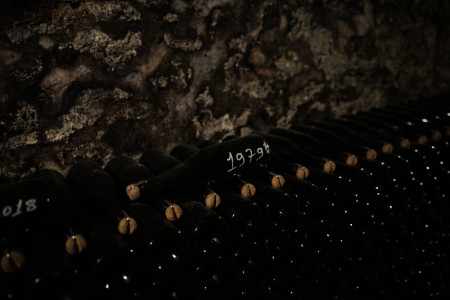
In stark contrast to non-vintage champagne is vintage champagne, also known as millésimé. This sparkling wine is intended to reflect the differences between vintages. For this reason, cellar masters only use grapes from a single vintage. In addition, the yeast must be left to ferment in the bottle for much longer than with non-vintage champagne.
For non-vintage champagne, a minimum of 15 months is required, while for millésimé champagne, a minimum of 36 months is required. However, many houses significantly exceed this minimum. A vintage champagne is therefore always more complex and full of character than a non-vintage champagne. Furthermore, it may only be produced in the best years. Which vintages qualify is decided exclusively by the Champagne Committee after the harvest.
Prestige Cuvée
This is the flagship of each house. There are no binding specifications for a prestige champagne. That is why the designation is usually not on the label. However, the cellar master uses only the best grapes from the best vineyards and the best vintages. Accordingly, prestige champagnes are more expensive than millésimés, but they also enchant with their enormous depth and radiance. Anyone who has ever had such a champagne in a glass will not forget it in a hurry.
Blanc de Blancs
Translated, Blanc de Blancs means ‘white from white grapes’. The name says it all, because only white grape varieties are used here. Usually this is then Chardonnay. As a rule, the cellar master wants to bring the character of a particular terroir or municipality to the bottle with a Blanc de Blancs. These champagnes are usually full of elegance and freshness and have a very good structure. They can also age extremely well.
Blanc de Noirs
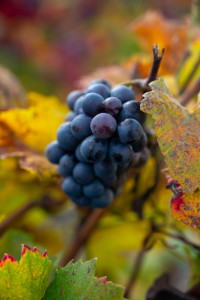
Here we have the ‘white made from black grapes’. Pinot Noir or Meunier are pressed white here. If the grapes are pressed particularly slowly, the sparkling wine can have a very light pink tinge. This is usually an indication that the sparkling wine is very fruity and caresses the palate. But at the same time, these wines are surprisingly elegant.
Rosé Champagne
To prepare a rosé champagne, the cellar master has several options. The most common is the so-called rosé d'assemblage, in which a dash of red wine is added to the expedition dosage after disgorging. These champagnes are very fruity and delicate. To make a rosé de saignée, the cellar master macerates red grapes until he has achieved the desired colour. These rosé champagnes are much stronger and more intense and have a very complex structure.
Has champagne always been dry?
No. And in fact, it doesn't have to be today either. Of course, the absolute majority of all champagnes on the market today are brut, which means that they have between six and 12 grams of residual sugar per litre. However, there are also sweet (doux) varieties that have 50 grams of residual sugar or more per litre! But they are now a rarity and are produced very rarely.
It is hard to believe that until well into the 19th century, sugar-sweet champagnes were actually the standard. They usually had significantly more than 50 grams of residual sugar and were often even sweeter than a Sauternes or even a Trockenbeerenauslese! Here, too, it took a courageous widow to take the next step in the history of champagne. Louise Pommery, that is. She was the first female champagne maker to launch a Brut version of champagne on the market in 1874. And lo and behold: the English in particular loved this dry champagne. From there, it set out on its triumphal march around the world and is now the absolute standard in terms of sweetness.
When did the first prestige champagne come onto the market?
In 1876. But strictly speaking, this particular champagne was not launched on the market at that time, but rather in the Russian royal house. For it was Tsar Alexander II who commissioned Louis Roederer (also the II) to produce a champagne for which only the best grapes from the best vineyards were to be used. Prestige, in other words. This champagne is still available today, by the way. It is the legendary Louis Roederer Cristal. And even today, the Cristal still has the special attributes of that time.
The Tsar was not particularly popular and was very afraid of being poisoned or killed by an explosive device. That is why he insisted that the champagne be served in a transparent bottle. So that poison could be recognised. Furthermore, the bottle was not to have the typical conical bulge at the bottom, so that no explosive device could be hidden there. In 1881, the Tsar was killed by a hand grenade, despite all these precautions. Fortunately, it wasn't hidden under a bottle of champagne.
Has champagne always been clear?
No! Especially not in the 17th and 18th centuries! Back then, the wines were more grey and cloudy. Well, the grey colour came from the fact that red grapes were used and they couldn't be pressed as quickly as they can today. That's why a "vin gris" was created. In other words, a "grey wine". But whether red or white grapes were used, all champagnes back then had one thing in common: they were very, very cloudy. This was because the dead yeast cells from the second fermentation were simply left in the bottle.
It was not until the end of the 18th century that people finally started to remove the yeast from the champagne bottles. This was the birth of the dégorgement. However, it took a small eternity for the yeast to collect in the bottleneck. And a lot of wine was lost when it was removed! However, together with her German cellar master Anton von Müller, the widow Barbe-Nicole Clicquot-Ponsardin, better known today as Veuve ("Widow") Clicquot, developed the remuage. This is the process of shaking the yeast on special riddling racks, known as pupitres. This meant that the yeast could migrate to the neck of the bottle in just three weeks.
A further development of the remuage was achieved by the two winemakers Claude Cazals of Champagne Cazals and Jacques Ducion, who registered their gyropallet for a patent in 1968. This gyropallet is operated by electric motors. The bottles do not have to be shaken individually by hand, but are placed in metal cages in which the remuage takes place mechanically. This means that many more bottles can be shaken at the same time!
What food goes with sparkling wines from the Champagne region?
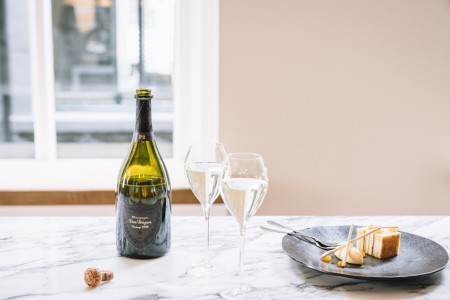
It would be a shame to reduce champagne to an aperitif. Yes, its fine bubbles perfectly prepare the palate for further delights. And yes, its moderate alcohol content, which hardly ever exceeds 12.5 percent by volume, makes it an ideal introduction. Especially if you serve a non-vintage. But champagne is also an excellent accompaniment to food!
A Blanc de Blancs, for example, goes very well with sushi, sole or scallops, while a Blanc de Noirs is the ideal accompaniment to all kinds of poultry dishes. It is also a great match for veal. A Millésimé, on the other hand, is a guaranteed delight with duck or goose. And yes, it also goes very well with a spicy pizza or savoury crisps. And with vintage sardines! We are very happy to serve caviar or oysters with a prestige champagne. And a rosé champagne is an ideal accompaniment to fish and shell soups. Particularly strong varieties even go well with a steak! As you can see, there are no limits to your creativity. Discover the different champagnes at Best of Wines now!
