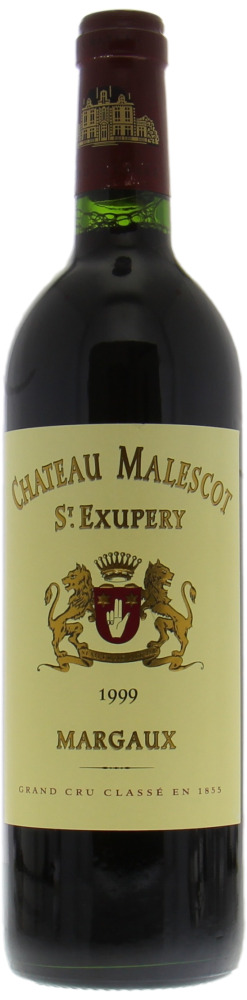
| Classification | Troisième Cru Classé |
| Type | Red |
| Producer | Chateau Malescot-St-Exupery |
| Vintage | 1999 |
| Country | France |
| Main region | Bordeaux |
| Region | Margaux |
| Grape | Cabernet Sauvignon, Merlot, Bordeaux Blend |
| Volume | 0,75 |
| Condition | New release from Chateau 2022 |
| Label | Perfect |
| Drinkable | -2018 |
| Stock | 3 |
The 1999 Margaux brought growers what they needed after the challenging seasons of 1997 and 1998. A warm and dry summer ensured good ripening, but rains in September meant careful selection at harvest time was necessary. For Château Malescot-St-Exupéry, these conditions produced wines that showed both the elegance for which Margaux is renowned and the structure needed for proper aging. For the Zuger family's third-level domaine, Michel Rolland acted as a consultant during this period, bringing the Right Bank experience to the terroir of the Left Bank. Expect a wine that balances the structure of Cabernet Sauvignon and the intimacy of Merlot, in the classic Margaux style, but with enough staying power for good aging.
This 1999 is one of the finest efforts of the vintage. It offers up complex aromatics consisting of herbs, red and black fruits, minerals, acacia flowers, and licorice. The dark plum color does not possess the saturation of a vintage such as 2000, but this is pure seduction in a medium-bodied, beautifully balanced, nicely-textured effort. It is virtually impossible to duplicate such a wine anywhere else in the world.
Blueberry and fresh spearmint aromas follow through to a full body, with a good amount of plum, meat and mushroom character on the palate.
Rene Gabriel rates this wine 17/20 points.
New release from Chateau 2022
Cabernet Sauvignon makes up about 50% of the blend, providing the structure and aging potential for which tertiary vineyards are renowned. Merlot makes up 35%, softening the harsh tannins and adding fruit character. So why is the remaining 15% so important? Cabernet Franc provides aromatic lift and freshness, while Petit Verdot adds color intensity and spice nuances. This classic Left Bank formula works particularly well in the gravelly soils of Margaux, where the Cabernet Sauvignon acquires remarkable finesse rather than power.
Cedar aromas, typical of the Left Bank due to aging in French oak, show up first. Black currant and dark plum from the Cabernet Sauvignon follow, and Merlot adds full texture in the middle of the palate. The tannins are firm but polished, more refined than in neighboring Pauillacs. There's also a touch of minerality, and Margaux's terroir shows up in the form of graphite and pencil shavings. Tobacco leaves and dried herbs linger on the finish. Over 20 years of aging, this wine has moved from primary fruit to secondary complexity without losing its structure.Decant for an hour or so and everything will unfold as it should.
Best drinking period till 2030. The harsh tannins of youth have softened to silkiness and the oak is fully integrated. Why this particular period? Margaux 3rd growth usually peaks at 20-25 years of age, and this vintage shows all the signs. It should be kept at 12-14°C for long term storage. What changes next? The fruitiness gradually fades away and a third note emerges, such as leather or forest floor. But honestly, we want to drink our bottles as soon as possible.
When the Tudgé family purchased Maresco St. Exupéry in 1955, they inherited just 7 hectares of vineyards and a third growth that needed serious work. Three generations later, they expanded the vineyard to 28 hectares and restored the estate's prestige through careful vineyard management and selective winemaking. Michel Rolland has advised them on technical issues and has used his experience with Merlot from the Right Bank to improve this blend based on Cabernet Sauvignon from the Left Bank. Robert Parker has noted that the consistent quality since 2000 has been particularly impressive.
The 28 hectares of land are situated on gravel overlooking the river. This well-drained gravel allows the vines to root deeply, concentrating flavors and creating a mineral backbone that distinguishes high quality Margaux. Because of its proximity to the Gironde, temperature regulation is critical, as the gravel stores heat during the day and releases it at night, thus extending the ripening period. Why it is important. Cabernet Sauvignon requires a long ripening period to develop not only strength but also complexity.
A refined tannin structure requires good proteins that are not overly rich. Try the following combinations:
Decant for an hour and serve at 16-17°C. This is an elegant wine, suitable for a formal dinner where the food and wine complement each other rather than compete with each other.
The grapes are harvested by hand in small crates to preserve the integrity of the fruit before being gently pressed. Fermentation takes place in temperature-controlled stainless steel, but the important decision is made later: 12-18 months in French oak barriques with a 30-40% new oak ratio. This percentage allows the wine to gain structure and vanilla notes without emphasizing the fruit. By not filtering the wine at bottling, the wine's natural character is preserved. This solution requires confidence in the hygiene of the cellar, but is rewarded with more complex flavors. The result is that Malescot wines can age for decades, producing a third flavor that only emerges after proper barrel aging.
With track & trace code