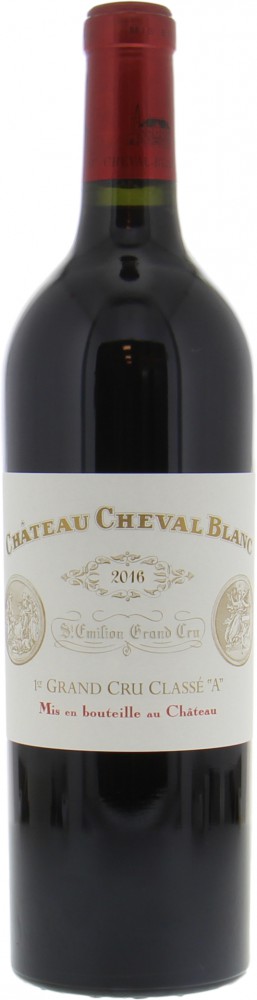
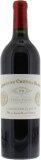
| Classification | Premier Grand Cru Classe A |
| Type | Red |
| Producer | Chateau Cheval Blanc |
| Vintage | 2016 |
| Country | France |
| Main region | Bordeaux |
| Region | Saint-Emilion |
| Grape | Merlot, Cabernet Franc, Bordeaux Blend |
| Alcohol % | 13.5% |
| Volume | 0,75 |
| Condition | In Original Wooden Case |
| Label | Perfect |
| Stock | 0 |
The 2016 vintage was an exceptional year for Saint-Emilion, whose ideal conditions allowed for the creation of structured, age-worthy wines. Château Cheval Blanc was able to vividly express its unique terroir on the border between St. Emilion and Pomerol. The growing season was blessed with warm and dry weather, allowing the estate's characteristic blend of Cabernet Franc and Merlot to ripen to perfection. Harvest took place from late September through mid-October, allowing winemaker Pierre-Olivier Clouet to precisely control the harvesting process. The result? A wine that expresses both the elegance that Cheval Blanc is known for and the power that makes the 2016 a celebrated vintage on the Right Bank of Bordeaux.
The 2016 Cheval Blanc is blended of 59.5% Merlot, 37.2% Cabernet Franc and 3.3% Cabernet Sauvignon. Deep garnet-purple in color, the nose is incredibly youthful yet not so shy as some other 2016s at this stage, giving wonderfully intense scents of red currants, black cherries, wild blueberries and violets with nuances of star anise, cinnamon stick, rose hip tea, cigar box and wood smoke plus a touch of beef drippings. Medium to full-bodied, the palate has jaw-dropping elegance and depth, offering up layer upon layer of fragrant red and black fruits plus an extraordinary array of mineral sparks, supported by a rock-solid grainy texture, finishing with epic persistence and an edifying perfume. This is a very different style from the rich, opulently hedonic 2015, yet this wonderfully fragrant, beautifully poised and intellectually compelling 2016 is equally extraordinary.
This has turned into a very dense wine, with waves of cassis, plum reduction and blackberry paste forming the core. Wrapped tightly in layers of tobacco and loam for now, while singed alder, incense, black tea and bergamot notes peek in here and there. The finish rumbles like thunder for now, with the swath of tannins, and there's just a twinge of drought-induced austerity. But there's acidity and drive too, and this will cruise in the cellar for some time.
Dark ruby with purple reflections and bright narrow rim. Savoury black berry fruit on the nose with delicate liquorice, dark cherry, fine noble wood notes and pleasant herbal character. Complex and very tightly meshed on the palate with subtle sweetness, integrated, supporting tannins and chocolate, ripe cherry and minerality on the finish. Excellent ageing potential, offering a lot of drinking pleasure over the next fifteen to twenty years.
The wine starts with dark Merlot-based berries, but then develops floral notes and graphite nuances characteristic of Cabernet Franc. The wine has a savory flavor reminiscent of pencil shavings, which speaks to the distinctive character of this grape. On the palate, the wine shows impressive concentration without being heavy. The tannins are firm and fine-grained, and the structure indicates aging potential. Most impressive of all is its balance, the structure is rich enough to be satisfying now but will develop in complexity over the decades. The finish is long, with dark fruit, subtle oak spice and a thread of minerality that runs through all great Cheval Blancs. It needs time to fully integrate, but all the components are there.
What makes Château Cheval Blanc unusual on the Right Bank is the high percentage of Cabernet Franc. The blend usually includes
But why use so much Cabernet Franc when most Saint-Emilion farmers rely on Merlot? The answer lies in Cheval Blanc's unique gravelly sandy soils, which are well-drained enough to ensure that the Cabernet Franc ripens reliably. The high percentage of Cabernet Franc gives the wine a complexity and structure not found in pure Merlot. This is one of the most characteristic approaches to blending in Bordeaux.
Best time to drink: 2025-2045. Can it be opened now? Of course, but you'll miss the full performance. It needs a few more years for the firm tannins to soften and meld with the fruit. The great fruit and concentration from 18 months of aging in French oak gives this wine the foundation to age gracefully for 20 years or more. Store it in a cool, dark place at about 55°F (13°C). Over time, the basic fruit flavors will develop into leather, tobacco and earthy aromas, while maintaining the elegance that characterizes Cheval Blanc.
Bernard Arnault and Baron Albert Frère have owned this 37-hectare estate since 1998 and have transformed it with a futuristic cellar completed in 2011. But the real story began in 1832, when Jean-Jacques Ducasse harvested the main vineyard. Today, Technical Director Pierre-Olivier Clouet manages the vines, which average more than 45 years old in the unique gravel and sand soils. Best of Wines has seen the estate consistently produce wines with extraordinary aging potential. This is why we believe Cheval Blanc is a must-have for serious Bordeaux collectors.
Cheval Blanc is situated on exceptional terroir for a Saint-Emilion. Rather than the limestone plateau that most right bank estates call home, it is the gravelly sandy soil typical of Pomerol. This well-drained soil structure is the reason why Cabernet Franc thrives here while it struggles elsewhere in the appellation. 8,000 vines per hectare planted at a density that avoids root competition and concentrates flavors. In addition, mature vines, 45 years old or more, dig deep into the soil in search of nutrients and water. The result is a powerful, weightless, refined tannin structure.
Cheval Blanc is aged for 15-18 months in French oak barrels, usually 50-80% new, depending on the strength of the vintage. Both stainless steel and concrete tanks are used to allow the grapes from different sites to develop their individual traits before blending. Gravel and sand soils drain quickly, allowing flavors to naturally concentrate. This means less intervention is required in the cellar. The average age of the vines is 45 years, giving the wine a complexity that younger vines lack.
This structure calls for richness. The combination of duck breast and cherry sauce is perfect: the fat softens the tannins and the fruitiness echoes the dark berry notes of the wine itself. However, game such as guinea fowl and pheasant should not be overlooked. The earthy minerality of the wine enhances the complexity of the meat. Mature Comté or aged Roquefort would go well with cheese. The acidity of the wine cuts through the richness and the depth matches the strength of the cheese; decant within an hour and serve at 16-18°C.
With track & trace code