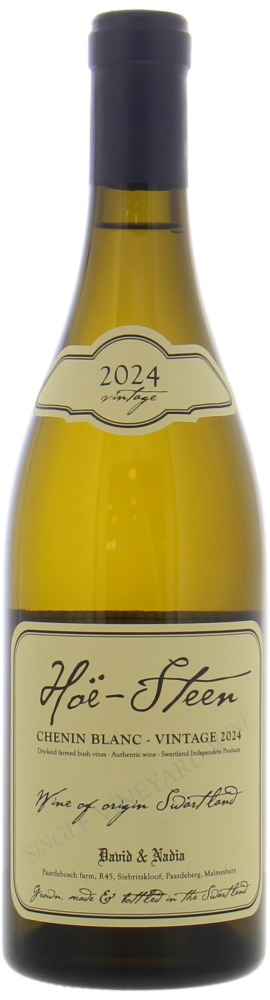
Hoë-Steen signifie haute pierre ; ce Chenin Blanc millésime 2024, produit par David & Nadia, a été récolté dans le vignoble de Paardeberg, exposé au vent, situé dans la région du Swartland et créé en 1968. En raison des tempêtes survenues pendant la période de végétation, la nouaison a été perturbée et la récolte n'a permis de produire que moins de 1 000 bouteilles. Grâce à son sol d'argile rouge riche en fer, à son exposition plein sud et à un clone à grosses grappes, ce vignoble mûrit jusqu'à quatre semaines plus tard que les autres parcelles du domaine, et ces caractéristiques se reflètent clairement dans le vin. Les arômes de fruits jaunes prédominent sur ceux de fruits blancs, avec des notes de fenouil et de zeste de citron, ainsi qu'une finale minérale et salée sous une texture onctueuse. À déguster de préférence entre 2026 et 2040.
Robert Parker (96)
The David & Nadia 2024 Swartland Hoë-Steen Chenin Blanc, translated as “high stone,” comes from a wind-exposed Paardeberg vineyard planted in 1968, producing just 900 bottles in this vintage. Grown on iron-rich red soils and planted to a large-bunch clone, the site ripens up to four weeks later than the estate's other parcels. South-facing exposure and flowering challenges limit yields, resulting in a wine shaped more by texture than overt perfumes. Yellow fruit and density are balanced by structure and depth. The vineyard’s elevation and exposure to persistent Cape winds contribute to its slow, steady ripening that adds beautiful intensity and unique length. It will be fascinating to see how this wine fleshes out with more time in bottle.
James Suckling (96)
Lovely breadth and density to this full-bodied white, with stony and salty undertones to the fruit. Aromas of fennel, lemon rind, jasmine and grapefruit are supported by mineral coolness and creamy texture. Delicious finish. From a vineyard planted in 1968 with deep iron- and clay-rich soils. Drink or hold. 1,000 bottles produced.
Vinous (91)
The 2024 Chenin Blanc Hoë-Steen comes from vines on iron-rich clay that tend to ripen at the end of February. Wind reduced volumes to 900 bottles due to interrupted fruit set. It has a lightly spiced, peppermint-tinged bouquet that opens gradually in the glass, yellow rather than white fruit. The palate has respectable weight, a keen line of acidity, perhaps just does not quite have the complexity of the Langland on the finish. But still, this will give a decade of drinking pleasure.