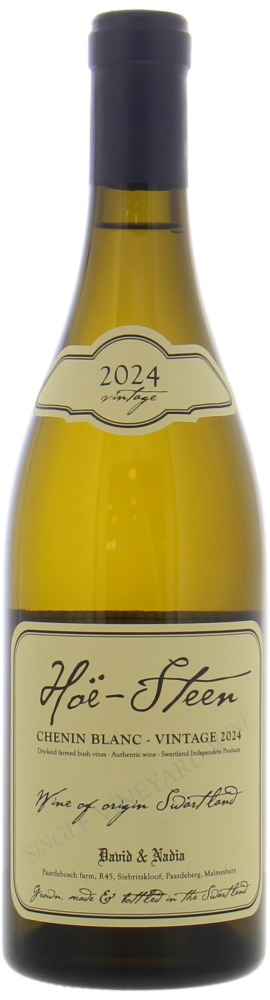
Hoë-Steen bedeutet hoher Stein, und dieser Chenin Blanc des Jahrgangs 2024, produziert von David & Nadia, stammt aus dem windausgesetzten Weinberg Paardeberg in der Region Swartland, der 1968 angelegt wurde. Aufgrund von Stürmen während der Vegetationsperiode wurde der Fruchtansatz gestört, und die Ernte ergab weniger als 1.000 Flaschen. Dank des eisenreichen roten Lehmbodens, der Südlage und eines Klons mit großen Trauben reift dieser Weinberg bis zu vier Wochen später als die anderen Parzellen des Weinguts, und diese Eigenschaften spiegeln sich deutlich im Wein wider. Aromen von gelben Früchten dominieren gegenüber weißen Früchten, mit Noten von Fenchel und Zitronenschale sowie einem steinigen, salzigen Abgang unter einer cremigen Textur. Am besten zwischen 2026 und 2040 zu genießen.
Robert Parker (96)
The David & Nadia 2024 Swartland Hoë-Steen Chenin Blanc, translated as “high stone,” comes from a wind-exposed Paardeberg vineyard planted in 1968, producing just 900 bottles in this vintage. Grown on iron-rich red soils and planted to a large-bunch clone, the site ripens up to four weeks later than the estate's other parcels. South-facing exposure and flowering challenges limit yields, resulting in a wine shaped more by texture than overt perfumes. Yellow fruit and density are balanced by structure and depth. The vineyard’s elevation and exposure to persistent Cape winds contribute to its slow, steady ripening that adds beautiful intensity and unique length. It will be fascinating to see how this wine fleshes out with more time in bottle.
James Suckling (96)
Lovely breadth and density to this full-bodied white, with stony and salty undertones to the fruit. Aromas of fennel, lemon rind, jasmine and grapefruit are supported by mineral coolness and creamy texture. Delicious finish. From a vineyard planted in 1968 with deep iron- and clay-rich soils. Drink or hold. 1,000 bottles produced.
Vinous (91)
The 2024 Chenin Blanc Hoë-Steen comes from vines on iron-rich clay that tend to ripen at the end of February. Wind reduced volumes to 900 bottles due to interrupted fruit set. It has a lightly spiced, peppermint-tinged bouquet that opens gradually in the glass, yellow rather than white fruit. The palate has respectable weight, a keen line of acidity, perhaps just does not quite have the complexity of the Langland on the finish. But still, this will give a decade of drinking pleasure.