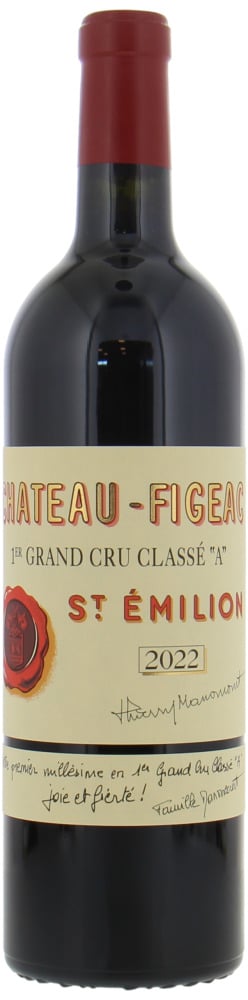
Der Château Figeac 2022 ist ein Rotwein, ein Saint-Émilion Premier Grand Cru Classé A, und markiert den ersten Jahrgang, den die Familie Manoncourt in dieser höchsten Klassifizierung abgefüllt hat. Es passt daher gut, dass die Vegetationsperiode in jenem Jahr anders war als alles, was sie zuvor erlebt hatten. Ab Ende Mai hielten überdurchschnittliche Temperaturen und Trockenheit an, und die Reifephase (die Zeit, in der die Trauben ihre Farbe ändern) breitete sich ab Ende Juni über den gesamten Weinberg aus; die Lese begann am 1. September, der früheste Erntezeitpunkt in den 130 Jahren, seit denen die Familie diesen Weinberg besitzt. Dank leichter Regenfälle im Juni und August sowie kühler Nachttemperaturen konnten die Reben ihr Wachstum ohne Unterbrechung stetig fortsetzen.
Saint-Émilion überstand das Jahr 2022 besser als die meisten anderen und war die einzige große Bordeaux-Appellation, die einen überdurchschnittlichen Ertrag verzeichnete. In Figeac sorgten die kies- und lehmhaltigen Böden wie immer für Ausgewogenheit im Wein. Dies ist der zweite Jahrgang, der in der neuen Kellerei produziert wurde, und man kann deutlich erkennen, wie unterschiedlich sich die Eigenschaften der einzelnen Weinberge im Glas ausdrücken. Der abgefüllte Wein ist ein gut ausgereifter, tieffarbiger Figeac, der nach wie vor voll und ganz die Eigenschaften der Cabernet-dominierten Linie des Weinguts verkörpert, die für ihre hellen, lebendigen Noten bekannt ist. Trotz des warmen Jahres ist es kein schwerer Wein.
Robert Parker (100)
The 2022 Figeac is one of the wines of the vintage. Unfurling in the glass with a deep and complex bouquet of dark berries and cassis mingled with hints of violet, pencil lead, mint and cigar wrapper, it's medium to full-bodied, dense and concentrated, with striking intensity and sweetness of fruit married with unerring precision and energy, concluding with a long, penetrating finish. Abundant but exquisitely filigreed tannins lend a sense of classicism and proportion to a wine that might otherwise be flamboyant. As I wrote from barrel, it's the quintessential Figeac, testament to the late Thierry Manoncourt's vision to plant such a large proportion of Cabernet, and on drought-resistant rootstocks. Such is the inherent complexity of Figeac's terroirs that harvest took place sub-block by sub-block between September 1st and 25th. Could the result be a contemporary version of the estate's magical 1949?
James Suckling (99)
Deep nose with graphite, gravel, dark hazelnut chocolate, blackberries, blueberries and truffles. Really taut and tense on the palate with fresh, vibrating tannins and a very long, chalky finish. Compact. 35% merlot, 34% cabernet franc and 31% cabernet sauvignon. Lots of vibrancy and muscled tension here from an extremely hot and dry year. Drink from 2029 when the wood spices get more integrated.
Jancis Robinson (18)
Tasted blind. Rich and opulent and very smooth and seductive. I could enjoy this and its little salty note tonight! Utterly hedonistic. Jancis Robinson
Vinous (98)
The 2022 Figeac, bottled on July 20th, has an intense nose that, as I observed out of barrel, leans more toward the Left than Right Bank, despite a slightly lower percentage of Cabernet Sauvignon. It has wonderful delineation with black fruit, pine and a light graphite note that runs through from start to finish. A touch of incense emerges with time. The palate is medium-bodied with fine tannins. It is still firmly on the Left Bank stylistically, with gentle grip and a stony aftertaste. The fruit will come back with bottle age, which you can see by comparing tastings in late November 2024 and then at the end of January 2025.
Jeb Dunnuck (100)
An absolute legend of a wine, the 2022 Château Figeac is based on 35% Merlot, 34% Cabernet Franc, and 31% Cabernet Sauvignon that saw malolactic in barrel and 18 months in new barrels. This deep purple-hued beauty offers incredible cassis, spring flowers, crushed stone, graphite, and subtle tobacco notes to go with a full-bodied, ultra-pure, fine, seamless style on the palate. It's so rare to find a wine that can deliver this level of richness and intensity with no sensation of weight, as well as an incredible sense of finesse and elegance. It reminds me of a slightly more concentrated version of the 2016. Hide bottles for a decade if you can and enjoy over the following 40 years or so.
Falstaff (99)
Deep dark ruby in colour with an opaque core, purple reflections, and subtle brightening on the rim. On the nose, aromas of ripe black plum, dark cherry, underpinned with nuances of cassis and tobacco, a touch of candied tangerine zest, and delicate fine oak. The palate is juicy and elegant with polished tannins, fine acidity, and notes of ripe cherry, and blackcurrant fruit with a citric, saline minerality on the lengthy finish. Definite ageing potential.