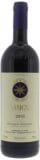
| ex Vat | € 1.699,00 |
| in Vat | € 2.055,79 |
| Volume | 0,75l |
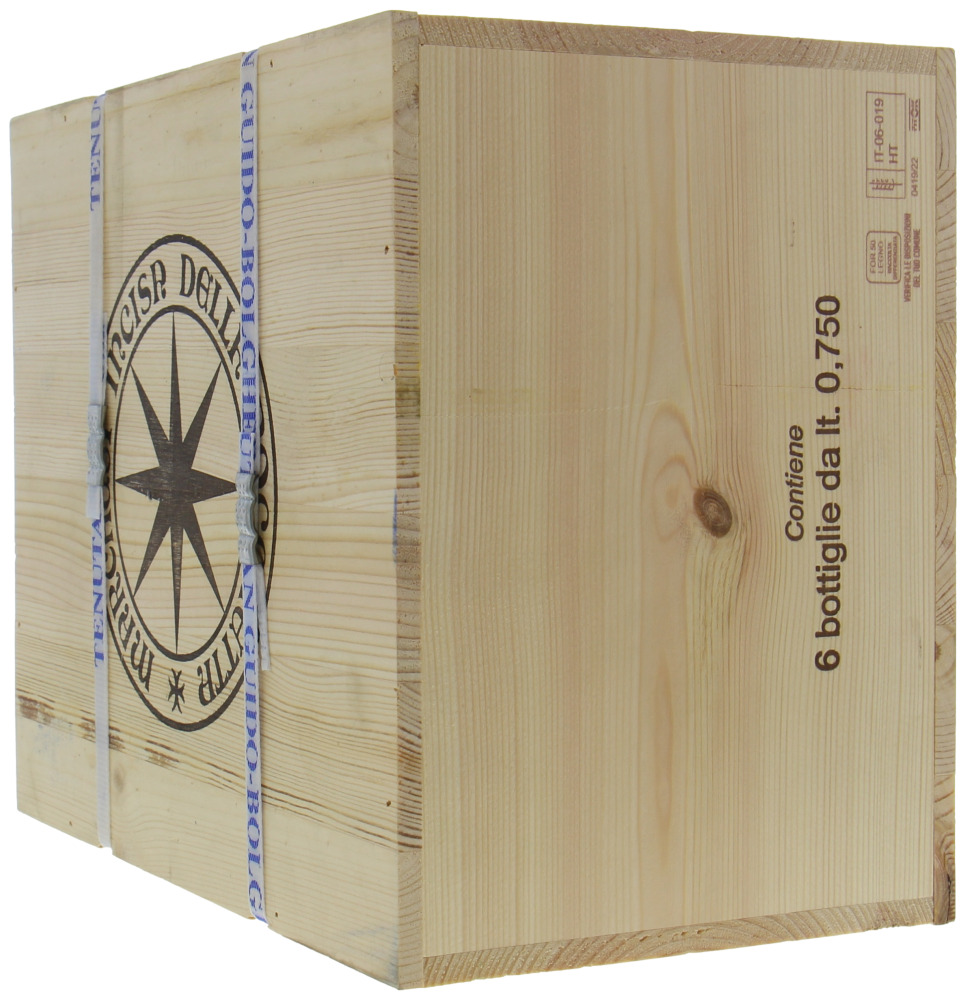
| Case of | 6 bottles |
| Classification | Cru Classe |
| Type | Red |
| Producer | Tenuta San Guido |
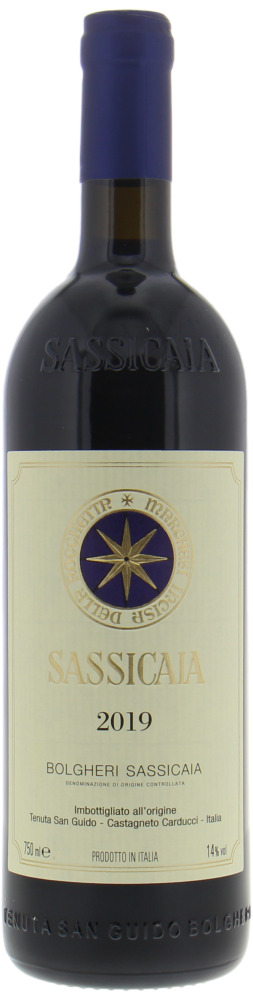
| Wine | Sassicaia |
| Vintage | 2019 |
| Country | Italy |
| Region | Tuscany |
| Appellation | Bolgheri |
| Grape | Cabernet Sauvignon, Cabernet Franc |
| Alcohol % | 14% |
| Volume | 0,75 |
| Condition | Perfect |
| Label | Perfect |
| Drinkable | 2025-2050 |
| Stock | 8 |
| Volume | 0,75 |
| Condition | Perfect |
| Label | Perfect |
| Drinkable | 2025-2050 |
| Stock | 0 |
Bolgheri's 2019 growing season brought everything one could wish for to this legendary estate. A warm, dry summer and the constant winds from the Tyrrhenian Sea that characterize this corner of the Tuscan Maremma coast. For Tenuta San Guido's Sassicaia, these conditions meant concentrated fruit of exceptional ripeness, a harvest that reminded everyone why this is the first Super Tuscan to receive its own DOC. The harvest was later than usual, which allowed the Cabernet Sauvignon and Cabernet Franc to bring out all of their aromatic complexity while maintaining the wine's characteristic elegance.
The latest release from Tenuta San Guido is the 2019 Bolgheri Sassicaia. The bouquet is up front and very expressive from the get-go. It offers a generous display of crunchy, dark cherry that hints at the extra concentration and fruit weight obtained in the 2019 growing season. This vintage will be remembered for the crisp richness of the fruit and its important textural imprint. It also shows fine elegance, bordering on the ethereal, with berry aromas, tarry earth and brushes of balsam herb or grilled rosemary. Sassicaia always shows an almost-glossy finely knit quality to the polished mouthfeel, and I find it again here next to fresh acidity and firm tannins. Mouthfeel in 2019 is the wine's strongest suit. The 2019 is one of the prettiest and most balanced editions of Sassicaia we've seen this past decade, along with the back-to-back duo of 2016 and 2015. The 2019 marries the precision of the 2016 with the rich fruit weight of the 2015.
Supple and beautifully defined, with black cherry, black currant and blackberry fruit augmented by tobacco, iron and thyme. Firmly structured, tightening up as this lingers with an aftertaste of dark fruit, graphite and spice. Shows a sense of elegance as well as power and intensity. Cabernet Sauvignon and Cabernet Franc.
The purity of cabernet sauvignon fruit is exceptional here, with character and sensibility that’s reminiscent of some of the great Sassicaias from the 1980s, such as 1982 or 1988. But this is much more precise and clean. Aromas and flavors of currants and berries with cedar and earth. Sage and minty character, too. It’s full-bodied yet there’s so much polish and balance, together with structure, elegance, and refinement. Hard not to drink at this stage, yet give it time and respect. This will be a classic Sass and reminds me why I love this wine.
Lustrous mid ruby. More classic, if you like, than the 2022, 2021 or 2020 with brooding, contained richness. Raspberry and hints of cassis with a touch of cigar box and the merest suggestion of eucalyptus, but overall still a little closed. Slow to emerge but layered. Sleek yet concentrated but still quite subdued on the palate. A near-perfect balance between firm, polished tannins clinging to the juicy, elegant fruit and streamlined by energetic acidity. You could decant this and enjoy it but it will take some time to get to its peak. (WS)
The 2019 Sassicaia is restrained and also a bit reticent in its first impression. Rose petal, dried herbs, blood orange, mint, sweet pipe tobacco and cinnamon give the 2019 striking aromatic presence. The 2019 is a mid-weight, very classic feeling Sassicaia that is going to need a number of years to open. There's good fruit depth, but the tannins are not as polished as they usually are. That could be a result of lingering stress from frost that year or recent bottling. The 2019 saw 18-20 days on the skins with natural ferments. Malos followed in tank. Aging was 25 months in barrel (1/3rd new), a longer elevage than normal. The 2019 shows beautifully with a few hours of aeration, so I am optimistic for the future. Let's see what happens.
The 2019 Sassicaia is exquisite and refined, with interwoven layers of cassis, leather, Mediterranean herbs, and dark mineral earth. It is medium to full-bodied, with ripe though present tannins and a long and elegant finish that lifts off the palate and has fantastic energy throughout, with notes of black cherry, tobacco, and a stony texture. There is a classic and tension-filled sensibility that will benefit from several years in cellar to achieve its full expression.
The intense blackcurrant is immediately striking, complemented by cedar and the characteristic graphite minerality that distinguishes great Cabernet Sauvignon. There are savory notes of dried herbs and tobacco leaf that speak to the terroir of the Maremma. On the palate, Sassicaia 2019 shows remarkable concentration without heaviness. The tannins are firm but refined, balanced by an underlying freshness. The finish shows pencil sharpening and dark chocolate, classic signs of authentic Bordeaux style winemaking. This wine has a beautifully developing structure, but the fruit intensity makes it drinkable now for those who can't wait.
The blend is common for Sassicaia:
Cabernet Sauvignon provides a backbone, dark black currant flavors and structured tannins that age beautifully. But why add Cabernet Franc? The 15% Cabernet Franc gives flavor lift and soft texture. In the coastal climate of Bolgheri, Franc matures beautifully with Cabernet Sauvignon, bringing violet notes and helping to balance the intensity of the Cabernet Sauvignon. The combination works well because both varieties grow on gravelly, well-drained soils near the Tyrrhenian Sea.
Best between 2027 and 2045. Aged in French oak barriques for 24 months to give the wine structure and time to fully integrate; store in a dark place at 12-14°C (54-57°F). Over time, the fruit aromas are expected to evolve from the original blackcurrant aromas to more complex notes of leather and truffles, and the oak will gradually become part of the wine's texture rather than a separate element.
Tenuta San Guido changed Italian wine with the release of its first commercial variety, Sassicaia, in 1968. Marchese Mario Incisa della Rocchetta had been experimenting with Bordeaux varieties since the 1940s, revolutionizing the region's obsession with Sangiovese. His nephew, Piero Antinori, convinced him to release the wine on the commercial market. The result? A new category called "Super Tuscan." Today, under the direction of winemaker Graziana Grassini, the 2,500-hectare estate produces about 180,000 bottles a year. Best of Wines considers Sassicaia the benchmark for Italian Cabernet Sauvignon.
Sassicaia's 90 hectares are located between 45 and 60 meters above sea level in Bolgheri, where clay-limestone soils mixed with galestro (loose marl) and alberese (limestone) create perfect drainage. The Tyrrhenian Sea, just a few kilometers away, moderates the temperature: there are hot days and cool nights. Why does it matter? Cabernet Sauvignon needs heat to fully ripen, but the sea breeze prevents overripening and preserves acidity. Gravelly sediments provide deep rooting and flavor concentration. This terroir received its own DOC, Bolgheri Sassicaia DOC, in 1994.
Fermentation takes place in temperature-controlled stainless steel tanks for two weeks, followed by malolactic fermentation in barriques (small French oak barrels). Then the all-important aging begins: 24 months in French oak, with about 33% from new oak. Why are only a third of the barrels new? Because Sassicaia's philosophy is to enhance, not mask, the fruity flavors. The relatively low percentage of new oak enhances the expression of Cabernet Sauvignon varietal character and terroir. After barrel aging, the wine is released after another six months of bottle aging.
In order for the tannin structure of a wine to show its best behavior, fats and proteins are needed. These are excellent options:
Serve at 18°C and decant 90 minutes before dinner. This vintage is influenced by coastal waters, so the wines open up relatively early compared to inland Tuscany.
With track & trace code