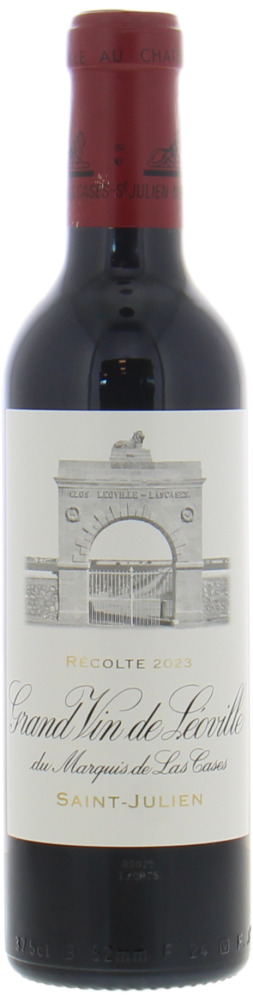
| ex Vat | € 975,00 |
| in Vat | € 1.179,75 |
| Volume | 0,75l |
| Classification | Cru Classe |
| Type | Red |
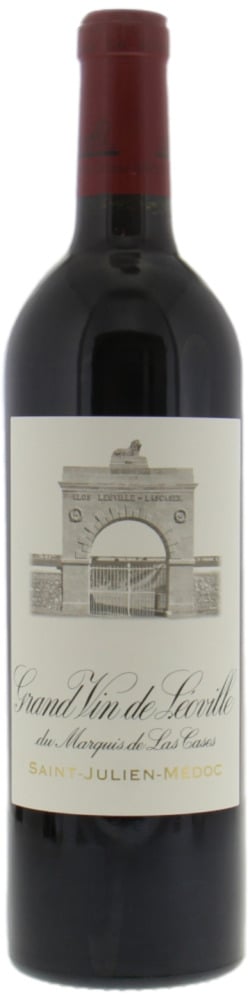
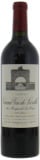
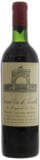
| Producer | Chateau Leoville Las Cases |
| Vintage | 2023 |
| Country | France |
| Main region | Bordeaux |
| Region | Saint-Julien |
| Grape | Cabernet Sauvignon, Merlot, Bordeaux Blend |
| Volume | 0,75 |
| Condition | Perfect |
| Label | Perfect |
| Stock | 12 |
| Volume | 0,75 |
| Condition | In Original Wooden Case |
| Stock | 0 |
The 2023 growing season in Saint-Julien was warm and dry - conditions favorable for Cabernet Sauvignon, with sufficient rainfall to keep the vines healthy. Château Léoville Las Cases took advantage of these favorable conditions to produce wines that showcase the power and elegance for which this second growth estate is renowned. According to initial tastings, this vintage reflects the characteristic style of the estate, structured yet approachable, with depth coming from the Grand Clos vineyard.
94-96: A blend of 86% Cabernet Sauvignon, 10% Cabernet Franc and only 4% Merlot, the 2023 Léoville Las Cases is one of the more serious, structured wines of the vintage, reminiscent of a modern-day version of the estate's excellent 2001. Unwinding in the glass with aromas of cherries, cassis and plums mingled with hints of licorice, mint and creamy new oak, it's medium to full-bodied, deep and concentrated, with a taut core of fruit, lively acids and plenty of fine, youthfully firm tannins. It will require and reward patience.
97-98: Exceptional quality of cabernet comes through here, with a lot of graphite, lead pencil, crushed stone, walnut and currant fruit. It grows and expands on the palate, remaining in focus at the same time. Refined and seamless with beautiful tannins that show power and intensity. It rolls across the palate with verve. 86% cabernet sauvignon, 10% cabernet franc and 4% merlot.
Cabernet Sauvignon predominates here, with the percentage usually around 65% in Leoville Las Cases. This percentage reflects the estate's gravelly soils, which drain well and warm the Cabernet to full ripeness. Merlot makes up about 19% of the blend, adding fleshiness to the middle of the palate. Cabernet Franc makes up 16% of the blend, higher than other Left Bank farmers. What matters is this: This percentage of franc gives the wine an aromatic lift, helps it age, and contributes to the violet and spice notes that set Las Cases apart from its Pauillac neighbors.
Saint-Julien is all about power and finesse, and the 2009 Chateau Leoville Las Cases is a fine expression of both. The nose opens with classic Left Bank blackcurrant and graphite character, but there is more complexity. Cedar and tobacco leaf emerge, suggesting that the wine was aged in French oak for 18 months. On the palate, the wine shows remarkable concentration without being heavy-handed. The tannins are firm but refined, supporting flavors of dark fruit that seem to go on forever. This wine has the backbone of a wine that has been decades in the making, not years. Decant it and you can drink it now, but patience will be rewarded.
Best time to drink: 2024-2040, perhaps even longer The Chateau Leoville Las Cases wine from the 2009 vintage has the concentration and tannin backbone that define the aging potential of great Bordeaux. It needs a few more years for these firm tannins to fully integrate, but once that happens, it will be enjoyable for 20 years. Store in the dark at 55°F. As it ages, expect the primary fruit flavors to give way to more complex notes (leather, earth, truffle). The Cabernet Sauvignon base (76% of the blend) ensures long aging.
Jean-Hubert Delon is the latest generation of the family that has been building this estate since 1900 on a foundation laid in 1638. But what makes the Delon family stand out? Their willingness to sacrifice quantity for quality. In difficult vintages, they have been known to downgrade up to 67% of the harvest. This no-compromise approach explains why Las Cases is consistently rated among the top second growths. Best of Wine considers this estate to be one of the most reliable producers in Bordeaux.
The 55-hectare Grand Clos vineyard is located right next to Château Latour. Only a small stream separates these two legendary estates. This proximity is no accident. Both estates share the same deep Gunz gravel soils overlying a clay-limestone subsoil deposited during the Pleistocene period. So what makes Las Cases different? Its prime southeastern location brings optimal morning sun while avoiding the intense midday heat. These well-drained gravel soils store heat during the day and release it at night, allowing for a longer growing season and allowing the Cabernet Sauvignon to fully ripen even in difficult years.
Tannins require protein, which is why Côtes de Boeuf is so well suited to this wine. Beef fat softens the wine's structure, and the iron-rich meat responds to the terroir. Roasted duck breast with cherry gastrique is a perfect bridge between the wine's fruitiness and its earthy notes. Of the cheeses, choose a mature Comté or Roquefort. The salty and umami flavors balance the wine's intensity; serve at 16-18 °C and decant for at least an hour. The wine will show patience at the table as well as in the cellar.
The Delon family has kept the tradition alive while adding modern touches. Fermentation takes place in temperature-controlled stainless steel and concrete tanks to preserve the purity of the fruit before it goes into barrels. Important decisions are made after malolactic fermentation, the wine is aged in French oak barriques for 18-20 months. This may sound aggressive, but the Grand Clos vineyard produces fruit with enough concentration for this. The result? We end up with the layered, complex flavors that Saint-Julien is known for, with notes of cedar and tobacco along with black currants.
With track & trace code