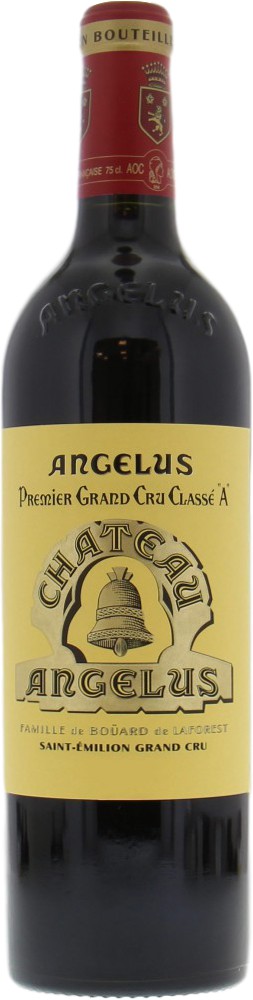
| Classification | Premier Grand Cru Classe A |
| Type | Red |
| Producer | Chateau Angelus |
| Vintage | 2019 |
| Country | France |
| Main region | Bordeaux |
| Region | Saint-Emilion |
| Grape | Merlot, Cabernet Franc, Bordeaux Blend |
| Alcohol % | 14.5% |
| Volume | 0,75 |
| Condition | Perfect |
| Label | Perfect |
| Drinkable | 2026-2060 |
| Stock | 5 |
The 2019 growing season at Saint-Émilion was a warm, dry summer with cool nights that allowed the Merlot to fully ripen without baking. For Château Angélus, located on the south-facing slope beneath a limestone plateau, this means concentrated fruit and surprisingly fresh acidity. The 2019 has plenty of dark fruit, but with the lift expected from an estate with a high proportion of Cabernet Franc. Drinkers expecting a massive, overripe vintage will be surprised.
Composed of 60% Merlot and 40% Cabernet Franc, the 2019 Angélus was harvested from the 13th of September until the 4th of October. Deep garnet-purple colored, it sashays out of the glass with gregarious scents of Morello cherries, lilacs, chocolate box and potpourri with a core of Black Forest cake, blueberry crumble, fragrant soil and menthol. Medium to full-bodied, the intensity on the palate builds from delicate, beguiling nuances with ethereal weight to a full-on fireworks display of flavor sparks, framed by fantastic freshness and very finely pixilated tannins, finishing long, layered and invigorating.
An extremely refined and sharpened Angelus with super fine tannins and sweet ripe fruit in the center palate. It’s full-bodied, yet tight and so very polished. Silky. Very subtle. Bright blue fruit, black fruit and stones. Supple and minerally. 60% merlot and 40% cabernet franc.
Tasted blind. Subtle and lifted nose. Lots of tannin on the end but nuanced fruit – and some coolness – on the way there. Really ripe but fresh fruit. Neat. Superior. (JR)
The 2019 Angélus has a Cabernet Franc-driven nose, touches of Earl Grey and ash infusing the almost sultry black fruit. The palate is medium-bodied with fine tannins, taut and crisp, quite a fine arching structure that delivers wonderful tension and mineralité on the finish. Serious. Tasted blind at the Southwold annual tasting.
Based on a final blend of 60% Merlot and 40% Cabernet Franc, the 2019 Château Angélus is knockout stuff, and while I'm not sure it matches the perfect 2018, it's not far off. Gorgeous notes of redcurrants, blueberries, sandalwood, dried flowers, vanilla, and forest floor are just some of its nuances, and it hits the palate with medium to full body, a perfectly balanced, seamless mouthfeel, beautifully ripe tannins, and a great, great finish. It doesn't have the sheer weight or richness of, say, the 1998, 2000, 2005, or even the 2009, but it doesn't lack for intensity or power, and it’s just a beautiful example of modern-day Saint-Emilion. It's already approachable (this was best on day two) yet will keep for another 30+ years.
Impressive on the nose, with aromas of violets, graphite and pencil shavings from the Cabernet Franc amid a deep Merlot core of black cherry and plum, the 2019 wine has the warmth of the vintage in its fruit but is restrained. The tannins are firm and chalky due to limestone notes, and the new oak shows cedar and cocoa rather than vanilla sweetness. The long, savory finish has the iron grip of Saint-Émilion.
In 2019, Merlot is responsible for the body and dark fruit, and Cabernet Franc makes up about 40% of the blend. That's a high proportion for Saint-Émilion. So what does the Franc add? Floral aromas, notes of graphite and a fresh acidity that keeps the wine from seeming heavy. Old vines over 60 years old give the Cabernet Franc its concentration.
Drink between 2028 and 2050. Dense Merlot fruit, Cabernet Franc acidity and tannins from 100% new oak. Wait a few more years before opening; store at 12-14°C; expect tobacco and truffle notes from 2030.
The de Boüard de Lafollet family has shaped the estate since 1782, but it was the modernization of Hubert de Boüard at the end of the 20th century that transformed Angélus into what it is today. In 2012, Angélus was classified as Premier Grand Cru Classé A, joining the three other top-ranked Saint-Emilion vineyards in the region. The estate was then classified as a Premier Grand Cru Classé A, joining the other three estates at the pinnacle of Saint-Emilion's classification. What sets Angelus apart, however, is that it voluntarily relinquished that title in 2022. We at industry observers believe that this decision is truly a sign of confidence in their ability to produce great wines.
Angelus is located in what locals call a natural amphitheater on the southern slopes of Saint-Emilion. This position concentrates the summer heat and promotes early ripening. The soil is divided into two zones: the upper zone is clay-limestone, which grows Merlot, and the lower zone is sandy clay-limestone, which grows Cabernet Franc. Why is this important? Clay retains moisture during droughts, so the vines are not stressed even in hot summers like those of the 2020s. And the underlying limestone provides a mineral backbone that can be felt in every bottle. The slopes are always well drained, which is essential to prevent waterlogging during the rainy season.
Angelus is characterized by the use of open tanks for fermentation, a method pioneered by Hubert de Boüard in the 1990s. This allows for better extraction while maintaining the elegance that is essential for blends with a high Cabernet Franc content. After fermentation, the wine is aged on its lees to give it texture without masking the fruit. In recent vintages, the use of larger oak barrels in addition to traditional barriques (small French oak barrels) has softened the heavy oak notes of earlier vintages. The result is a fresher, more transparent wine, which is exactly what we see in this 2020 vintage.
Protein is needed to soften the hard tannins in the wine, which explains why Bordeaux and beef have been partners for centuries. Try Côte de Beef with shallot confit. The fat of the beef softens the tannins and the minerality of the wine breaks up the richness. Duck breast would also work well with a cherry sauce, especially in response to the dark fruitiness of the wine. If you want to try something more regional, try herb-fried rabbit, served at 16-18°C and decanted for at least an hour to allow the flavors to develop.
With track & trace code