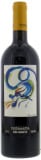
| Classification | Cru Classe |
| Type | Red |
| Producer | Bibi Graetz |
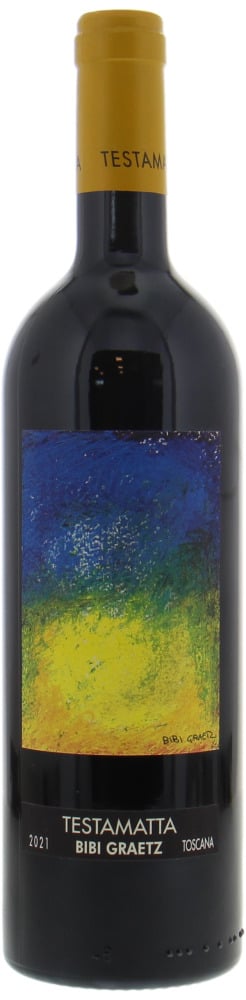
| Wine | Testamatta |
| Vintage | 2021 |
| Country | Italy |
| Region | Tuscany |
| Grape | Sangiovese |
| Alcohol % | 13.5% |
| Volume | 0,75 |
| Condition | Perfect |
| Label | Perfect |
| Drinkable | 2024-2045 |
| Stock | 13 |
The 2021 vintage in Tuscany was marked by a cold, dry winter and late frosts in April, which led to lower yields throughout the region. The summer was hot but without extreme temperatures, and thanks to cool nights, the acidity of the Sangiovese grapes was preserved. For Bibi Graetz, who cultivates old vines in Vincigliata, Lamole, and other plots throughout Tuscany, this season yielded small berries with thick skins. “Testamatta 2021” perfectly reflects these characteristics: the wine is concentrated and has a robust structure, and its style is geared more toward aging than immediate enjoyment.
The 2021 Testamatta is Sangiovese sourced from various hilltop vineyards spanning different cool microclimates. The ideal is to underline the transparency and fragility of the variety. Fruit from the Olmo Vineyard plays a big role and “gives a strong imprint to this wine,” Bibi says. Testamatta offers fresh aromas of violet, rose, forest green and candied orange peel. Bibi says 2021 was generally warmer than 2020, but all three vintages—2020, 2021 and 2022—are considered hot. He is upbeat regarding 2023 thanks to all the rain. Testamatta shows an earthy note that gives this wine (with 120,000 bottles made) a slightly more accessible personality. The tannins are lightly managed and the oak framing is down to an elegant minimum. Bibi buys 1% new oak each year, and his oldest barrels date back to 2003. He does not pull leaves, and he employs methods that do not concentrate his fruit so he can safeguard the typicity of Sangiovese. The beautiful results are classic and bright. He strives to keep alcohol contents below 13%.
Number 46 in the Top 100 from 2023
Fabulous aromas of strawberries, orange zest and orange blossom. So pure on the nose. Very perfumed. Medium-bodied with intense linear tannins that are ultra-fine in texture. It's fresh and salty with a brightness and focus. Minerally and crisp. pH is 3.4 highlighting the strength of the acidity. Crunchy. Salty. So delicious now but this will age incredibly well.
100% Sangiovese made from young vines from several vineyards between Florence and Siena. Fermented and aged in stainless steel for six months.Lustrous and just mid ruby. A restrained red-fruit nose with exotic spice hints and a suggestion of soy. Very fine, still very closed and really fresh. Rather firm tannins that are a tiny bit bitter at the moment but they will evolve, no doubt, with further ageing. Cranberry on the finish and very elegant, if tannic right now. Cool-climate character.
Beautifully fragrant on the nose, delicately scented and inviting with subtle wild flower scents, red and black berries and sweet spices. Chalky and powdery tannins support super bright acidity which gives this such a sharp, thrilling and lively expression. Tannins are super fine but have a spiced edge that grips and holds interest, supportive but not overpowering, letting the acidity and bright fruit flavours shine through. Beautifully delineated and expressed, elegant, refined, totally beguiling yet with layers of flavour and intensity and such a long finish. Feels supremely drinkable and that is such a feat at this young stage. Well worked, balanced, and enjoyable with flashes of heat and spice dotting the finish. Really wonderful and totally charming.

Initial impressions include cherry and crushed raspberry, with underlying notes of dried herbs, leather, and a barely perceptible hint of iron. The 2021 vintage possesses the rich flavor and almost wild character that have become Testamatta’s hallmark, yet it has a firmer structure than the 2020 vintage. The tannins are fine and persistent, the acidity is bright (a characteristic of Sangiovese grown at high altitudes), and the finish lingers with notes of tea leaves and orange zest. If you plan to drink the wine right away, we recommend letting it breathe in a decanter. However, it’s even better to wait until it has had time to age.
“Testamatta” is a pure Sangiovese grown on five separate plots planted with old vines ranging in age from 35 to 80 years. Since 2015, Bibi Graetz has gradually transitioned to 100% Sangiovese, removing the Canaiolo and Colorino varieties from the blend, varieties that previously gave the wine its roundness. It is the individual character of each plot that plays the role that, in other regions, is fulfilled by the varieties used for blending:
Best enjoyed between 2024 and 2045. The 2021 vintage can be enjoyed right now if the wine is allowed to breathe in a decanter; however, judging by its tannic structure and acidity, it will need at least another 5 years to fully reveal its true potential. Store at a temperature of 12–14 °C. Over the next 20 years, the aroma of sour cherries is expected to deepen into notes of dried figs, while the herbal nuances will evolve into earthy aromas and umami.
Bibi Graetz entered the world of wine almost by accident. A graduate of the Florence Academy of Fine Arts and the son of a sculptor of Swiss-Israeli descent, he inherited the lease to an old vineyard on the family estate in Castello di Vincigliata and, rather than giving it up, decided to take up winemaking. The first vintage was released in 2000 and immediately attracted attention. The winery is located in the building of the former Hotel Aurora on the main square in Fiesole, and Graetz still lives there. Since there are no other producers in Tuscany who use such unique winemaking methods, these wines are always in stock at our store.
The grapes for Testamatta are sourced from vineyards scattered throughout Tuscany, but the main one is Vincigliata, located directly below the family's historic castle at an elevation of 280 meters. Its soil is galestro, a brittle limestone-clay shale mixed with sand and small pebbles. Galestro provides good drainage, which forces the vines to work harder, resulting in a more intense flavor in the grapes. In addition, the inclusion of grapes from Lamore—located at an elevation of 600 meters in the very heart of Chianti Classico—gives the Sangiovese the acidity necessary for ageing and a high level of aromatic intensity. The earthy aroma that fills the glass and the wine’s slightly wild character are precisely what these soils impart.
At Graetz, the harvest is carried out by hand, and to ensure the optimal moment for each plot is not missed, up to 8 harvests may take place on a single plot during the season. The grapes are sorted twice: in the vineyard and at the winery. Fermentation is carried out exclusively using natural yeasts: for small plots, in open 225-liter barriques (small French oak barrels), and for larger ones, in larger barrels or stainless steel tanks. Each plot is managed in complete isolation from fermentation through aging, and blending takes place at the final stage. This is precisely why each vintage has a flavor that reflects the climatic conditions of that year and does not conform to a predetermined recipe.
Sangiovese’s acidity calls for richness. The traditional Tuscan dish “Bistecca alla Fiorentina” (a thick bone-in steak, crispy on the outside and “red” on the inside) is a classic pairing that goes perfectly with this wine. Even more delightful is the pairing of pappardelle with wild boar ragout: the rich flavor of the game harmonizes perfectly with the wine’s savory notes. After the meal, try aged “Pecorino Toscano” with a small amount of honey. Serve at 18–20 °C. Decant the wine 60–90 minutes before serving.
With track & trace code