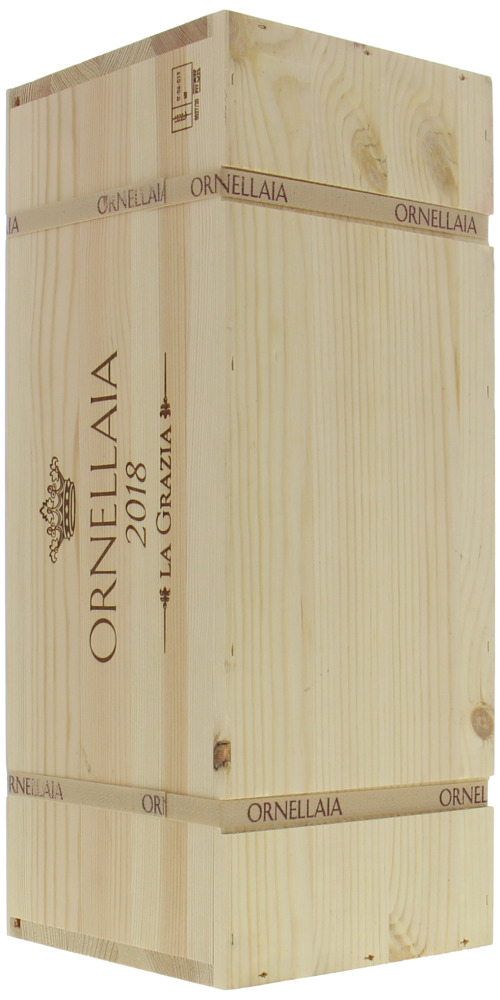
| ex Vat | € 108,00 |
| in Vat | € 130,68 |
| Volume | Half bottle |
| ex Vat | € 459,00 |
| in Vat | € 555,39 |
| Volume | Magnum |
| ex Vat | € 461,00 |
| in Vat | € 557,81 |
| Volume | Magnum |
| ex Vat | € 1.015,00 |
| in Vat | € 1.228,15 |
| Volume | Double Magnum |
| Classification | Cru Classe |
| Type | Red |
| Producer | Tenuta dell' Ornellaia |
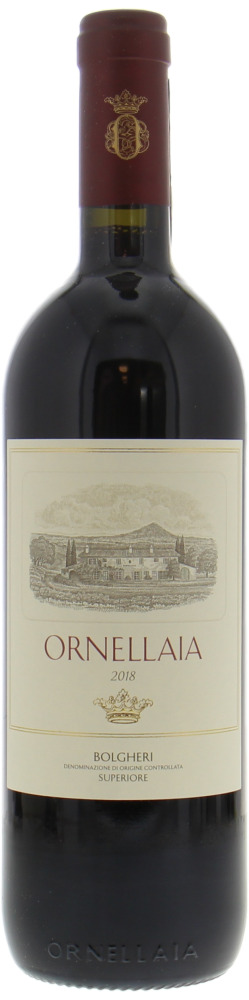
| Wine | Ornellaia |
| Vintage | 2018 |
| Country | Italy |
| Region | Tuscany |
| Appellation | Bolgheri |
| Grape | Cabernet Sauvignon, Merlot, Bordeaux Blend |
| Alcohol % | 14.5% |
| Volume | 0,75 |
| Condition | Perfect |
| Label | Perfect |
| Drinkable | 2024-2048 |
| Stock | 0 |
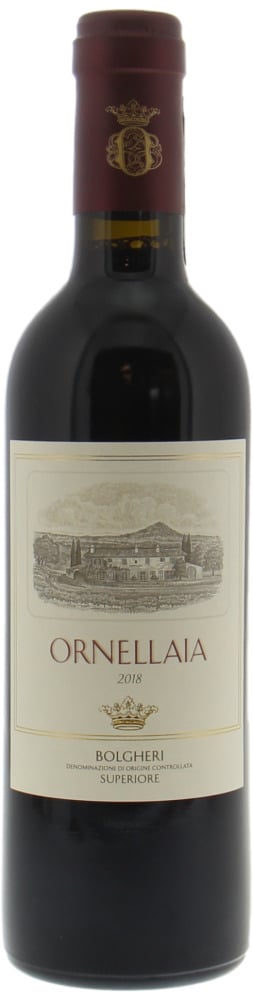
| Volume | 0,375 |
| Condition | Perfect |
| Label | Perfect |
| Drinkable | 2024-2048 |
| Stock | 0 |
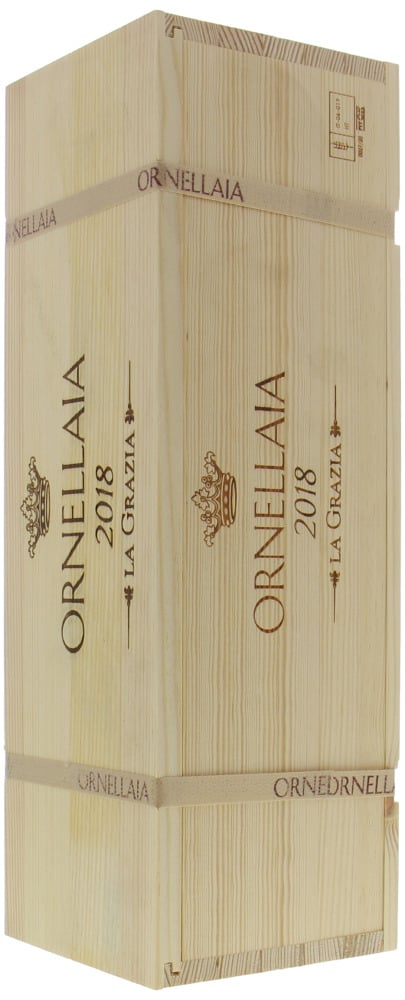
| Volume | 1,5 |
| Condition | Perfect |
| Label | Perfect |
| Drinkable | 2024-2048 |
| Stock | 0 |
| Volume | 1,5 |
| Label | Perfect |
| Stock | 0 |
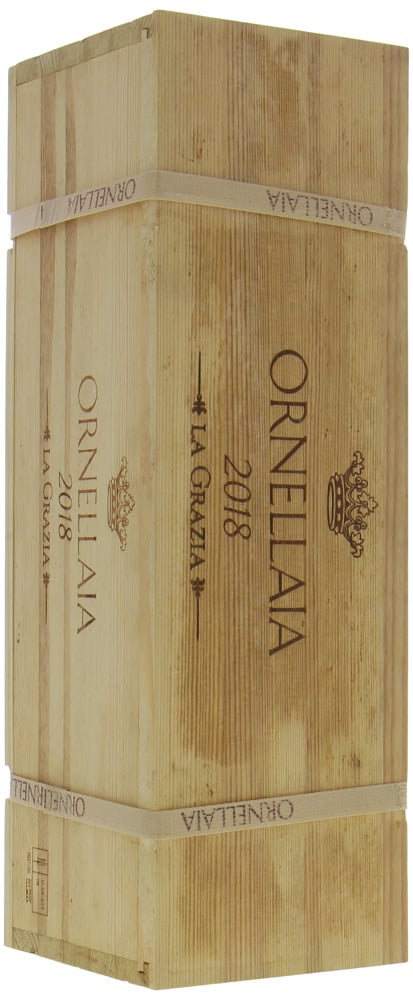
| Volume | 3,0 |
| Condition | Perfect |
| Label | Perfect |
| Drinkable | 2024-2048 |
| Stock | 0 |
2018 brought exactly what Bolgheri needed. A warm, dry summer followed by cool September nights allowed for longer ageing times. At Tenuta dell' Ornellaia, this meant that each varietal was harvested at the optimal ripening dates: the Merlot was picked in early September and the Cabernet Sauvignon in October. The result is evident in the glass. Concentrated fruit and surprising freshness for such a warm vintage. The 2018 wine is more balanced in terms of power and elegance than many recent releases.
The 2018 Bolgheri Superiore Ornellaia is complete and seamlessly stitched together with extreme care and precision. This is an almost technical blend of Merlot (at 50% of the blend for the first time), 42% Cabernet Sauvignon, 5% Cabernet Franc and 3% Petit Verdot that offers a true sense of wholeness and consistency that speaks to the blending expertise and experience of the winemaking team. Finding harmony among the various vinous components of the wine was especially important in this vintage that prized early-ripening grapes like Merlot over the others. Blackberry and dried cherry segue to spice, tar, campfire ash and more sweet fruit. We're off to a great start, and this vintage of Ornellaia is surely destined to flesh out and grow more complex with age.
So aromatic and complex with blackcurrants, blueberries, fresh violets and lavender on the nose. Some graphite and iodine, too. Medium to full body with firm, chewy tannins that are polished and refined, yet the palate is so long and refined. This is an Ornellaia with strength in elegance.
This blend says a lot about Bolgheri's potential:
Cabernet Sauvignon is the foundation of everything, thanks to its structure and length. And Merlot softens those facets, adding complexity. The real surprise is the 10% Petit Verdot, which is rare in most estates but gives Ornellaia its characteristic spiciness and intensity of color. Cabernet Franc enhances the flavors.
Opening with intense aromas of black currants and blackberries, the wine immediately shows Cabernet Sauvignon dominance: cedar and graphite notes due to 18 months of aging in a French barrique, and violet notes due to the 10% blend with Petit Verdot. In the mouth, the tannins are serious but subtle, coating the palate without overwhelming it. The Merlot (27% blend) brings a fullness to the middle of the palate, balanced by a Cabernet backbone. The finish lasts almost a minute with dark chocolate and espresso. Drink now if you like, but this wine is designed for the long term.
Best time to drink: 2026-2045; the 2016 vintage wine has the tannin structure and concentration to age gracefully for at least 20 years. It needs time for the firm tannins to integrate, and right now they are still quite pronounced; store it in a cool, dark place at 12-14°C. As it matures, the dark fruit flavors will be replaced by notes of leather and truffles, and the oak will become more integrated; if the bottle is opened before 2026, decant it for at least two hours.
Lodovico Antinori founded Ornellaia in 1981 with a simple idea: could Bordeaux varieties make world-class wines on the Tuscan coast? The answer was yes, but Lodovico didn't rest until he saw the idea fully realized. After periods of ownership by Mondavi and Constellation, control of the estate passed to the Frescobaldi family in 2005. We believe this was the best thing that could have happened to the estate. Frescobaldi brought authentic winemaking resources and, importantly, patience.
The vineyard is located just 5 km from the Tyrrhenian Sea, at an altitude of 50-60 meters above sea level. The soil, which is a marine sedimentary mixture of clay and limestone, is a special feature of the site. Its geological history is also important. The well-drained marine soils allow the vines to penetrate deeply and concentrate the flavors, while the clay component retains enough moisture in the hot Bolgheri summer. The proximity to the coast allows cool breezes to blow, preserving acidity even in warm vintages such as 2022. The 107 hectares of vineyards are planted with 5,500 vines per hectare, a high density that emphasizes quality over quantity.
The firm tannin structure requires proteins and fats to soften it. That's why Tuscan bistecca alla Fiorentina pairs so well with it: the charred meat and its marbled fat create the perfect counterpoint. For more refined dishes, try duck breast with cherry sauce or aged Pecorino Toscano with a crystalline texture.
Serve at 16-18°C and decant for at least an hour. The strength of the wine can overwhelm delicate dishes, so pair it with robust foods.
The grapes are handpicked and carefully selected. The wine is aged after fermentation for 18 months in French barriques with 70% new oak. By using 225-liter barrels (the standard size for Bordeaux) instead of larger barrels, the oak contact with the wine is increased. This allows vanilla and cedar notes to emerge in the wine. Each varietal is fermented separately, aged separately, and then blended depending on how each element has developed. In this way, the winemakers give himself maximum leeway in the final creation of the wine. The result is an integrated rather than dominant flavor.
With track & trace code