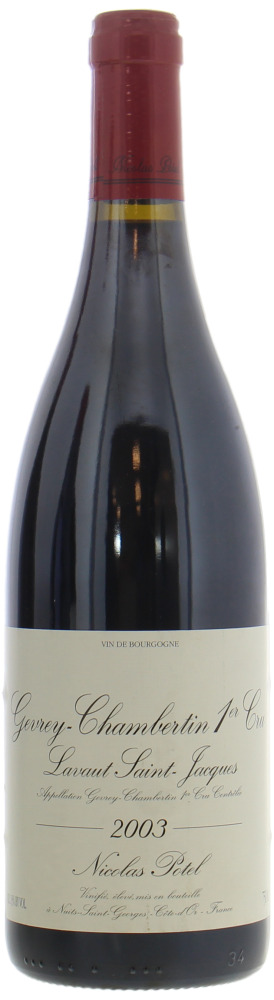

| Classification | Cru Classe |
| Type | Red |
| Producer | Nicolas Potel |
| Vintage | 2003 |
| Country | France |
| Main region | Burgundy |
| Region | Côte de Nuits |
| Appellation | Echezeaux |
| Grape | Pinot Noir |
| Volume | 0,75 |
| Condition | Perfect |
| Label | Slightly bin soiled |
| Stock | 1 |
The 2003 growing season in Burgundy was unusual, and not in a good way. The Côte de Nuits was hit by Europe's worst heat wave in 500 years, with temperatures reaching 47°C in August. Harvest began on August 21, which was the earliest record at the time. For Nicolas Potel's 2003 Gevrey-Chambertin Lavaux Saint-Jacques 1er cru Gevrey-Chambertin Lavaux-Saint-Jacques, this meant concentrated, intense fruit, and wines that defy traditional Burgundian elegance. This vintage, one of the most recognized Premier Cru in Gevrey, shows what happens when Pinot Noir faces extreme conditions.
True red Burgundy nose without exaggeration. Some real interest! Good lively fruit and an edge of bitter cherries.
As soon as you open this bottle, you'll notice it's different from typical vintages. The nose shows ripe black cherries and plums, darker than the typical Gevrey-Chambertin. There is a smoky, almost roasted flavor from heat stress, along with forest floor and dried herbs. On the palate, the wine is fuller and more concentrated than usual for a Burgundy Premier Cru. The tannins are soft (the heat is having an effect), but the acidity keeps everything in balance. On the palate, it tastes more like a pinot noir from a warm climate than a classic Burgundy. Best drunk a little cooler than usual, around 15°C, to retain elegance.
This wine is 100% Pinot Noir, not blended. In the Côte de Nuits in Burgundy, Pinot Noir is king, and Gevrey-Chambertin shows exactly why. But what does pure Pinot Noir mean in a vintage as hot as 2003? The inherent elegance of Pinot Noir is compressed, becoming more intense and concentrated. Where delicate red fruit and floral notes would normally be present, the heat pushes the wine toward blackberry instead of cherry and darker earth aromas instead of flowers. Therein lies the beauty and complexity of Pinot Noir. Pinot Noir reflects everything the vineyard gives it, including extreme weather conditions.
This wine reached its peak in 2008-2010 and has been drinking well ever since. The 2003 Burgundies evolved faster than usual due to the heat wave. It is recommended to drink until 2028 while the concentration of fruit is still balanced by the earthy elements of the wine; store in a dark place at 12-14°C. Unlike classic Burgundy wines, which can age for decades, the 2003 is best enjoyed for its unique character rather than stored in the cellar.
Nicolas Potel founded his own winery in 1997, following in the footsteps of his father Gerard (who ran Domaine de la Pousse d'Or). However, Nicolas chose a different path, buying grapes and must from growers rather than owning the vineyards. His approach was to create wines with minimal intervention and express the individuality of each vineyard. The company produced excellent wines from 1997 to 2008, when it was sold to Labouré-Roi. Nicolas left the company shortly thereafter. Best of Wines believes that the early years under Nicolas' direct control were very strong wines that conveyed terroir without being heavy.
Lavaux-Saint-Jacques is located on the east-facing hillside of Gevrey-Chambertin, 280-320 meters above sea level. The soil here is limestone and clay, with a high iron content. This is important because Iron-rich clay retains water even in dry periods and played a very important role during the drought of 2003. The southeastern exposure to the sun allows the morning sun to reach the vineyard, yet it does not suffer from the midday heat. This 9.54 hectare vineyard typically produces wines that balance the power and finesse of Jouvray. The vineyard's location between the village class and the grand cru above it gives it complexity without being overly heavy.
Central to Nicolas Potel's philosophy is a commitment to letting the vineyard show its character, that is, minimizing the use of new oak, natural fermentation and gentle extraction wherever possible. In 2003, however, this principle was put to the test. Due to the intense heat, the grapes were already concentrated and arrived at the winery with a potential alcohol content approaching 14%. The challenge was to maintain elegance. Fermentation took place in open-topped wooden vats, with regular punchdowns to extract color without over-extracting tannins. Aging took place in old barrels (minimum new oak) for approximately 16 months. The aim was to soften the intensity of the vintage while retaining the fruitiness of the vines.
The concentrated character of the 2003 wine demands that it be served with solid food. Imagine duck breast with cherry sauce. This fruity intensity can handle richer sauces that can overwhelm lighter dishes. Beef bourguignon, in particular, pairs perfectly with the earthy nuances of this wine. Avoid delicate cheeses and opt for mature epoisses or Maroilles. Game such as pheasant and guinea fowl go particularly well with cooked mushrooms. The wine should be served at 16°C, which is slightly below the temperature of red Burgundy wines.
With track & trace code