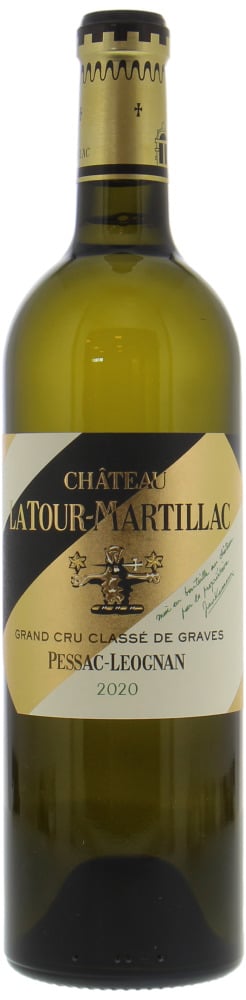

| Classification | Cru Classe |
| Type | White |
| Producer | Chateau Latour-Martillac |
| Vintage | 2020 |
| Country | France |
| Main region | Bordeaux |
| Region | Graves |
| Grape | Sauvignon Blanc, Semillon |
| Alcohol % | 13.5% |
| Volume | 0,75 |
| Condition | Perfect |
| Label | Perfect |
| Drinkable | -2038 |
| Stock | 8 |
The 2020 growing season in Pessac-Léognan was warm and dry, keeping white wine producers hard at work. At Château Latour-Martillac, white wines were harvested early, in mid- to late August, to preserve acidity before the heat wave arrived. And it worked: the 2020 Latour-Martillac Blanc has the freshness required for Graves white wines, but is complemented by the depth of texture that a warm year brings.
The 2020 Latour Martillac Blanc has a fragrant nose of lemongrass, spiced pears and lime leaves, plus hints of fresh peaches and shaved almonds. The medium-bodied palate has an impressively racy backbone cutting through the intense citrus and stone fruit flavors, finishing long and zesty.
A dense yet fresh white with sliced lemon and cooked apple. Green mango, too. Phenolic tension. Full-bodied and layered. Solid phenolics at the end.
Initial nose: citrus zest, white peach, a glimpse of flint. A waxy, faintly honeyed texture that distinguishes the white wines of Pessac-Léognan from the leaner Sauvignon Blancs of other regions. The palate is firm but not thin, with notes of oak fermentation (toasted almonds and light vanilla) behind the fruit. The finish is long and salty. Drinks well with airing, but its maturation is just beginning.
The 2020 blend includes:
Why this particular blend? The Pessac-Léognan straight Sauvignon Blanc becomes too pungent after barrel fermentation. Semillon compensates for this. It is aged according to the classic white Bordeaux formula.
Drinkable now, but better from 2026 and until about 2038. Semillon's acidity and weight give it the backbone to develop the honeyed and nutty notes that Pessac-Léognan white wines are known for. Store chilled (12-14°C) on its side; open a bottle in 2027 to check its development.
The estate takes its name from a 12th century tower built in the courtyard by the ancestors of the philosopher Montesquieu. But the wine story begins with Édouard Kressmann, a Bordeaux merchant who noticed the quality of the local white wines in 1871. His son Alfred Kressmann bought the place in 1930. What makes Latour-Martillac so special: it is one of the few domaines in Graves classified as Cru Classé for both red and white wines. It is currently managed by Tristan and Loïc Kressmann. The white wines, which make up half of production, are considered particularly noteworthy.
The domaine is located on a gravel plateau in Pessac-Léognan, in the northernmost part of Graves. Why is gravel important? It drains well, stores heat during the day and gives it up at night. This allows for the extended ripening period needed for semillon and sauvignon blanc to develop flavors without losing acidity. Underneath the gravel is soil composed of clay and limestone. The clay retains moisture, preventing the vines from stalling during the dry periods that characterize Bordeaux.
Barrel fermentation is very important for white wines. The juice is fermented directly in French oak barriques (225-liter barrels). The wine is then aged on the lees for 10-12 months with regular stirring (bâtonnage). Why do this? Stirring the lees creates texture and softens the oak so that the wine doesn't turn into a vanilla bomb. In addition, the ratio of new oak is intentionally kept low. This is because we want to support the fruit flavors, not bury them under toast and spice.
The acidity and waxy texture make this wine more of a meal than an aperitif. Serve with:
At 10-12°C. Too cold a temperature will cause the semillon to lose texture.
With track & trace code