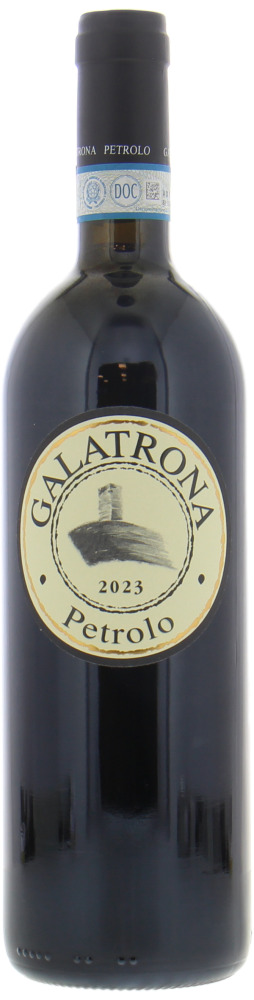
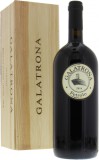
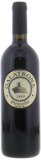
| Classification | DOC |
| Type | Red |
| Producer | Petrolo |
| Wine | Galatrona |
| Vintage | 2023 |
| Country | Italy |
| Region | Tuscany |
| Grape | Merlot |
| Volume | 0,75 |
| Condition | Perfect |
| Label | Perfect |
| Drinkable | 2028-2044 |
| Stock | 25 |
The 2023 growing season in Valdarno di Sopra was full of surprises. Due to a rainy and cool spring, budbreak was delayed, and the summer turned out to be hot and dry. For Petrolo’s “Galatrona” wine, made from 100% Merlot grapes grown in vineyards at an elevation of 250–500 meters, this altitude proved to be a saving grace. Thanks to the cool nights, the wine retained its aroma, which is often lost in Merlot from warmer vintages. The 2023 vintage is distinguished not so much by its jammy richness as by its fresh, floral character, which also reveals the piquant nuances characteristic of “Galatrona.”
The aromas of black currants, graphite, lavender and violets are gorgeous. Black olives and walnuts, too. Medium-bodied with ultra-fine tannins, a racy texture and small black berry-like flavors. Iron undertones as well as dark chocolate, dried sage and rosemary. Vertical nature to this. One for the cellar. Pure merlot. From organically grown grapes. Best after 2030.
100% Merlot. Rain in June affected fruit set leading to a small harvest. Harvest 6–15 September. Spontaneous fermentation in lined concrete vats. Aged for around 18 months in French oak barriques and tonneaux, approx one-third new, with regular bâtonnage for the first few months. Organic.
Mid bright blueish crimson. Rather fierce, drying tannins and a slightly old-fashioned structure with ripeness then tannin. Not much length.
The 2023 Galatrona,100% Merlot, is soft, plush and sensual. Dark blue/purplish fruit, cloves, new leather, menthol and licorice all meld together in the glass. Soft, caressing contours shape this mid-weight, understated vintage of the estate's flagship wine. The 2023 is not a huge Galatrona but is instead a wine that impresses with its finesse. This is a step up from the 2022.

Hidden within the aroma of crushed black cherries and plum jam are hints of violet and subtle notes of graphite. The aroma does not feel heavy; on the contrary, it is light and open. This is a characteristic feature of Galatrona that emerges when the harvest takes place under favorable conditions. On the palate, the tannins are fine and have a chalky texture; the acidity highlights the fruity notes, while the oak undertones remain subtly in the background, just as they should. The finish is long and rich, with hints of bitter cocoa. At this stage, the wine is still quite dense, so it needs time to mature.
“Galatrona” is a pure Merlot made from grapes first planted in 1990. Most Tuscan Merlots are characterized by a rich and warm flavor. However, “Galatrona” is an exception. This is precisely what defines this wine. The cool microclimate, due to its elevation above sea level, and the soil, which contains marl and shale, give the Merlot a structure and power rarely found outside of Pomerol. In addition to aromas of plum and cherry, the wine offers notes of iron and graphite, as well as a soothing bitterness with a pleasant aftertaste that unfolds in the finish. Even with the same grape variety, the growing region makes all the difference.
Best enjoyed between 2028 and 2044. The 2023 vintage currently has a dense flavor with pronounced tannins and acidity, and it will take time for these elements to blend harmoniously. It is recommended to age the wine for at least 5 years. Store at a stable humidity and a temperature of 12–14 °C. As the wine matures, the fruit notes are expected to evolve from initial aromas of cherry and plum to notes of dried figs, leather, and tobacco.
Petrolo is located in a quiet corner of Tuscany, Valdarno di Sopra, between Florence, Arezzo, and Siena. This region is little known to most wine lovers. The winery has been owned by the Bazzocchi family since the 1940s, but the modern “Petrolo” came into being when management was taken over by former artist Luca Sanjust, who replanted the vineyards. In 1990, he planted the first Merlot vineyard, and in the second half of 1994, almost by accident, the first “Galatrona” wine was produced. Our website continues to feature this winery because there is no other producer in Tuscany that creates such a unique Merlot.
The vineyards are located at an elevation of 250 to 500 meters above sea level, which is a significant altitude for Tuscan Merlot. And it is precisely this elevation that is a key factor for “Galatrona.” Cool nights slow ripening, preserve acidity, and retain aromatic compounds that are lost at lower altitudes. The soil consists of marl, sandstone, and shale; it is well-drained and rich in minerals. The dense forest surrounding the vineyard further lowers the air temperature. As a result, even under conditions where heat and heaviness are typically expected, the wine acquires freshness and structure.
Organic farming methods are used: there is no irrigation or plowing, and the natural grass cover is preserved throughout the entire area. Yields are intentionally kept low, around 20–25 hectoliters per hectare, which allows for a higher concentration of fruit notes without excessive extraction. “Galatrona” is aged in French oak barriques (small 225-liter barrels), but the proportion of new barrels is kept to a minimum, so the oak aroma does not dominate the wine. On the palate, you can taste the fruit, the characteristics of the soil, and the elevation above sea level. The work in the cellar is focused on highlighting the vineyard’s individuality, not altering it.
“Galatrona” has delicate tannins and a deep flavor that complements the taste of red meat without overpowering it. Here are a few recommended pairings:
Serve at 18–20 °C. Young wine should be decanted at least one hour before serving.
With track & trace code