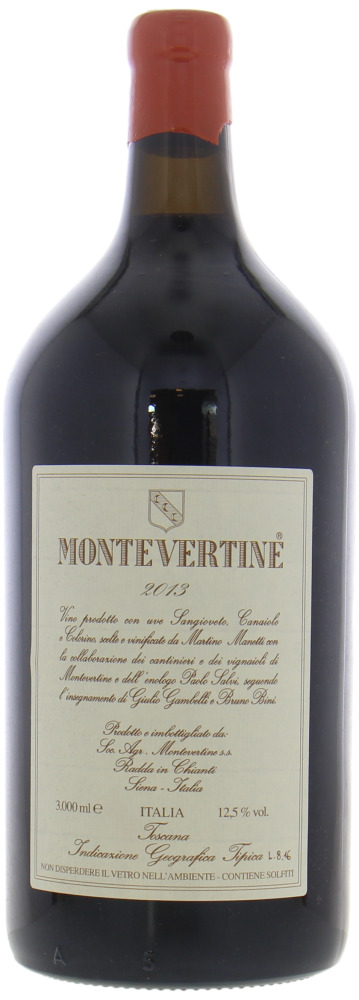

| ex Vat | € 289,00 |
| in Vat | € 349,69 |
| Volume | Double Magnum |
| Classification | Cru Classe |
| Type | Red |
| Producer | Montevertine |
| Vintage | 2013 |
| Country | Italy |
| Region | Tuscany |
| Grape | Sangiovese |
| Volume | 3,0 |
| Condition | Perfect, In single OWC |
| Label | Perfect |
| Drinkable | -2036 |
| Stock | 1 |
The 2013 growing season for Radda in Chianti was cool and slow. Late budbreak, a long summer without the heat of 2012 and a harvest that lasted until October. For sangiovese-dominated wines at 425 meters above sea level, this is almost perfect. The Montevertine Toscana 2013 is exactly what you would expect. Bright acidity, fine-grained tannins and the kind of flavor that a cool vintage brings to Radda fruit.
Adopting a soft and intricate approach, the 2013 Montevertine is like an Impressionist's painting executed with pastel colors and bright patches of luminosity. The wine is subtle and undertone, yet the power of the narrative is not lost. It speaks of the purity of Sangiovese with impeccable aromas of wild cherry and white cherry that are followed by pressed rose and dried violets. The mouthfeel is silky and polished. The slightly cooler vintage, the long growing season and slow ripening have all contributed to create this truly authentic taste of Sangiovese.
Extremely perfumed with a wealth of plum and floral character. Full body, extremely fine tannins and plenty of fruit yet an austerity and beauty that pulls you in. So beautiful now, but drink this when you want. A beauty for ageing.
First and foremost, the nose is impressive. Sour cherry, dried rose petals, tobacco leaf and orange zest. A classic Sangiovese from Radda, made in the cool season of 2013. On the palate, the 2013 Montevertine Toscana is medium-bodied, with mineral firmness from the Gallestro soil. The tannins are firm but refined, the acidity is high, and the finish is long and savory, with notes of iron and dried herbs. Delicious to drink now, but not to be rushed.
The blend is approximately:
So why not 100% Sangiovese, as in Le Pergole Torte? Because the Canaiolo softens the sharp edges of the Sangiovese and adds roundness, while the Colorino darkens the color and adds more intense fruitiness. This is a historic Chianti recipe, minus the white grapes that used to be mandatory.
Drink from now until about 2036; the 2013 has enough acidity and tannins to age well, and well-preserved bottles are best stored at 12-14°C. Over time, red fruit aromas will give way to dried cherry and leather, and iron notes will become more pronounced.
Most producers aim for the Chianti Classico label. Montevertine has given that up. Why: In 1981, Sergio Manetti refused to add white grapes to his red wines (a requirement for Chianti Classico at the time) and withdrew from the consortium entirely. Since then, his wines have been labeled IGT Tuscany and produced on lands in the heart of the Chianti Classico zone. His son Martino now runs the 18-hectare estate, which has been certified organic since 2009.
Radda is the highest and northernmost of the three historic Chianti Classico communes. Montevertine is 425 meters above sea level and is a mixture of galestro (slate marl) and alberese (limestone) with clay underneath. What happens in the glass? Freshness. The high altitude provides cool nights even in hot summers and preserves acidity and flavors. Galestro gives elegance and flavor, while Alberese gives structure. This is why wines from this region are finer and more mineral than Sangiovese from Castelnuovo Berardenga, further south.
In Montevertine, almost nothing has changed since the 1970s. Fermentation takes place in the estate's old cellars in the traditional way. The wine is then aged for two years in large Slavonian oak botti (large neutral barrels), but never in small barriques. Why is this important? Because in barriques, Sangiovese takes on notes of vanilla and toast that drown out the fruit flavors. Botti allows the wine to breathe and develop without an oaky flavor. You taste fruit, soil and time.
High acidity and firm tannins make you want fat and salt. The Tuscan tradition knows the answer:
Served at 16-18°C; bottles less than 10 years old should be decanted one hour before serving.
With track & trace code