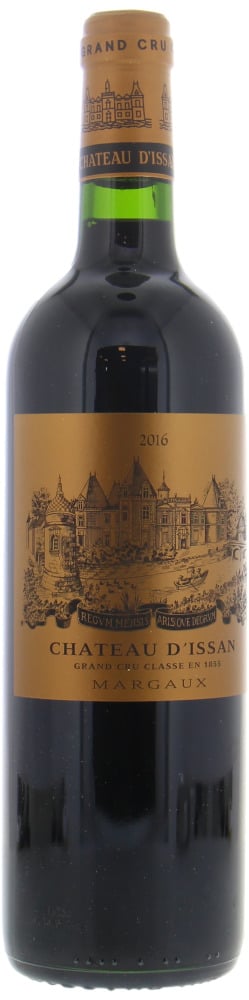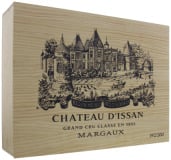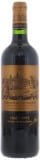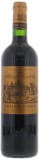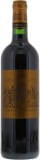

| Classification | Cru Classe |
| Type | Red |
| Producer | Chateau D'Issan |
| Vintage | 2016 |
| Country | France |
| Main region | Bordeaux |
| Region | Margaux |
| Grape | Cabernet Sauvignon, Merlot, Bordeaux Blend |
| Volume | 0,75 |
| Condition | Perfect |
| Label | Perfect |
| Drinkable | 2028-2042 |
| Stock | 4 |
In 2016, Margaux experienced a drought throughout the summer, but rains came just in time in September, relieving stress on the Cabernet Sauvignon vines. The harvest began slightly later than usual and proceeded at a leisurely pace. For Château d'Issan, located on the gravelly soils of Cantenac, near Château Palmer and Château Margaux, this resulted in thick skins, deep color, and ripe tannins without heaviness. The 2016 vintage embodies the classic Margaux style: with vibrant aromas at the forefront and a robust structure at its core. Reviews are available from Robert Parker, James Suckling, and Falstaff.
The 2016 D'Issan is blended of 64% Cabernet Sauvignon and 36% Merlot, aged in 50% new and 50% one-year-old French oak for 18 months. Medium to deep garnet-purple colored, it has vibrant black cherries and blackcurrants notes with chocolate mint, beef drippings, black olives and cigar box. Medium-bodied with a well-sustained, intensely flavored mid-palate, it has a rock-solid, grainy frame and long savory finish. 10,500 cases produced.
Aromas of chocolate and aromatic herbs. Medium-bodied, very balanced and accessible, with precise tannins and ethereal fruit. Approachable now, with the tannins tightening gently in the finish. Wonderful balance.
Dark garnet with an opaque core and a discreet bright rim. There are fine roasted aromas, ripe plums, a hint of Parma Violets and fresh orange zest on the attractive bouquet. Juicy and elegant with nougat and fine, integrated tannins on the palate, the wine is long, fresh and persistent, classic Margaux with a hint of caramel on the finish.
Aromas of black currant and dark cherry unfold first, followed by notes of violet, graphite, and a subtle hint of cedar from the oak barrels. On the palate, the wine is medium-full-bodied, with the silky texture characteristic of Margaux that you’d expect from d'Issan, though compared to the softer 2016 vintages, it has a firmer structure. The tannins are fine, and the aftertaste is long. The finish offers umami, minerality, and subtle hints of iron. The wine can be enjoyed now, but its entire structure suggests that it should be aged further This is truly a majestic wine from d'Issan.
In the 2016 vintage, Cabernet Sauvignon accounts for 64%, with Merlot making up the remainder. The Cabernet brings aromas of black currant and cedar, as well as forming a tannic framework that will support this wine for several decades. The Merlot adds roundness to the mid-palate and softens the sharp edges. On the deep gravel soils that lie over the clay layer of d'Issan, Cabernet ripens slowly and fully. This is precisely why the blend’s varietal ratio turned out this way.
The wine will be ready to drink around 2026, but we recommend aging it until at least 2028. It will reach its peak around 2030–2045, though the finest bottles will continue to age beyond that. The tannin density and acidity of this vintage are ideal for long-term aging. Store horizontally at a temperature of 12–14 °C. As the wine matures in the bottle, aromas of tobacco, leather, and truffles will develop.
Wine has been produced at d'Issan since the Middle Ages, and the current château, surrounded by a moat, was built in the 17th century. The walled "Clos" vineyard was completed in 1644. However, d'Issan's modern history truly began in 1945, when the Cruz family acquired the neglected estate and replanted the vineyards. In 1998, management passed to Emmanuel Cruz, who achieved a significant improvement in quality, and in 2012, the Lorenzetti family joined the business as co-owners. We offer d’Issan wines because, despite their third-growth-level pricing, they always deliver the aromas of Margaux.
The vineyards are located on a gravelly hill in the very heart of the Margaux AOC, between Château Palmer and Château Margaux. The croupe (a gravelly rise) is well-drained and warms up quickly, forcing the vines to send their roots deep into the underlying clay layer in search of moisture. This is precisely where the wine’s richness comes from. The mouth of the Gironde River moderates temperature fluctuations, and since this estate is located almost exactly on the 45th parallel north, it enjoys long, warm summers and mild winters. For the Cabernet Sauvignon variety, these are, in essence, the typical conditions of the Left Bank.
The hand-harvested grapes undergo a two-stage sorting process (first by hand, then on a vibrating sorting table) and flow by gravity into stainless steel tanks, separated by vineyard plot. Fermentation and maceration last between 18 and 24 days. The blend is determined in January and February in consultation with consultant Éric Boissenot, after which the wine is aged in French oak barriques (225-liter Bordeaux barrels) for 16–18 months. About half of the barrels are new. This proportion of new barrels is sufficient to impart structure and spicy notes to the wine without detracting from the floral nuances characteristic of Margaux. Each year, the chateau ships approximately 100,000 bottles of grand vin.
Tannins require proteins and fats. Examples of successful pairings:
Serve at 16–18 °C. Young vintages, such as the 2022, should be decanted for at least an hour before serving to allow them to breathe.
With track & trace code