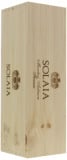
| ex Vat | € 309,00 |
| in Vat | € 373,89 |
| Volume | 0,75l |
| ex Vat | € 359,00 |
| in Vat | € 434,39 |
| Volume | Magnum |
| Classification | Cru Classe |
| Type | Red |
| Producer | Antinori |
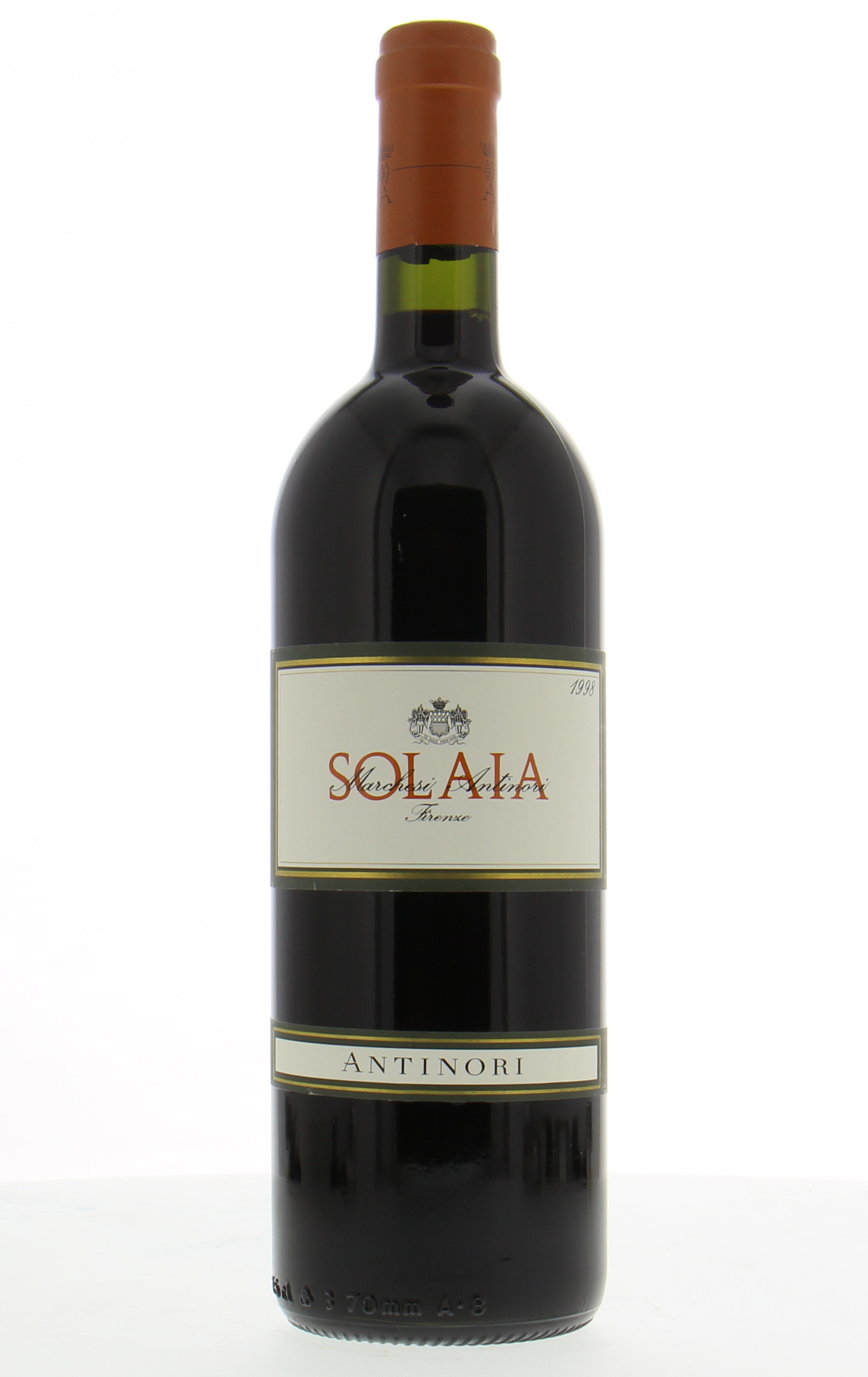
| Wine | Solaia |
| Vintage | 1998 |
| Country | Italy |
| Region | Tuscany |
| Grape | Cabernet Sauvignon, Sangiovese |
| Volume | 0,75 |
| Condition | Perfect |
| Label | Perfect |
| Drinkable | -2020 |
| Stock | 0 |
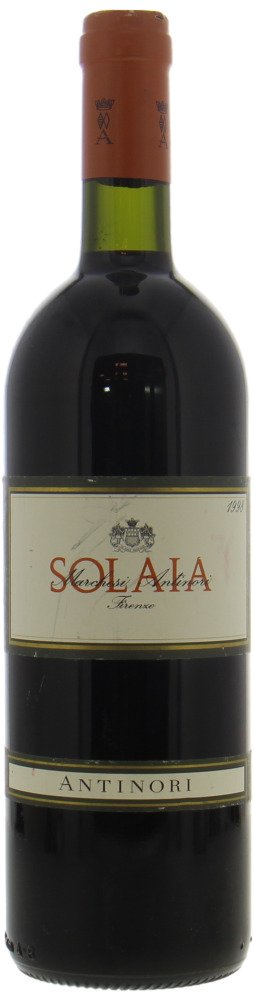
| Volume | 0,75 |
| Label | Slightly damaged |
| Stock | 1 |
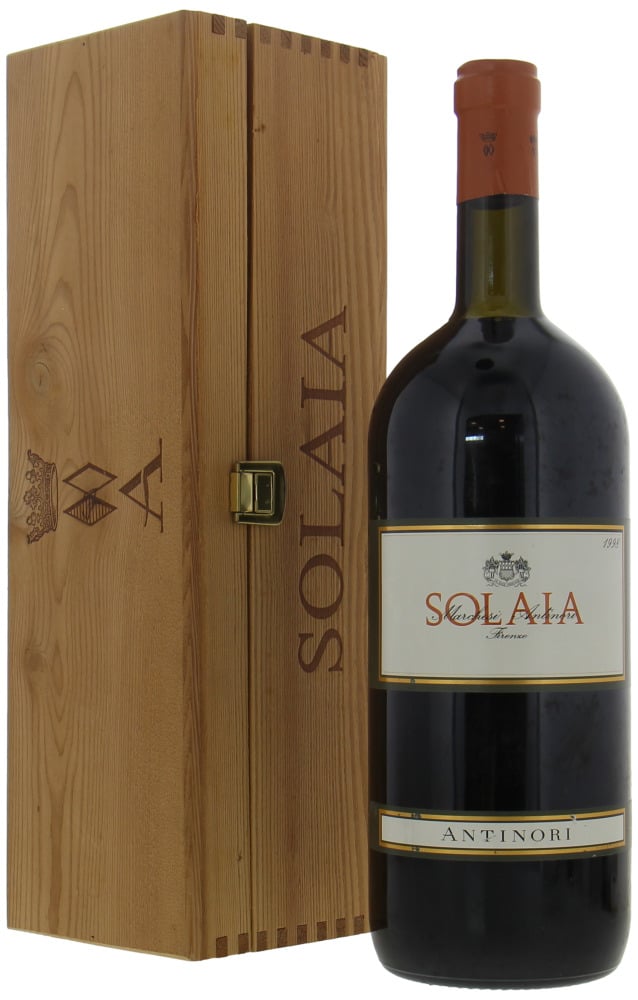
| Volume | 1,5 |
| Condition | From Original Wooden Case |
| Label | Perfect |
| Drinkable | -2020 |
| Stock | 0 |
The 1998 growing season in Tuscany was characterized by a hot and dry summer, little rain in early September and warm weather until just before harvest. In other words, favorable conditions for Cabernet. Antinori's Solaia 1998 is a Cabernet-driven wine, so this vintage played to its strengths. Sangiovese proved to be a challenging variety this year, but in this blend above Chianti Classico level, the Bordeaux varieties win out in terms of ripeness and density.
Solaia has been one of Italy's most brilliant wines since the early eighties. Made in a Bordeaux-like style, it will age for two decades or more. The 1998, a blend of 75% Cabernet Sauvignon, 20% Sangiovese, and 5% Cabernet Franc (8,000 cases), was aged for 14 months in new and one-year old French oak casks prior to being bottled without filtration. Yields were a low 30 hectoliters per hectare. The 1998 is a classically-structured, dense, full-bodied, youthful, well-balanced wine designed for cellaring. Its opaque ruby/purple color is accompanied by a classic bouquet of black currants, vanillin, earth, tobacco, and a touch of mint.
Rich aromas of smoke, sage and ripe fruit follow to a full-bodied palate, with big, velvety, chewy tannins and a long, mouthpuckering finish. This needs time. Cabernet Sauvignon, Cabernet Franc and Sangiovese.
The first impression is dark and brooding. Notes of black currant, graphite and new cedar. Underneath, the Sangiovese surges forward with sour cherry and leathery, tobacco spice, giving the Cabernet integrity. The palate is firm, with fine tannins, reflecting the warm 1998 Tuscan vintage. The finish is long, focusing more on structure than fruit. Decant.
The 1998 blend is as follows:
Why this blend and not just Cabernet? Because it is the Sangiovese that tells us this wine is from Chianti Classico and not Bolgheri. The Sangiovese provides solid support to the Cabernet backbone of Solaia.
Solaia 1998 is in the aging stage. It will be drinkable from now until about 2030. The tannins have softened, the fruit notes have moved on to dried cherry and tobacco, and the cedar notes that emerged after 18 months of aging in barriques (small French oak barrels) are fully integrated. Store at 12-14°C. The day before serving, place the bottle in an upright position.
The Antinori family has been making wine since 1385, but a very recent development is important here: in the 1970s Piero Antinori broke Chianti norms and released Tignanello (1971), a Cabernet blend, and Solaia (1978), a Cabernet-dominated wine. The first two wines were released in 1971 and 1978 respectively. Both became "Super Tuscany." And both helped redefine Italian wine. Today, with Renzo Cotarella as head winemaker and Piero's daughter Albiera as president, Antinori is still making wine their way. We believe this is why their wines continue to be benchmarks.
The Solaia vineyard is located next to the Tenuta Tignanello winery in Mercatale Val di Pesa, in the Chianti Classico zone. The vineyard's name means "sunny" and its southwestern exposure at 350-400 meters above sea level explains why. The soils are alberese (calcareous marl) and galestro (schistose loose clay). Why it matters. Limestone gives Cabernet Sauvignon the structure and freshness needed for warmer climates, and the higher altitude means cooler nights. Greater diurnal variation, slower ripening and aromatic complexity. That's the formula.
Solaia is aged in French oak barriques (small 225-liter barrels from Bordeaux) for about 18 months. Fermentation is first carried out in stainless steel to preserve the purity of the fruit and allow Antinori to precisely control the extraction. The wine is then transferred to barrels where new oak adds cedar and vanilla without reducing the acidity of the Sangiovese. After bottling, the wine is aged for another year before release. This is why Solaia is not raw but refined at release.
Cabernet tannins call for fat and char. Bistecca alla Fiorentina (Tuscan chianina beef bone-in) is the obvious answer and very tasty. But there's more to it than that:
Serve at 17-18°C. Decant at least 2 hours before serving.
With track & trace code