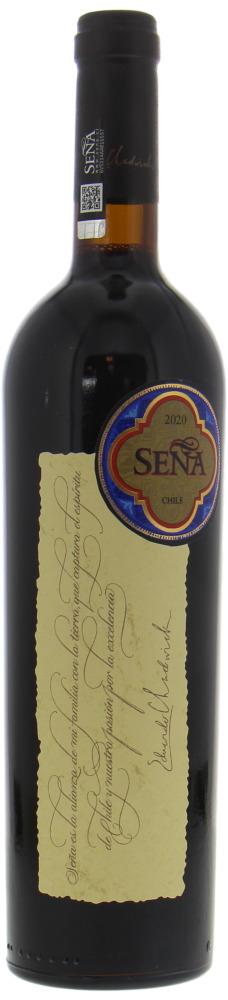
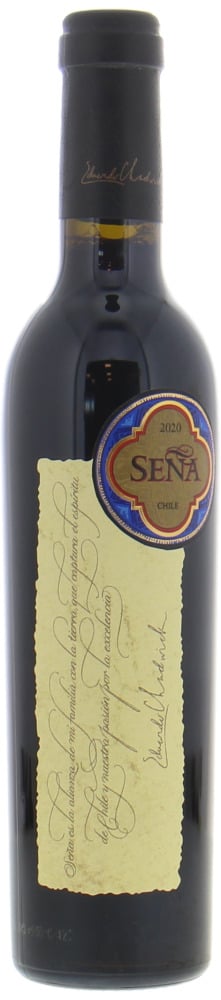
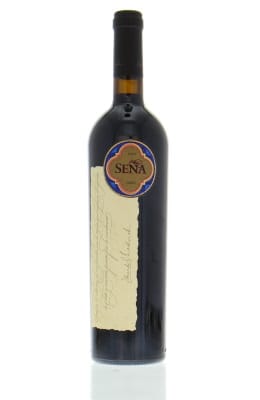
Le Seña 2020 est un assemblage rouge de style bordelais produit dans la région de la vallée de l'Aconcagua, au Chili ; il a été élaboré par Viña Seña, sur les collines surplombant Ocoa. La saison de croissance 2020 au Chili a été marquée par une chaleur extrême et une sécheresse ; en réponse, l'équipe de vinification a procédé à une récolte précoce au cours de la deuxième semaine de mars, soit une semaine plus tôt qu'en 2019. De plus, la proportion de Malbec a été augmentée afin de préserver l'acidité et le dynamisme des arômes. Cette stratégie s'est avérée payante, aboutissant à un taux d'alcool de 13,5 %, un niveau modéré, faible par rapport aux normes de la vallée pour une année chaude.
La fermentation s'est déroulée principalement dans des cuves en acier inoxydable, 10 % du vin ayant fermenté dans des œufs en béton. Le vin a ensuite été élevé en fûts pendant 22 mois, dont 90 % en fûts de chêne français (dont 78 % neufs) et 10 % dans de grands foudres de 2 500 litres. Un foudre est un grand fût qui enrichit la texture du vin sans lui conférer d'arômes de chêne prononcés. Le vin a été mis en bouteille en février 2022, avec une production d'environ 100 000 bouteilles.
Francisco Baettig, qui a défini le style de Seña au cours des deux dernières décennies, a occupé ici le poste de maître de chai. Les raisins ont été cultivés selon les principes de l'agriculture biodynamique, comme c'est le cas dans ce domaine depuis 2005.
Robert Parker (97)
The 2020 Seña is a blend of 53% Cabernet Sauvignon, 25% Malbec, 15% Carmenere and 7% Petit Verdot (a little higher in search of acidity) from grapes harvested early, the second week of March, and fermented mostly in stainless steel and 10% in concrete eggs. It has a moderate 13.5% alcohol and good freshness. It's subtle and layered, not only fruit but with more spice; it has polished tannins and very integrated oak after 22 months in barrique, 78% new, and with 10% of the volume in large Stockinger barrels. The warmer years seem to be nicely managed, so that it's not reflected in the ripeness but is more a matter of texture and quality of the tannins; in the warmer years, like 2017 or this 2019, the wines have a little more grip, but these are definitely finer than those from the 2017 vintage. This wine has intensity and complexity, with no mintiness or herbal notes; it's spicy and juicy, with energy and depth. It has structure, color, stuffing and acidity to develop nicely in bottle. 100,000 bottles produced. It was bottled in February 2022.
James Suckling (98)
Complex, with savory, spicy character, showing tobacco, salted plums, olives, black cherries, cassis and a hint of white pepper on the nose, followed by a refined, savory, balsamic accent. A full-bodied Seña with juicy fruit chiseling into the tight, extremely fine-grained tannins. Long, bright and still elegant from this warm vintage. 53% cabernet sauvignon, 25% malbec, 15% carmenere and 7% petit verdot. and stone. Chewy and fine-grained. A wine with soul and length. From biodynamically grown grapes.
Jancis Robinson (16.5)
53% Cabernet Sauvignon, 25% Malbec, 15% Carmenère, 7% Petit Verdot.
Pure plum and cherry fruit on the nose. Seña now has real polish and refinement having mastered the ripeness of fruit to avoid herbaceous and green notes in the wine. Ripe and fine tannins melt into medium-bodied red and black fruit, which has a real zing and freshness. Sweet spices bolster the fruit and bring a more seductive profile to the wine, though it remains modest and compact throughout, with a long, clean finish.
BOW (9-)
Falstaff (97)
Brilliant dark ruby with purple reflections, subtly lighter at the rim. Fine noble oak notes, black fruits of the forest, subtle cassis, delicate savoury aromas, some nougat and tobacco. The wine is inviting, with a multi-faceted young bouquet and ripe plum in the background. Juicy and elegant, ripe sweet cherry, round, supporting tannins, good freshness, mineral and lively with nuances of red fruits on the finish. The wine has a very good length, is already harmonious, and has good ageing potential.