
Dom Perignon
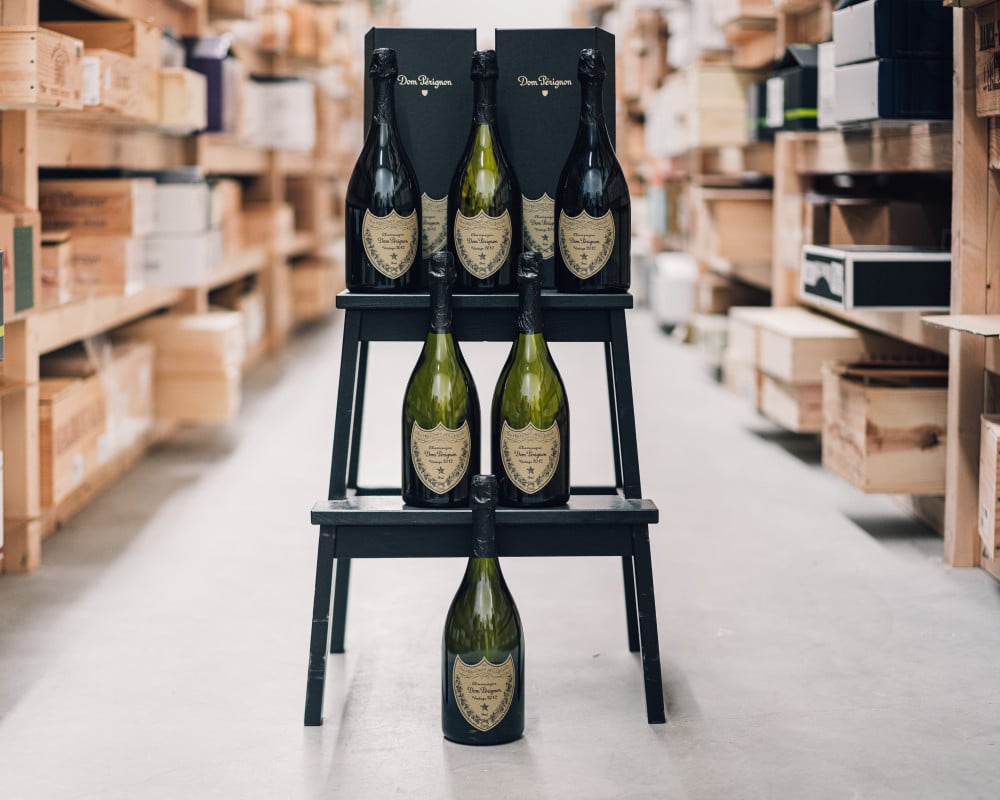
Dom Pérignon is one of the most famous champagne brands. It appears on bottles uncorked at celebrations across the globe, has become synonymous with luxury, and embodies a history stretching back more than three centuries. But behind all this glamour lies a house with a clear and unwavering philosophy: to produce champagne only in years when the harvest is good enough.
History
It all started with the Benedictine monk Pierre Perignon (1638-1715) who was the cellar master at the Abbey of Hautvillers, near Épernay. It is often said that he invented sparkling wine, but this is not true. His actual task was rather the opposite: to find a way to stop the second fermentation in the bottle, as too much stock was being lost due to exploding bottles. His contribution lay in genuine breakthroughs: he ordered stronger bottles from England, pruned the vines to reduce yields and improve concentration, and handled the grapes with care to prevent the juice from being exposed to air. He was also a pioneer in the use of cork stoppers, which helped prevent spoilage and allowed the wines to mature.
The modern brand emerged much later. The first commercial vintage of Dom Pérignon was produced in 1921, went on sale only in 1936, and was shipped to New York on the liner ‘Normandy’. In 1937, Moët & Chandon acquired the rights to use this brand for its prestigious cuvée. Today, Dom Pérignon is part of the LVMH empire.
Vineyards
The Dom Pérignon vineyards are situated in the most prestigious areas of Champagne, mainly around Haut-Villiers, but also in Grand Cru vineyards, including Ay, Bouzy, Verzenay and Avize. Over time, successive chefs de cave have identified a core terroir of around 200 hectares comprising the finest vineyards.
Terroir
The vineyards are situated on chalky limestone soils typical of the Champagne region, which impart mineral notes to the grapes and contribute to the aromatic complexity of the finished wines. The combination of the cool northern climate and these chalk-rich soils gives the champagne its characteristic freshness and structure, without which the long ageing required by Dom Pérignon would be impossible.
Grape varieties
Dom Pérignon uses only Chardonnay and Pinot Noir, so without Pinot Meunier, unlike many other Champagne producers. The blend typically consists of the two varieties in a ratio of approximately 50/50, although depending on the vintage, this ratio may vary to 60/40 or 40/60. Chardonnay brings freshness and clarity; Pinot Noir adds body and depth.
Winemaking
Dom Pérignon is always a vintage champagne: every grape in the bottle comes from a single harvest. If the year is not good enough, no wine is produced. The wine is aged in the cellar for at least eight years before release. The process involves two fermentations: the first turns the must into still wine, the second takes place in the bottle and creates the bubbles. The wines are then aged on the lees, in contact with spent yeast, which gives them roundness and aromatic complexity.
Wines
Dom Perignon used to have late releases of their vintage Champagnes called oenothèque. Since 2014, the term is no longer used, instead, they use the word "Plenitude": releases in three stages of maturation, known as Plénitudes. The first (P1) appears after approximately eight to nine years on the lees. The second (P2) follows after fifteen to twenty years, and the third (P3) after thirty years or more, in very small quantities.
The domaine also produces a rosé wine made from grapes grown in specific plots stretching from O-Viller through Cumières to Aÿ. Each vintage bears the character of its own year, the domaine does not blend vintages or smooth out differences. In Dom Perignon's view, it is not the wine itself that changes, but how it has evolved over time.
The best vintages
As there are quite some different Dom Perignon releases (the 'normal' release, the P2, the P3 and the former Oenotheque, the rose) it's quite difficult to name a complete list.
However the following vintages, amongst others, can described as legendary: 1961, 1969, 1971, 1990, 1996, 2002, 2008,