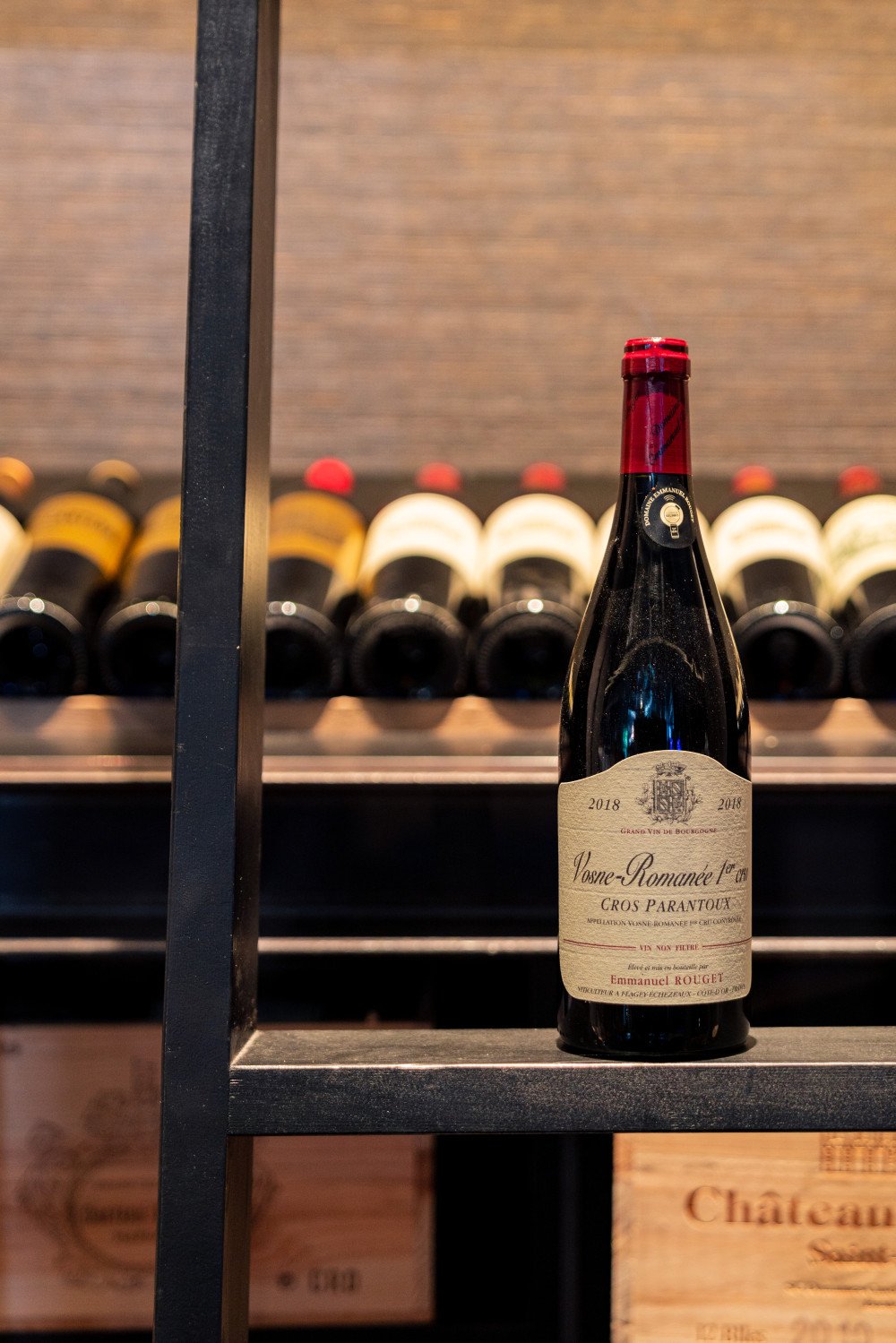

Emmanuel Rouget
The Domaine Emmanuel Rouget winery, located in the village of Flagey-Échezeaux in the Côte de Nuits region, is one of the most sought-after winemakers in Burgundy. The estate is small, the wines are produced in tiny quantities, and prices have reached sky-high levels, because of the quality of the wines, the small availability and the famous family connection: Emmanuel Rouget is the nephew of the late Henri Jayer, a man whom many consider to be one of the most influential winemakers in Burgundy of the 20th century.
History
Emmanuel Rouget began his career as a tractor mechanic. In 1976, his uncle Henri Jayer took him on at the family estate, and Emmanuel learnt the trade directly from him. By 1985, he was already producing wine under his own label as Henri’s protégé. T
he rules of the French pension system forced Jayer to officially retire in 1996 and hand over his vineyards to Emmanuel, although he continued to advise his nephew and, until 2002, was involved in the production of around half of the wines under the Rouget label.
Since 2011, management has gradually been passing to Emmanuel’s two sons, Nicolas and Guillaume: Nicolas manages the vineyards, whilst Guillaume manages the cellar.
Vineyards
The estate is small and concentrated on a few prime plots along the border between Vosne-Romanée and Flagey-Échezeaux. The jewel in the collection is the Vosne-Romanée 1er Cru Cros Parantoux, where Rouget cultivates 0.72 hectares of the vineyard’s total 1.01 hectares, with the remainder belonging to Domaine Méo-Camuzet. Cros Parantoux is situated just above the Grand Cru Richebourg and is known to have been cleared from a former artichoke field by Henri Jayer himself in the 1950s.
Other holdings include Echézeaux Grand Cru (1.4 hectares across three vineyard plots, partly former vineyards of Lucien Jayer and Georges Jayer), Vosne-Romanée 1er Cru Les Beaumonts (0.26 ha), plots in the village of Vosne-Romanée (around 1.20 ha), Nuits-Saint-Georges Aux Lavières (0.33 ha), as well as small plots in Côtes de Nuits-Villages and Savigny-lès-Beaune.
Terroir
Here, the Côte de Nuits is situated on east-facing limestone and clay slopes. Cro-Parantoux is a special place: it lies higher than the neighbouring plots, with finer, very stony clay on a hard limestone base. The altitude and slightly cooler exposure mean that the grapes ripen a little more slowly and retain their natural acidity, which is one of the reasons why the wine ages so well. Échezeaux is more varied, with deeper soils and a softer style.
Grapes
Pinot Noir is the only variety of significance here. The entire range is red.
Winemaking
The approach has remained virtually unchanged since Jayer’s time. Cultivation is carried out without pesticides or herbicides, relying mainly on organic methods. Yields are very low. The grapes are completely destemmed, as Jayer always insisted, and then undergo cold maceration before fermentation in concrete vats.
Fermentation takes place with natural yeasts. Ageing occurs in oak barrels with a high proportion of new wood (often around 100 per cent for the finest wines) from the coopers Taransaud and François Frères, for approximately 20 months or more before bottling. The wines are unfiltered.
Wines
The range starts with Bourgogne, Côtes de Nuits-Villages and Savigny-lès-Beaune, which are already hard to find.
The single-village wines include Vosne-Romanée and Nuits-Saint-Georges Aux Lavières. Above these stand two Premiers Crus from Vosne-Romanée: Les Beaumonts and the legendary Cros Parantoux, of which only around 3,000–3,500 bottles are produced annually.At the very top is Echézeaux Grand Cru.
The overall style of the wines is silky and aromatic, with intense notes of red fruit, real depth and a long mineral finish. The wines age beautifully and are among the most sought-after and expensive Pinot Noirs in the world.
The best vintages
Top vintages for this domaine are: 1990, 1993, 2002, 2005, 2009, 2010, 2012, 2014, 2016 and 2018.
Regions
Countries
Other wine producers