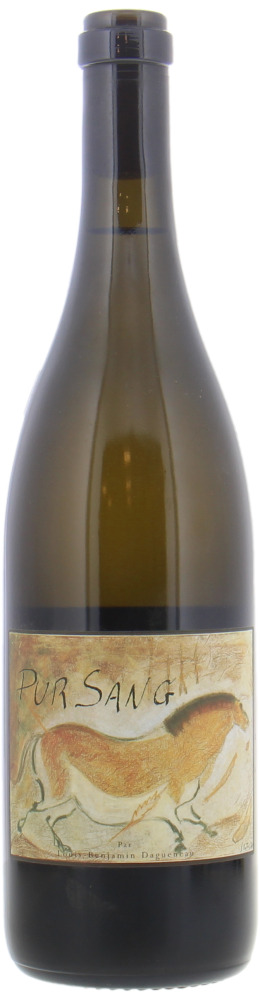

| Classification | Cru Classe |
| Type | White |
| Producer | Didier Dagueneau |
| Vintage | 2020 |
| Country | France |
| Region | Loire |
| Appellation | Pouilly-Fume |
| Grape | Sauvignon Blanc |
| Volume | 0,75 |
| Condition | Perfect |
| Label | Perfect |
| Stock | 4 |
The 2020 harvest in the Loire began with an unusually dry winter, followed by a warm and early spring that encouraged budbreak earlier than planned. For Didier Dagueneau's 2020 Pouilly Fumé Pur Sang, this meant highly concentrated wines from the deep clay-limestone soils of the La Folie vineyard. Louis-Benjamin Dagueneau called 2020 "precise." The vines are stressed for flavor concentration, and the clay soils retain enough moisture to prevent shutting down during the hot summer months.
A restrained and minerally wine with flint, tuberose and mint aromas, plus multilayered citrus fruit and pistachio toastiness. Full-bodied with weight and an elegant, silky texture. Slightly toasty and a bit buttery, with a super-polished and woven finish that’s incredibly savory. From biodynamically grown grapes. Still youthful due to the oak, yet ready to drink.
Forget aromatic Sauvignon, the 2020 Pur Sang is clear, pure and restrained. An evident nutty note to this is likely derived from the 20-25% new oak employed for all the Dagueneau cuvées. The oak combines with ripe, white stone fruit and almond meal, which lingers on the taut, grippy finish, and reveals that this wine is still in its infancy.
100% Sauvignon Blanc. This is exactly how Dagueneau approaches the creation of this cuvée. This is where Pur Sang differs from other Loire sauvignons. The grapes come from the La Folie vineyard, where deep clay soils mixed with limestone give it a very different expression than the silex (flint) vineyards for which Pouilly-Fumé is famous. The clay retains moisture and the vines experience less stress in hot years such as 2020. This results in riper fruit and higher textural weight.
Yellow citrus and wet stones are immediately apparent on the nose, but the wine is more rounded than you'd expect from a typical Pouilly-Fumé. La Folie's clay soils show up in the texture of the wine, giving it weight and presence on the palate, which is not the case with purely silex soils. Lime zest mingles with a subtle smokiness, but not flinty like a silex, but more like cold ash. The finish feels the tension between richness and acidity characteristic of the Loire: aged five years, this wine is delicious now, but its structure suggests it will last another ten years. To fully appreciate the complexity of flavor, drink at around 10-12°C.
Didier Dagueneau spent 25 years turning Pouilly-Fumé upside down and applying the Burgundian technique to Sauvignon Blanc. After he died in a plane crash in 2008, his son Louis-Benjamin took over the farm at age 26. And the results speak for themselves. Louis-Benjamin inherited his father's uncompromising approach: yields 50-75% lower than neighboring estates, multiple hand-picking and oak fermentation of his controversial Sauvignon Blanc In 2018, he reclassified the estate's wines as Vin de France, another provocative move, abandoning the appellation system altogether. This estate is integral to understanding what Sauvignon Blanc can achieve.
La Folie sits on deep clay soils mixed with limestone, not at all like the famous silex flint soils responsible for Pouilly-Fumé's smoky reputation. Why it matters. In the Loire's continental climate, the clay soils retain moisture even during dry periods, so the vines don't close up during the summer heat. This gives the wines a richer texture and less pungent minerality than with pure flint. The diversity of soil types in Saint-Andelain is also why Dagueneau treats each plot as a stand-alone wine, rather than blending raw materials. The Loire River moderates the region's temperature and creates a morning mist that extends the ripening period.
The mineral backbone and bright acidity of this wine make it an ideal pairing for Loire river fish - pike, perch (simply grilled with herbs). But the classic combination is the following: local goat cheese, Crottin de Chavignol. The texture of the wine matches the creaminess of the cheese, and the acidity cuts through the fat. The wine's subtle smoky flavor matches the brine. If you want to cook something more authentic, try baked chicken with tarragon or asparagus with hollandaise sauce. The key is to make a dish that won't lose out to the elegant mineral backbone of the wine. Chill to 10-12°C to preserve freshness, or serve at room temperature to open up the flavors.
Dagueneau was a pioneer in fermenting Sauvignon Blanc in oak barrels on the Loire. However, there is a fundamental difference here. They use barrels for texture and leach contact, not for flavor. Only wild yeast is used, with no acidification or added sugar. Fermentation takes place in different sized barrels, including the distinctive cigar-shaped 320-liter barrels and larger 600-liter foudres (large wooden vats). The wine is aged on the lees for 12 months without stirring, which gives it an immediately recognizable creamy texture. It is then aged in tanks for several months before bottling to allow all the components to integrate. Louis-Benjamin continues to experiment with packaging, such as ceramic or glass, but the basic philosophy remains the same.
You can drink it now, but it will be even better in 2028-2035. The structure of this wine, a balance of acidity and texture thanks to lees aging, gives it serious longevity; store in the dark at 12-15°C. With time, the citrus notes develop into more complex stone fruit characters and the subtle smokiness becomes more integrated. The clay-limestone terroir provides enough richness for long aging, unlike Loire Sauvignon, which peaks early and fades.
With track & trace code