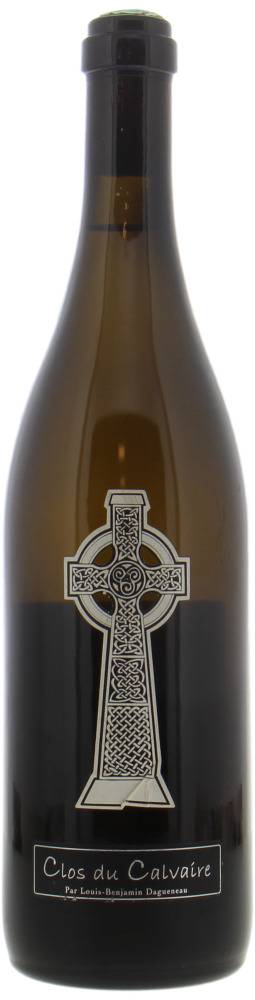

| Classification | Cru Classe |
| Type | White |
| Producer | Didier Dagueneau |
| Vintage | 2008 |
| Country | France |
| Region | Loire |
| Appellation | Pouilly-Fume |
| Grape | Sauvignon Blanc |
| Volume | 0,75 |
| Condition | Perfect |
| Label | Perfect |
| Stock | 1 |
The 2008 growing season in the Loire was cool and harvest late, ideal conditions for Pouilly-Fumé Sauvignon Blanc. For Didier Dagueneau's Clos de Calvaire vineyard, this meant more aging time on silex soils, allowing the mineral intensity characteristic of this single vineyard to be concentrated. Sadly, 2008 was also the end of a tragic winemaking journey due to Didier's plane crash. Charlotte and Benjamin Dagueneau took over the domaine, and Clos de Calvaire 2008 was both a tribute to their father's legacy and the special character of the vineyard. The result is a wine that captures the essence of flint-based Pouilly-Fumé with remarkable precision.
100% Sauvignon Blanc
So why does Dagueneau stick to one variety when most Loire producers use blends? The answer lies in the Clos de Calvaire vineyard itself. This steep limestone slope demands everything from the Sauvignon Blanc, and in return it gives it the characteristic tingling nuances that make Pouilly-Fumé famous. The natural acidity of the grapes is enhanced by the terroir, producing wines of outstanding mineral precision. 2008's cool conditions made this Sauvignon Blanc more restrained than usual, emphasizing the varietal's ability to express place rather than fruit.
Typical flint minerality, smoky aromas typical of silex soils. White peach and citrus zest follow, but flint dominates throughout. On the palate, beautiful precision and surprising intensity. The texture is balanced by citrus acidity and subtle richness from lees contact. The finish feels wet stones and a light note of white pepper. The 13-year-old Clos de Calvaire 2008 is ready to drink and shows the complexity that comes from proper aging, while retaining the freshness that characterizes Pouilly-Fumé.
Didier Dagueneau revolutionized Pouilly-Fumé winemaking when he bought his first vineyard in Saint-Andelain in 1982. But what changed him? While other winemakers used only stainless steel, Didier experimented with 620-liter oak barrels. His yields were extreme, in some years reaching as low as 15 hectoliters per hectare, and when Didier died in 2008, many wondered if the magic would continue. Charlotte and Benjamin have proven that it's not just about the vineyards they inherited. Best of Wines believes that since 2008, the Dagueneau wines have retained the same power and precision that made their father a legend. The family's 12-hectare vineyard remains one of the most sought-after sources of Pouilly-Fumé.
The Clos de Calvaire vineyard is situated on the famous soil of Pouilly-Fumé, namely limestone mixed with flint, which gives the wine its characteristic smoky character. The steep slopes allow for good drainage, which is essential during a rainy harvest season such as 2008. The clay component retains enough moisture to prevent grape stress, and flint fragments reflect heat back to the grape bunches during ripening. This soil composition is unique to Pouilly-sur-Loire and is also the reason why the Sauvignon Blanc grown here tastes so different from samples from elsewhere. The terroir literally forms the mineral foundation of the wine.
Mineral richness requires seafood from salty sources. Starting with oysters (Belon or Marenne Oleron), the wine's flinty notes respond to the brine. To grilled sea bass, the delicate flesh of the fish will allow the minerality of Clos de Calvaire to emerge in full force. For cheese, there is nothing better than Crottin de Chavignol, a local goat cheese that seems to have been created specifically for Pouilly-Fumé. The acidity of the wine cuts through the richness of the cheese and the Loire terroir creates a perfect harmony. Serve at 10-12°C. Minerality should take center stage in this wine.
Dagueneau's winemaking approach to Sauvignon Blanc breaks all the rules of simplicity. After hand harvesting, the juice is fermented in a mix of stainless steel barrels and 620 liter oak barrels with 50 mm walls that allow for controlled oxygen exchange without overburdening the fruit. The ratio of stainless steel to oak barrels depends on the nature of the grapes, but the important thing is that this is done during fermentation. This technique, borrowed from Burgundy, gives the wine a creamy texture and adds complexity. While most Sauvignon Blancs are bottled a few months after harvest, Clos de Calvaire is aged for at least one year before release.
You can drink it now if you like, but the 2008 wine will be at its peak around 2012-2015 and will continue to evolve through 2020. The wine's natural acidity and mineral concentration give it a unique aging potential for Sauvignon Blanc. Proper cellar conditions (12-14°C, constant humidity) allow the wine to integrate with the oak component and simultaneously develop tertiary flavors. Over time, fresh citrus aromas give way to more complex mineral and herbal characteristics.
With track & trace code