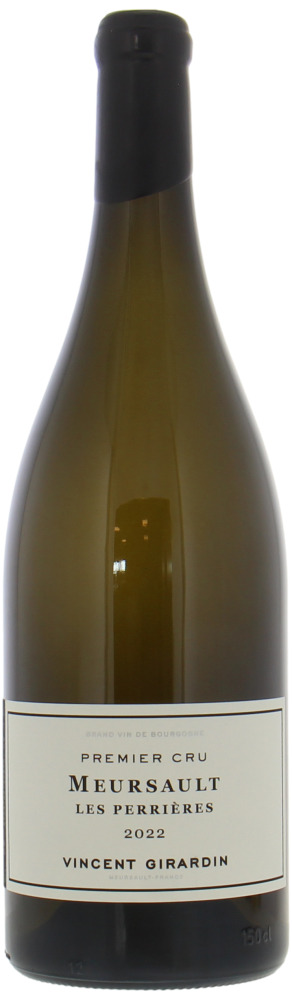
Éric Germain, a winemaker since 2002 and head of the style since Vincent Girardin’s departure in 2012, has not altered his approach in any way: hand-harvesting with double sorting, fermentation with indigenous yeasts, deliberately restrained use of new oak, and prolonged ageing on fine lees.
Best enjoyed between 2028 and 2042, though the finest bottles will retain their qualities for much longer.
Robert Parker (96)
The 2022 Meursault 1er Cru Les Perrières has turned out brilliantly, offering up notes of orange zest, wet stones, white flowers, toasted hazelnuts and nutmeg. Medium- to full-bodied, satiny and seamless, with lovely mid-palate plenitude, it marries ethereal purity with mineral depth to compelling effect, concluding with a sapid, chalky finish.
Vinous (95)
The 2022 Meursault Les Perrières 1er Cru has quite a perfumed, more floral bouquet than its peers, just a patina of oak to be assimilated, which it will. Impressive precision. The palate is very well balanced with a silver thread of acidity. Maybe just a little attenuated on the finish, but I adore the oyster shell tincture that elevates its complexity. Yet another Meursault Perrières that seems to have completely blossomed in bottle. Tasted blind at the annual Burgfest tasting.
Burghound (94)
A suggestion of phenolic character (olive oil nuances) is present on the cool and airy aromas of citrus and a plethora of floral elements. The driving medium weight flavors possess a highly sophisticated texture while delivering excellent length on the stony, bone-dry and lingering finish that, much like the Genevrières, is not especially austere. Textbook.
Jasper Morris (95)
Mid to full lemon yellow. The bouquet here displays a class and a weight of fruit over and above the others. There is impressive depth through the middle of the palate, then a saline note at the back, as the minerality of the vineyard punches through the undoubted flesh. A good long finish.