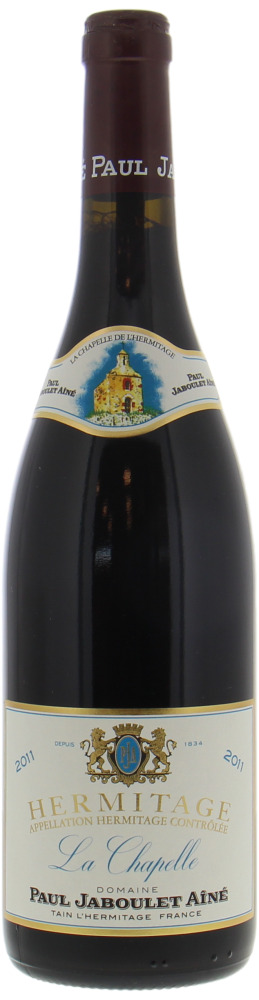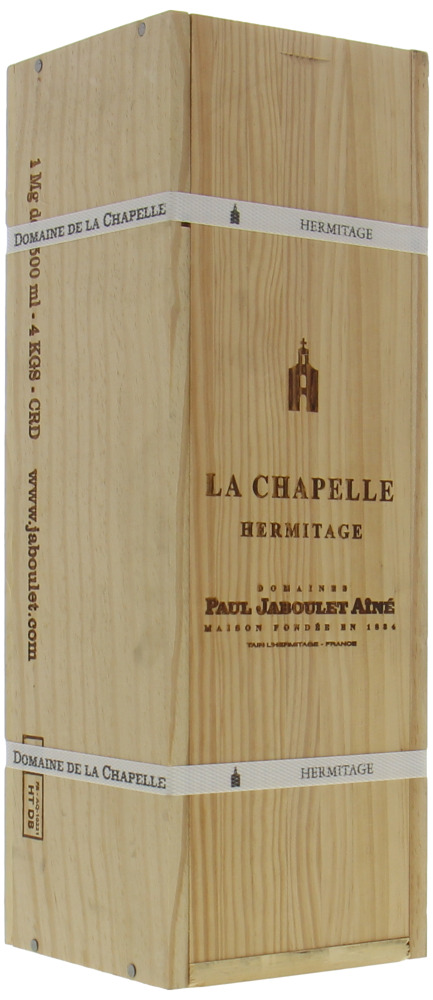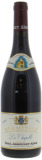

| ex Vat | € 359,00 |
| in Vat | € 434,39 |
| Volume | Magnum |
| Classification | Cru Classe |
| Type | Red |
| Producer | Paul Jaboulet Aîné |
| Vintage | 2011 |
| Country | France |
| Region | Rhone |
| Appellation | Hermitage |
| Grape | Syrah/Shiraz |
| Volume | 0,75 |
| Condition | Perfect |
| Label | Perfect |
| Drinkable | -2035 |
| Stock | 9 |
| Volume | 1,5 |
| Condition | Perfect |
| Label | Perfect |
| Stock | 1 |
The 2011 vintage in the northern Rhône was cooler and wetter than the powerful 2009 and structured 2010 that preceded it. The style was softer and more approachable for Hermitage La Chapelle from Paul Jaboulet, where Caroline Frey, winemaker since 2006, harvested syrah from plots of Les Bessards, Le Méal and Les Greffieux. As a result, La Chapelle can be approached earlier than larger vintages.
More dense, concentrated and structured, the knockout 2011 Hermitage La Chapelle, which comes mostly from the warmer, Le Meal lieu-dit, is up with the top 7-8 wines in the vintage. Offering up layers of black raspberry, powdered rock, chocolate, roasted meats and graphite, it flows onto the palate with full-bodied richness, solid mid-palate depth and masses of fine tannin that are sweet and polished. Reasonably approachable given the wealth of fruit and texture, it should nevertheless be given a handful of years in the cellar. It should have 20+ years of total longevity.
JS A gorgeous intensity of plum, spice and grilled meat on the nose. Cloves and hints of dried spices.?This is a big, structured La Chappelle. Full and powerful with chewy tannins and a long, long finish. A bit austere and muscular but gorgeous. Tar, spice, dried meat and asphalt.
The first thing that catches the eye is the nose. A whisper of violets, blackberries, olives and smoked bacon that is characteristic of a good Hermitage Syrah. The flavor is medium-bodied by La Chapelle standards, with fine tannins and a savory graphite tinge from the Les Bessards granite. The 2011 is not a blockbuster. It is flavorful, elevated and surprisingly approachable.
La Chapelle is 100% syrah. So why does this wine taste different from other Northern Rhône syrahs? It's all about where the fruit is grown:
Blending these components gives La Chapelle.
2011 was made to be drunk earlier than 2009 and 2010, so it's in good shape now. 2020-2035 would be a better time to drink it. The tannins have softened, the fruit is still present, and the secondary notes (leather, smoke) are starting to show. To store in bottles, keep at 12-14°C.
Jaboulet has been working on Hermitage Hill since 1834, and his 1961 La Chapelle is still considered one of the greatest wines of the 20th century. But after Gerard Jaboulet's death in 1997, quality declined. What changed: in 2006, the Frey family bought the estate and Caroline Frey took over the winemaking. She rebuilt the cellar, converted the vineyards to organic and biodynamic farming, and re-focused on the wines. 2010 onward is the strongest vintage for La Chapelle in decades.
The Hermitage is a single hill. It faces south, has a total area of 137 hectares and rises dramatically above the Rhone River at Tain-l'Hermitage. Why is granite important? Decomposed granite drains well and retains heat, allowing Syrah to ripen in the northern latitudes of the Rhone. The climate here is continental with Mediterranean influences, and the mistral winds dry the canopy and reduce disease. La Chapelle's vineyards are harvested between 150 and 300 meters above sea level, where the topsoil varies between granitic sand, glacial pebbles and clayey limestone.
Under Caroline Frey, restraint is an important consideration. The grapes are mostly de-stemmed, a departure from the old tradition of whole bunches and resulting in cleaner fruit and softer tannins. Fermentation takes place under gravity in a cellar rebuilt in 2010. Aging in French oak is approximately 12 months, with the percentage of new oak limited to 20-30%. Why it matters. With less new oak, Les Bessards' unique granitic character is not drowned out by vanilla and toast, but becomes distinctly tangible.
Syrah from the Northern Rhône loves game and char. Try venison tenderloin with pepper jus and the black pepper notes inherent in this wine will double. Braised wild boar and Provençal-style pigeon match the tannins. Aged Comté or Beaufort will be suitable as a base for a cheese course if served at 17°C and decanted at least two hours before in the case of young bottles.
With track & trace code