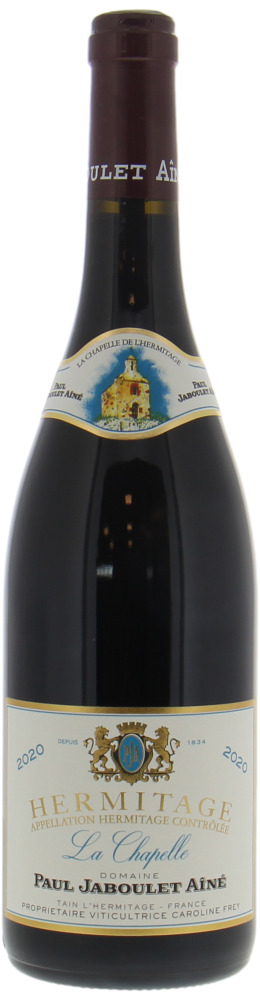
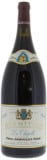
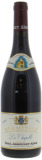
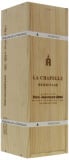
| Classification | Cru Classe |
| Type | Red |
| Producer | Paul Jaboulet Aîné |
| Vintage | 2020 |
| Country | France |
| Region | Rhone |
| Appellation | Hermitage |
| Grape | Syrah/Shiraz |
| Volume | 0,75 |
| Condition | Perfect |
| Label | Perfect |
| Stock | 17 |
The 2020 growing season in the Northern Rhône was warm and dry, with drought resulting in an earlier-than-usual harvest and lower yields. In Paul Jaboulet's Hermitage La Chapelle, syrah from the granite slopes of Les Bessards, Le Méal and Les Greffieux is well concentrated; expect a denser and more compact La Chapelle than in a cooler year like 2016. This is a wine for long aging.
After the past several vintages, the 2020 Hermitage La Chapelle will need to add significant richness and concentration if it is to compete at that level. That said, it is still an excellent wine, with classic aromas of crushed stone, cassis, espresso and black olives. It's full-bodied, fine and silky, giving an impression of great elegance on the lingering finish.
At first this feels like you’re standing in front of a set of locked gates. Huge power and structure without that much weight, thanks to the wonderful freshness that’s intertwined with the tarry depths of this Hermitage masterpiece. As it aerates smoked bacon, menthol and licorice notes develop, but I’d need much more space to give you all the aromas! The huge tannins at the finish are finely chiseled, suggesting this has decades of life ahead of it. From 40 to 100-year-old syrah vines.
Subdued but pure and profound. Tightly wound on the palate, the tannins powerful but refined, the fruit deep but underplayed. A saline edge that runs from start to finish adding length at the end. Needs to unfurl and expand but clearly has potential.

The first thing that catches the eye is the aroma. Violets, olives, crushed blackberries and the distinctive notes of smoked meat that characterize the Syrah from the Northern Rhône. On the palate, the 2020 wine is dense and firm. The tannins are firm but refined, framed by a savory, almost iron minerality of graphite and granite. Dark fruit and pepper are sensed on the finish.
Hermitage rules allow up to 15% Marsanne or Roussanne in red wine, but La Chapelle is 100% Syrah. So why not use white grapes? Because on granite slopes like Les Bessards, Syrah doesn't need softening. Syrah has structure, dark fruit and a peppery, meaty note. Old vines (often over 40 years old) give it extra concentration.
We will age this wine until at least 2028, with drinking age stretching to 2045 or later. The tannins are still firm, the fruit is dense, and the granite-grown Syrah is matured for long aging; store at 12-14°C. Over time, leather, truffle and game notes will emerge alongside the fruit.
Jaboulet has been working on Hermitage Hill since 1834, and his 1961 La Chapelle is still considered one of the greatest wines of the 20th century. But after Gerard Jaboulet's death in 1997, quality declined. What changed: in 2006, the Frey family bought the estate and Caroline Frey took over the winemaking. She rebuilt the cellar, converted the vineyards to organic and biodynamic farming, and re-focused on the wines. 2010 onward is the strongest vintage for La Chapelle in decades.
The Hermitage is a single hill. It faces south, has a total area of 137 hectares and rises dramatically above the Rhone River at Tain-l'Hermitage. Why is granite important? Decomposed granite drains well and retains heat, allowing Syrah to ripen in the northern latitudes of the Rhone. The climate here is continental with Mediterranean influences, and the mistral winds dry the canopy and reduce disease. La Chapelle's vineyards are harvested between 150 and 300 meters above sea level, where the topsoil varies between granitic sand, glacial pebbles and clayey limestone.
Under Caroline Frey, restraint is an important consideration. The grapes are mostly de-stemmed, a departure from the old tradition of whole bunches and resulting in cleaner fruit and softer tannins. Fermentation takes place under gravity in a cellar rebuilt in 2010. Aging in French oak is approximately 12 months, with the percentage of new oak limited to 20-30%. Why it matters. With less new oak, Les Bessards' unique granitic character is not drowned out by vanilla and toast, but becomes distinctly tangible.
Syrah from the Northern Rhône loves game and char. Try venison tenderloin with pepper jus and the black pepper notes inherent in this wine will double. Braised wild boar and Provençal-style pigeon match the tannins. Aged Comté or Beaufort will be suitable as a base for a cheese course if served at 17°C and decanted at least two hours before in the case of young bottles.
With track & trace code