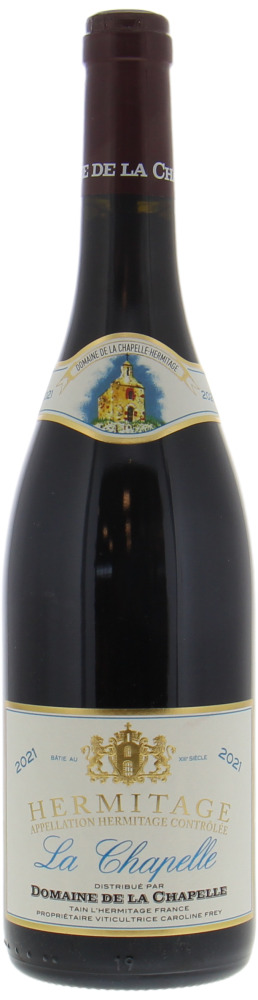
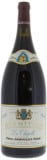
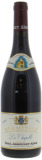
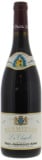
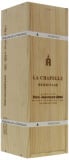
| ex Vat | € 451,00 |
| in Vat | € 545,71 |
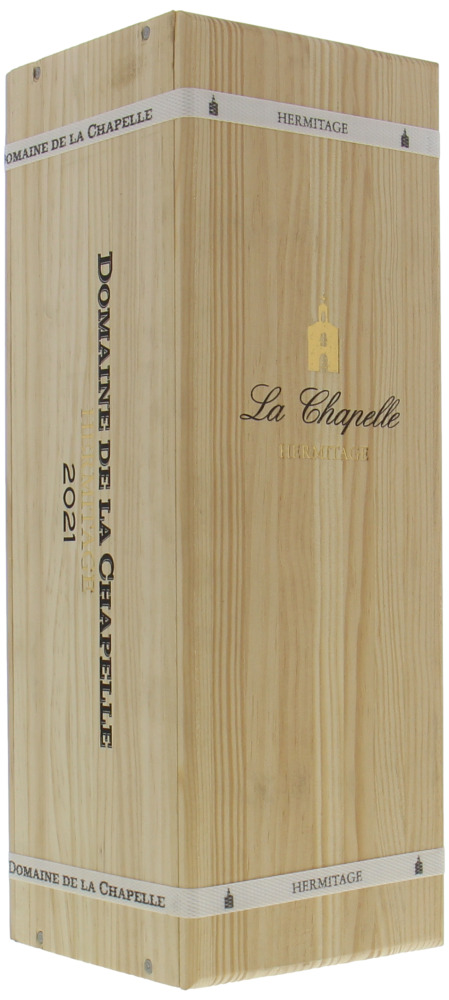
| Volume | Magnum |
| Classification | Cru Classe |
| Type | Red |
| Producer | Paul Jaboulet Aîné |
| Vintage | 2021 |
| Country | France |
| Region | Rhone |
| Appellation | Hermitage |
| Grape | Syrah/Shiraz, Rhone Blend |
| Volume | 0,75 |
| Condition | Perfect |
| Label | Perfect |
| Drinkable | 2028-2045 |
| Stock | 29 |
| Volume | 1,5 |
| Condition | Perfect |
| Label | Perfect |
| Stock | 2 |
The 2021 growing season in the northern Rhône was cool and typical: frost in April significantly reduced yields in the hills of Hermitage, and a slow, mild summer delayed harvest more than in previous warm vintages. At Paul Jaboulet's Hermitage La Chapelle, lower yields resulted in fresher flavors, more restrained alcohol, and a more transparent style of Syrah.
A refined, elegant version that's poised and aromatically expressive, showing bold black raspberry and brambly red berry details, with white pepper and floral high tones. Shy at first, this emerges with time in glass, revealing textural purity and notes of toasted aniseed, cigar box and rosemary, all held in place by a firm spine of iron and polished tannins. This will stand the test of time in the cellar.
NB name change from this vintage (no longer Paul Jaboulet Aîné). 100% Syrah. Harvested 26 September to 7 October. Cool and wet vintage. Alcoholic fermentation for around 10 days at 22–28 °C, with yeasts indigenous to the northern Rhône, with gentle punching down and pumping over. Post-fermentation maceration for around 2 weeks then ageing for 12 months in French oak barrels (15% new) and concrete eggs.
The fruit is slightly muddled on the nose at this stage, masked by stubborn reduction that is unpleasantly sulphurous – one hopes this will fade with bottle age. The palate shows delicate but candied notes of red fruit. Tangy, with a sweet profile oddly reminiscent of Grenache rather than Syrah. The structure is fine, with lightly sandy tannins and pristine, vibrant acids. Hopefully just in an awkward stage.
2021 is the first vintage where the Hermitage La Chapelle is labelled as Domaine de la Chapelle instead of Paul Jaboulet Aîné. As is customary, it blends grapes from various lieux-dits (mainly Le Méal and Les Bessards, with small additions of Les Greffieux and Les Rocoules). The 2021 unwinds with precise violet, rose petal and black cherry. Cedar and spice undertones add more layers. Hitting the palate with moderate flavor concentration, this is a rather delicate rendition of this cuvée. It delivers excellent freshness on the focused finish and should drink well over the next decade.
The flagship 2021 Hermitage La Chapelle (which is now released under the "Domaine de la Chapelle" label) was vinified in stainless steel and aged in 15% new barrels, with 10% in concrete eggs. It has an almost Côte Rôtie-like elegance and has perfumed aromatics of red and blue fruits, peppery herbs, smoke, and sappy, minty herbs. Medium-bodied and nicely balanced, with fine-grained tannins, it has solid underlying depth and structure, and warrants 4-5 years of bottle age. It will have 15+ years of prime drinking.

The first thing that catches the eye is freshness: 2021 is a cool, late ripening year in the northern Rhône, and Hermitage La Chapelle shows it: violets, black pepper and dark cherry, without the jammy depth of warmer vintages. The Syrah from Les Bessards has a structure reminiscent of graphite and granite. The tannins are firm but subtle, and the acidity is lively. It should age for another 5 years before popping the cork.
La Chapelle is a single-varietal Syrah. Hermitage rules allow up to 15% white grapes to be blended with red wine, but neither Marsanne nor Roussanne are used. So why Syrah specifically? Because it is made from grapes from the two best plots on the hill:
The combination of these two lieux-dits provides structure and aromatic lift in a single bottle.
Drink between 2028 and 2045. The fruit is there, but the tannins (grippy notes of leather and oak) are still firm and dense; wines from cool vintages such as 2021 often mature slower and longer than more mature years; store at 12-14°C. If it can't wait, decant 2 hours beforehand.
Jaboulet has been working on Hermitage Hill since 1834, and his 1961 La Chapelle is still considered one of the greatest wines of the 20th century. But after Gerard Jaboulet's death in 1997, quality declined. What changed: in 2006, the Frey family bought the estate and Caroline Frey took over the winemaking. She rebuilt the cellar, converted the vineyards to organic and biodynamic farming, and re-focused on the wines. 2010 onward is the strongest vintage for La Chapelle in decades.
The Hermitage is a single hill. It faces south, has a total area of 137 hectares and rises dramatically above the Rhone River at Tain-l'Hermitage. Why is granite important? Decomposed granite drains well and retains heat, allowing Syrah to ripen in the northern latitudes of the Rhone. The climate here is continental with Mediterranean influences, and the mistral winds dry the canopy and reduce disease. La Chapelle's vineyards are harvested between 150 and 300 meters above sea level, where the topsoil varies between granitic sand, glacial pebbles and clayey limestone.
Under Caroline Frey, restraint is an important consideration. The grapes are mostly de-stemmed, a departure from the old tradition of whole bunches and resulting in cleaner fruit and softer tannins. Fermentation takes place under gravity in a cellar rebuilt in 2010. Aging in French oak is approximately 12 months, with the percentage of new oak limited to 20-30%. Why it matters. With less new oak, Les Bessards' unique granitic character is not drowned out by vanilla and toast, but becomes distinctly tangible.
Syrah from the Northern Rhône loves game and char. Try venison tenderloin with pepper jus and the black pepper notes inherent in this wine will double. Braised wild boar and Provençal-style pigeon match the tannins. Aged Comté or Beaufort will be suitable as a base for a cheese course if served at 17°C and decanted at least two hours before in the case of young bottles.
With track & trace code