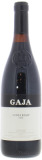

| Classification | Cru Classe |
| Type | Red |
| Producer | Gaja |
| Wine | Costa Russi |
| Vintage | 2015 |
| Country | Italy |
| Region | Piemonte |
| Grape | Nebbiolo |
| Volume | 0,75 |
| Condition | Perfect |
| Label | Perfect |
| Drinkable | 2021-2040 |
| Stock | 3 |
The 2015 growing season in Piedmont was a warm and productive year for Nebbiolo producers. The summer heat accelerated ripening, but the cool nights in the hilly Langhe region helped preserve the acidity necessary for Nebbiolo. Gaja’s “Costa Russi,” made from grapes harvested from a single vineyard in Barbaresco, has a more mature fruit profile than the 2013 and 2014 vintages, yet it retains the robust flavor characteristic of this wine.
The 2015 Barbaresco Costa Russi was about to be bottled before I tasted it. Like the other wines from this warm vintage, you are treated to extra plushness and roundness with dark berry fruit intensity. This wine also offers unexpected mineral tones that come off as crushed oyster shell and talc powder. These add to the drying, almost nervous, tension you feel in the mouth.
Wow. Such depth in the nose of strawberries, flowers and hints of raw meat. Crushed stones, too. Full body, fine and dusty tannins and a long and flavorful finish. Shows structure and finesse.
The aroma is dominated by notes of rose petals and crushed raspberries, with hints of tar, dried herbs, and a subtle leathery nuance in the background. The palate is more intense than that of a typical “Costa Russi,” with notes of dark cherry and a slight hint of dried fig, characteristic of this warm vintage. The tannins are firm yet smooth; the acidity lends the wine a sense of lightness, and the finish features the umami and almost metallic minerality characteristic of Nebbiolo from the Langhe. The wine can be enjoyed now if allowed to breathe, but it will improve with aging.
Costa Russi is made from 100% Nebbiolo, and since Gaja reclassified this wine as Barbaresco DOCG with the 2013 vintage, its style has remained unchanged. Prior to that, the blend contained a small amount of Barbera, and the label indicated “Langhe DOC.” Thanks to its single-varietal composition, “Costa Russi” directly expresses the individuality of the vineyards. It offers freshness with floral notes, high acidity, and a distinctive aroma reminiscent of tar and roses.
It is recommended to drink this wine between 2021 and 2040. Since this is a warm vintage, the wine will reach its peak drinking window earlier than wines with a more robust structure, such as the 2010 vintage; however, the tannins and acidity are robust enough to withstand another 15 years of aging in a suitable cellar at a temperature of 12–14 °C. Over time, the initial fruity notes can be expected to gradually give way to aromas of truffle and dried rose.
It wasn’t Gaja who created Barbaresco, but it was Angelo Gaja who made the wine world take this wine seriously. Having joined the estate in 1961 and taken the helm by 1970, he was the first in Piedmont to begin bottling wine from individual plots, using French barriques (small oak barrels with a capacity of 225 liters), and employing temperature-controlled fermentation. The “Costa Russi” wine was first released in 1978, and its name comes from the name of the vineyard where it is produced. We always keep Gaja’s wines in stock, as he has contributed a lot to shaping the image of modern Barbaresco.
Barbaresco is located northeast of Alba, and its soils have a higher sand content compared to the dense clay-marl soils of Barolo. Thanks to this sandy composition, Barbaresco wines have a light flavor, soft tannins, and reach their peak of maturity more quickly. “Costa Russi” is located on the southern slope. It is warm here during the day, but cool at night due to the influence of the nearby Tanaro River; in the fall, the ripening period lasts until mid-October. For the Nebbiolo variety, all these days are absolutely essential. Without them, the grapes’ tannins will not ripen.
A distinctive feature of “Costa Russi” is its approach, which relies on using grapes from a single vineyard. Gaja was the first in Barbaresco to refrain from blending harvests from his vineyards, instead bottling the wine separately for each plot, and this is precisely why this wine embodies not so much the “winery’s style” as the taste of “the land itself.” After fermentation in stainless steel tanks, the Nebbiolo is aged in barriques for about 12 months, followed by another year in larger Slovenian-made oak barrels (typically holding several thousand liters). The small barrels form the wine’s structure, while the large ones soften the oak aroma. Woody notes are detectable in the wine’s flavor profile, but they never dominate the core of the wine.
The high tannin and acidity levels in Nebbiolo must be balanced by richness and umami. This is precisely the role played by traditional Piedmontese dishes:
Serve at 18–20 °C. The young 2021 vintage should be decanted for at least two hours to allow it to breathe.
With track & trace code