| Price from | € 549,00 |
| ex Vat | € 489,00 |
| in Vat | € 591,69 |
| Volume | 0,75l |
| Classification | None |
| Type | Red |
| Producer | Penfolds |
| Vintage | 2018 |
| Country | Australia |
| Region | South Australia |
| Grape | Syrah/Shiraz |
| Alcohol % | 14.5% |
| Volume | 0,75 |
| Condition | Perfect |
| Label | Perfect |
| Drinkable | 2028-2055 |
| Stock | 5 |
| Volume | 0,75 |
| Condition | Perfect |
| Label | Perfect |
| Stock | 0 |
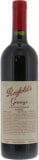
In South Australia, the 2018 growing season was warm and dry, with mild days and cool nights. Conditions were favorable for Shiraz. Penfolds has rated this wine highly on its internal vintage chart, and you'll understand why when you drink a bottle. To produce the 2018 Grange, Peter Gago and his team harvested grapes from Barossa Valley, McLaren Vale, Clare Valley, Magill Estate and Wrattonbully vineyards. Expect a wine that is both powerful and fresh at the same time from Grange.
This wine comes with high expectations—as does the vintage. The 2018 vintage across South Australia (and cheekily, we could probably extend the accolade to all of Australia) was excellent. It was warm, but without incident, and responsible for powerfully ripe, serious wines. Many producers made some of their best wines in this vintage. So here, to the 2018 Grange: there is spiced raspberry, lashings of salted licorice, red curry paste, layers of forest berries, rendered lamb fat and crushed pink peppercorns to start. In the mouth, the tannins close around the fruit with the same polish and seamlessness as the 2008, possibly the 2004? Very different vintages, but there is a textural similarity for me. This is polished and glossy and so very pretty. It contains 3% Cabernet Sauvignon this year, and 69% Barossa, 18% McLaren Vale and the balance from Clare Valley. Each of the regions brings with it its own characteristics. Barossa brings the red dirt, blood, deli meat and rust. McLaren Vale brings the plush purple fruits with a side of meat and licorice. Clare brings the polish, the opulence and the velvet texture. With their powers combined, this is an extraordinary Grange. One of the true greats, which will only get better as it ages.
A remarkable wine, bursting with complexity and intensity but on a polished, mouthcoating and juicy frame, which makes this easy to enjoy now. Features chicory, sarsaparilla, dark chocolate and salted caramel notes that mingle with ripe black cherry, framboise and huckleberry flavors, backed by hints of almond paste and savory details of cured meat and fresh-crushed rosemary that linger on the epic finish.
Opulent, ripe fruit. Heady perfume. Brambles and a round composition with masses of ripeness. Dry end, for the moment, but very rich up to that point. (JR)
Inky, bright-rimmed violet. A kaleidoscopic, penetrating bouquet evokes ripe black and blue fruit preserves, espresso, cola, incense, coconut and Moroccan spices, along with a smoky mineral topnote. Shows superb clarity and mineral lift to the sweet, deeply concentrated black currant, bitter cherry, dark chocolate, fruitcake and mocha flavors, which are sharpened by a spicy element. A vein of juicy acidity adds support and drives a wonderfully long, smoky finish that leaves a suave floral note behind.
Dark fruit comes first. Blackberry, plum, notes of licorice and American oak characterize the Grange: coconut, vanilla and sweet dill. Underneath there is a savory, almost iron depth that comes from the Cabernet part. The flavor is rich but not heavy. The tannins are ripe and grainy, the acidity keeps the palate lively, and the finish is long, with dark chocolate and pepper. This wine is suitable for long aging, but it already tells its own story.
The composition of the 2018 blend is as follows.
Why add a small amount of Cabernet? It's a trick from the Schubert era. A tiny percentage of Cabernet gives the Shiraz structure and spice, thickening it but not changing the character of the wine. Grange is unmistakably a Shiraz.
The 2018 Grange can be drunk from around 2028 and will age comfortably into the 2050s. Ripe tannins, fresh acidity, 19 months in new American oak barrels, stored flat at 12-14°C. If opened young, the wine shows power; with 15 years of cellaring, it develops leather, earth and real complexity.
Penfolds is the best-known name in Australian winemaking, and for good reason: the grange. Dr. Christopher Rawson Penfold founded the McGill Estate near Adelaide in 1844, but the wines that made the maison world-class did not exist for another century. 1951, winemaker Max Schubert, a European He returned from Europe and, inspired by the Northern Rhone, made his first experimental Grange varietal. We believe it is still the benchmark for Australian Shiraz, and since 2002 Peter Gago has been the winemaker.
Most iconic wines are made from a single vineyard. Grange is the opposite. It is a blend of multiple regions, including Shiraz from Barossa Valley, McLaren Vale, Clare Valley, Padthaway, Coonawarra, and McGill Estate vineyards, with the final blend determined each year by which parcels of grapes are received. Why mix different regions? Barossa brings intensity and dark fruit from ancient ironstone and red-brown earth, McLaren Vale adds Mediterranean exuberance and structure from sandy loam on limestone, and Coonawarra brings a savory finish from terra rossa. Schubert's idea is consistency, not place.
The wine is aged in 100% new American oak barrels for about 19 months. American oak gives the vanilla, coconut, and dill notes that are part of the Grange's DNA. French oak would be more subdued. Boldness is needed. Equally important is to complete fermentation in barrel, the method pioneered by Max Schubert. This allows the oak and fruit to integrate early on, so that the oak is felt as part of the wine, rather than superimposed on top of it.
Grunge needs authentic protein and flavor. Some ideas:
Served at 17-18°C. Decant for at least 2 hours, longer if served young. The fat content is necessary to soften the tannins.
With track & trace code