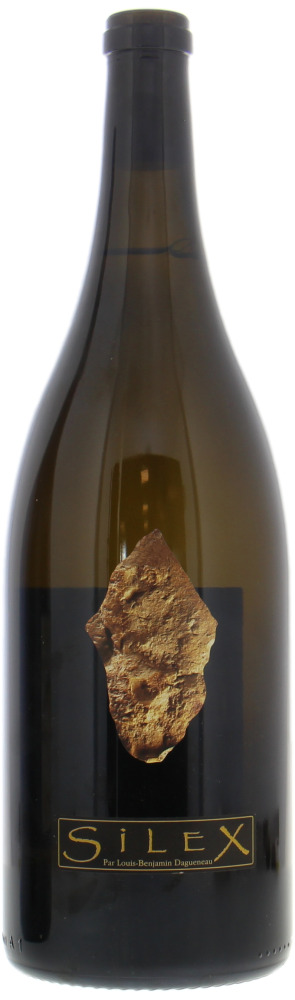
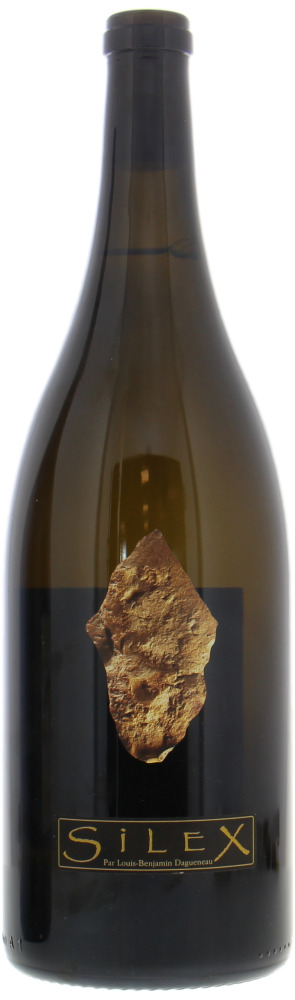
| ex Vat | € 349,00 |
| in Vat | € 422,29 |
| Volume | Magnum |
| Classification | Cru Classe |
| Type | White |
| Producer | Didier Dagueneau |
| Vintage | 2020 |
| Country | France |
| Region | Loire |
| Grape | Sauvignon Blanc |
| Alcohol % | 13.5% |
| Volume | 0,75 |
| Stock | 0 |
| Volume | 1,5 |
| Condition | Perfect |
| Label | Perfect |
| Stock | 0 |
The 2020 growing season in the Loire was warm, dry and early. Harvest was earlier than usual, and plots with the flint (Silex) on top of the Saint-Andelain hill maintained acidity where other plots would have lost it. For Louis-Benjamin Dagueneau, the Silex 2020 was a concentrated but not heavy wine. While it expects more fruit weight than the cooler 2017, the Silex character, smokiness, salinity and tension, is still present.
Something very distinctive and almost sour on the nose. Massive density. Very distinctive. Very much informed by terroir rather than grape variety. Grips the palate and doesn’t let go! Honey and stones on the end. So long! Hors classe. (JR)
While this was a warm season leading to richness in many wines from the region, the Silex 2020 shows ripe fruit, but there's no sense of being overblown. The fine line that races through many wines relying on flint-based parcels is there, carrying the nectarine and oak-derived vanilla flavors, but its influence never tips into austerity nor firmness. There's a sense of tenderness that runs through its core while remaining light in body.
First of all, the flint. This smoky, almost reductive note is characteristic of Silex, and it is pronounced in the 2020 wine. It hides ripe lemons, white peaches and a salty note that holds back the fruitiness of the warm vintage. The palate is dense but not heavy, with texture due to aging in large oak barrels, and the acidity persists through the mid-palate. Long salty finish; enjoy at around 10-12°C.
Silex is 100% Sauvignon Blanc. This is not unusual in Pouilly-Fumé, as the appellation's rules require the use of Sauvignon Blanc. What matters is where the vines grow. The vines are 60-90 years old and are planted on silex (flint mixed with clay) on top of Saint-Andelain. The soil is of great importance. The flint gives the Silex its smoky character. No other grape variety will pair so well with it.
You could open a bottle today, but we prefer to refrain. Silex 2020 is designed for aging; it can be drunk from 2026 to 2040, but 2028 would be most optimal. Acid and flint structure provide the backbone of this wine, which should be stored horizontally at 12-14°C. The smoky notes deepen and the fruit becomes waxy and honeyed.
Didier Dagueneau changed winemaking in the Loire Valley in the 1980s when he began fermenting Sauvignon Blanc in oak barrels. Why age a crisp white wine in oak barrels? But Dagueneau took inspiration from Burgundian masters like Henri Jayer and applied their methods to the Loire terroir. Didier Dagueneau died tragically in 2008. But he worked alongside his father both in the vineyard and in the cellar, learning the philosophy behind each decision. Today, Louis-Benjamin and his sister Charlotte run the estate with an uncompromising approach: low yields, multiple hand harvesting and only indigenous yeasts. We consider them one of the most important white wine producers in France.
The Silex vineyard is located at the top of Saint-Andelain hill, where siliceous clay mixed with limestone creates perfect drainage. But what makes this place special is the flint (silex in French). It is a mass of silica-rich rock formed millions of years ago that has a unique effect on Sauvignon Blanc. After a rain, the soil drains quickly, forcing the roots of the grapes to work harder and dig deeper. This stress concentrates the flavors and creates the mineral complexity you feel in the glass. The continental climate means cold winters and warm summers, and the Loire River mitigates temperature swings and lengthens the growing season.
This is where Dagueneau revolutionized winemaking on the Loire. Silex is fermented in French oak barrels rather than stainless steel tanks. The barrels are a mix of traditional 225-liter barriques and large 320-liter cigar-shaped barrels designed by Dagueneau himself. Why oak for Sauvignon Blanc? Not for vanilla flavor, but for texture and contact with oxygen during fermentation. Native yeast does the job (no commercial yeast is added) and the wine is aged on lees for 12 months without stirring. Contact with the lees creates a creamy texture that is immediately noticeable. After aging in barrels, the wine is transferred to tanks for several months before bottling. Louis-Benjamin continues to experiment with different vessels, including ceramic eggs, but oak remains the centerpiece of the Silex style.
A mineral backbone and bright acidity make Silex ideal for classic wines from the Loire Valley. The local goat cheese Crottin de Chavignol is a perfect match for the wine's tingling character and citrus notes. The acidity breaks up the richness of the cheese and the mineral notes complement each other perfectly.
Serve at 10-12°C to preserve the mineral precision and aromatic intensity of the wine.
With track & trace code