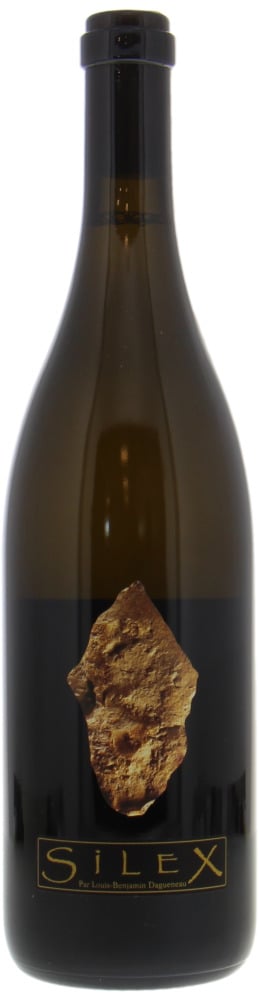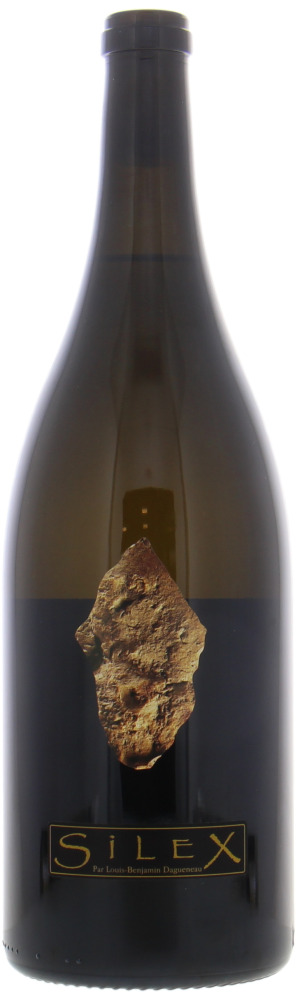

| Classification | Cru Classe |
| Type | White |
| Producer | Didier Dagueneau |
| Vintage | 2019 |
| Country | France |
| Region | Loire |
| Appellation | Pouilly-Fume |
| Grape | Sauvignon Blanc |
| Alcohol % | 13.5% |
| Volume | 0,75 |
| Condition | Perfect |
| Label | Perfect |
| Stock | 0 |
The 2019 growing season on the Loire has been hot and dry, with early spring frosts. For Didier Dagueneau's Silex variety, growing on old vines on siliceous soils atop the Saint-Andelain hill, this meant concentrated fruit and naturally low yields. Louis-Benjamin Dagueneau has managed the domaine since 2008, and the 2019 Silex reflects his stewardship.
The nose opens with smoke and flint, moving into grapefruit rind, white peach and chalky, salty flavors. On the palate, the 2019 is characterized by density. The warm vintage shows ripe citrus and stone fruit, but the acidity is still there and keeps everything even. Aging in barrels on lees gives a creamy weight without overt oak notes. The finish is long, mineral and slightly salty.
Silex is 100% Sauvignon Blanc. There are no blending partners or safety net here. So why does this grape work so well here? The flint (silex) soils of Saint-Andelain give Sauvignon Blanc something it rarely gets elsewhere. Old vines, 60 to 90 years old, add concentration.
The 2019 Silex is drinkable now, but we prefer to wait. This wine is notoriously slow to open up, and a full-bodied cuvée takes 10 years or more to reach its peak; it is best enjoyed in the 2026-2040 window; store at 12-14°C. With aging, you can expect honey, beeswax and deeper smoke to emerge.
Didier Dagueneau changed winemaking in the Loire Valley in the 1980s when he began fermenting Sauvignon Blanc in oak barrels. Why age a crisp white wine in oak barrels? But Dagueneau took inspiration from Burgundian masters like Henri Jayer and applied their methods to the Loire terroir. Didier Dagueneau died tragically in 2008. But he worked alongside his father both in the vineyard and in the cellar, learning the philosophy behind each decision. Today, Louis-Benjamin and his sister Charlotte run the estate with an uncompromising approach: low yields, multiple hand harvesting and only indigenous yeasts. We consider them one of the most important white wine producers in France.
The Silex vineyard is located at the top of Saint-Andelain hill, where siliceous clay mixed with limestone creates perfect drainage. But what makes this place special is the flint (silex in French). It is a mass of silica-rich rock formed millions of years ago that has a unique effect on Sauvignon Blanc. After a rain, the soil drains quickly, forcing the roots of the grapes to work harder and dig deeper. This stress concentrates the flavors and creates the mineral complexity you feel in the glass. The continental climate means cold winters and warm summers, and the Loire River mitigates temperature swings and lengthens the growing season.
This is where Dagueneau revolutionized winemaking on the Loire. Silex is fermented in French oak barrels rather than stainless steel tanks. The barrels are a mix of traditional 225-liter barriques and large 320-liter cigar-shaped barrels designed by Dagueneau himself. Why oak for Sauvignon Blanc? Not for vanilla flavor, but for texture and contact with oxygen during fermentation. Native yeast does the job (no commercial yeast is added) and the wine is aged on lees for 12 months without stirring. Contact with the lees creates a creamy texture that is immediately noticeable. After aging in barrels, the wine is transferred to tanks for several months before bottling. Louis-Benjamin continues to experiment with different vessels, including ceramic eggs, but oak remains the centerpiece of the Silex style.
A mineral backbone and bright acidity make Silex ideal for classic wines from the Loire Valley. The local goat cheese Crottin de Chavignol is a perfect match for the wine's tingling character and citrus notes. The acidity breaks up the richness of the cheese and the mineral notes complement each other perfectly.
Serve at 10-12°C to preserve the mineral precision and aromatic intensity of the wine.
With track & trace code