
Solaia
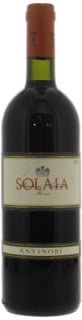
Solaia from Antinori is regarded as one of the best wines from Tuscany. It's made on the Tignanello estate near San Casciano Val di Pesa, and is a blending of old-school Italian winemaking with a new French twist that helped kick off the Super Tuscan popularity.
History
The Antinori family has been at it since 1385, one of Italy's longest-running wine dynasties. In the 1970s Piero Antinori, the 24th generation, wanted something completely different to shake things up, as Chianti's strict rules back then blocked winemakers. Tignanello came first in 1971, which was made of mostly Cabernet-Sangiovese. Then Solaia debuted in 1978 with 80% Cabernet Sauvignon and 20% Cabernet Franc: so no Sangiovese. By 1980, Antinori changed the blend a little bit, adding 20% Sangiovese for the typical Tuscan signature while keeping Cabernet Sauvignon around 75-80% and Cabernet Franc at 5-10%. The blend has stayed close to that ever since. Solaia is only produced when it meets the highest standards, so there is no Solaia produced in f.e. 1984 and 1992.
The name Solaia means "sunny one" in local dialect, because of its prime hillside spot. Antinori calls it their passion project, as it is made from the best grapes on the sunniest slope.
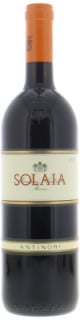
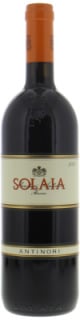
Piero once said it's all about harvesting the top fruit from Tignanello hill, then pouring in hard work. That mindset turned it into a legendary wine. The bottle label? It started as Piero's business card with "Solaia" slapped on.
The Vineyards
Solaia's grapes come from a 20-hectare plot on the Tignanello estate, split off from the bigger hillside because it's the sweetest spot. Vines sit between 350-400 meters up, facing southwest for maximum sun. They're guyot-planted at high density, about 10,000 vines per hectare, for maximum quality with the right balance.
The vineyard dates to the 1970s plantings, with Cabernet vines grafted onto local rootstocks that handle the soil. Harvest happens by hand in late September-October, starting with Cabernet Franc, then Sangiovese, finishing with Cabernet Sauvignon. Workers sort berries right there in the vineyard. Only perfect fruit makes the way to vinification.
The production is relatvely modest by keeping the yields low to have a high concentration. The climate means cool nights, hot days, and autumn sun so to build ripeness without overdoing it.
The Terroir
Tignanello's hillside gives Solaia its distinctive character: galestro soils, schistous clays packed with minerals. These soils have good draiange, forcing the roots to dig deep, adding a chalky, iron-like signature.
Elevation brings cool breezes to the vineyards, cooling nights for acidity while days ripe the fruit intensively. The rainfall is moderate, around 700mm a year, with some big showers in August to refresh. Antinori says the terroir keeps it "Toscana" despite the French grapes: Solaia has elegant tannins and fresh tones, not just power.
Grapes Used
The Solaia blends have roughly 75% Cabernet Sauvignon, 20% Sangiovese, and 5% Cabernet Franc, though it varies a bit by vintage. Cabernet Sauvignon leads with blackcurrant, cassis, and structure. Sangiovese gives cherry, herbs, and a bright Tuscan acidity. Cabernet Franc adds floral notes, spice, and finesse.
Winemaking
It starts in the vines: harvest is doe by hand putting the grapes into small bins, then destem and sorting on the tables. No bruised grapes are allowed. The juice flows by gravity into 60-hectoliter conical oak or steel tanks for fermentation. It is temperature controlled for soft tannins and keeping the aromas fresh. Maceration lasts for 3-4 weeks.
The aging is done for 15-18 months in new French oak (Allier or Tronçais), 225-liter barrels. The parcels are aged separately at first then the Cabernet Sauvignon, Sangiovese, and Cabernet Franc are blended and go back in the barrels for harmony. Barrels do not have heavy toast.
Bottling is done after another 6-12 months and is unfined and unfiltered for maximum expression. Total time from vintage to shelf is about 24 months.
