

Relentless
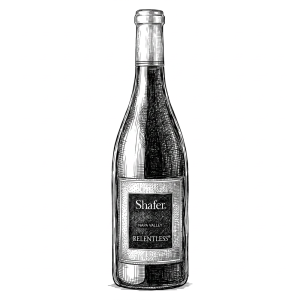
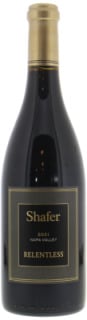
Shafer Relentless is a Syrah-based wine made by one of the Stags Leap area's most respected producers, Shafer, and bears a name with a special origin: it's named for Elias Fernandez, who has been making wine here since 1984. His work ethic led to the moniker, and the wines bear it.
So what is Relentless? It's a blend of Syrah and Petite Sirah from fruit grown on the Napa Valley estate, made in a style closer to McLaren Vale than Hermitage. It's dark, dense and ripe, but with the structure that the Stags Leap neighborhood is known for. This wine isn't Shafer's flagship (it's Hillside Select Cabernet), but it has its loyal fans. And there's a reason for that.
About Shafer
Shafer is one of those Napa farms where the same people have been doing the same job for decades. Doug Shafer became president in 1983. Elias Fernandez joined him the following year as assistant winemaker and became head winemaker in 1994. Such continuity is rare in California.
Doug's father, John Shafer, moved from a Chicago publishing company in 1972 and re-planted grapes on the hillside where they had been grown since the 1880s; in April 2022, the family sold the property to Shinsegae Property in South Korea. In our opinion, the wines have remained remarkably stable throughout the transition, and Relentless is a good example of this.
History & Heritage
Relentless wines first appeared in 1999. There's a real story behind the name: Doug Shafer started calling Elias Fernandez "Relentless" because of Elias' approach to harvesting, blending and every detail. So when they launched their new Syrah-dominant blend, the name was already a household name.
Why is it so important to what's in the bottle? Because Relentless is an Elias wine that is not part of Hillside Select. It's a project with a winemaker who has spent 40 years in the region and is committed to a particular style. In 2012, Wine Spectator magazine named the 2008 vintage the wine of the year.
Terroir & Climate
The Stags Leap region became an AVA in 1989 and is defined by two factors: the rocky Palisades rising on the east side and the cool gravitational pull of San Pablo Bay to the south. The Palisades are volcanic in nature (rhyolite and basalt) and reflect the midday heat onto the vineyards. This is one of the reasons why syrah ripens perfectly here.
The soils on the hillsides are dry and stony, while the valley floor is alluvial loam. The Shafer estate is shaped like an amphitheater, so there is plenty of sunshine during the day. The cool nights on the bay side inhibit grape growth. As a result, the Syrah and Petite Sirah are fully ripe and the wines do not become extravagant.
Grape Varieties
Syrah predominates in Relentless wines, usually about 80% Syrah and 20% Petite Sirah, but the proportions vary from vintage to vintage. So why the blending? Syrah brings flavors of blackberry, black pepper and smoked meat. Petite Sirah brings color and tannins and a certain inky structure that keeps the wine from slipping into pure jamminess.
In Napa, Syrah is a secondary varietal to Cabernet, and most producers who make good use of Syrah rely on Petite Sirah for structure. Shafer is no exception. The blend allows the wine to age.
Winemaking
About 30 months in French oak with a high proportion of new oak. That's a long time. Most Napa cabernets are aged 18 to 22 months. So why the additional aging of the Syrah blend?
Because the wines can handle it. Petite Sirah's tannins and Syrah concentration absorb new oak in a way that lighter wines do not. Long barrel aging softens the tannins and unites them with the oak, so that by the time the wine is bottled, the vanilla and toast notes become part of the wine rather than the top of it. Hand-picked fruit, optical sorting in the cellar, careful fermentation. No ostentation, just discretion.
Tasting Notes
The first thing you notice is the density. Smoky notes of blackberry compote, blueberries, black pepper and roasted meat. Beneath that is cocoa, vanilla and clove from the long aging in French oak.
On the palate, the wine is full-bodied but not heavy. Petite Sirah's tannins give it a firmness, but refined rather than aggressive. The acidity holds everything together. The finish is long, with notes of dark chocolate and pepper. Younger vintages need aeration. Older bottles (from 2015) start to show leather and dried herbs, and that's when this wine gets really interesting.
Food Pairing
Stubbornly committed to fat and charring. The smokiness and pepperiness of this wine pairs well with grilled or smoked meats:
- Smoked brisket and burnt ends reflect the wine's charred flavor.
- Grilled lamb chops with rosemary
- The juiciness of the lamb softens the tannins of Petite Sirah.
- Short ribs braised in red wine: slow-cooked collagen combines with the body of the wine.
- Aged gouda or sharp cheddar after a meal.
Avoid delicate meats. Avoid fish. Serve at 16-18°C. Peppered venison loin also pairs well if you can find it.
Serving Suggestions
Invariably at 16-18°C. Room temperature in many homes is too warm, which accentuates the alcohol. Decant young wines for at least 90 minutes; for bottles older than 10 years, 30 minutes is sufficient. A large Bordeaux glass is sufficient. There is no need for expensive glasses.
Vintages
Relentless is one of those wines where house style takes precedence over vintage variation, but vintage still matters: warmer years in Napa, such as 2018, will yield a fuller-bodied, more direct Relentless with dark fruit and soft tannins; cooler years, such as 2019, or more hard-structured years will be more savory and dense, with longer aging.
The 2022 vintage was affected by the Labor Day heat and drought, so expect concentration and small yields. If you're going to drink wine this weekend, look for wines that have been bottle aged for at least five to seven years. To age a wine in the cellar, it needs 10-15 years of patience. We recommend buying two bottles.
Cellaring Potential
Relentless can drink well at the time of release, but it only gets better with time. With recent vintages, it is best to wait 5-8 years. The wine has tannins and acidity (due to Petite Sirah) and can age for 15-20 years in strong vintages; it should be stored horizontally at 12-14°C, away from light. With aging, the fruitiness changes from blackberry to dried figs and the leather starts to show.
