

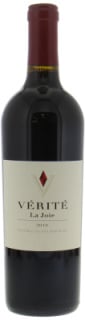
La Joie
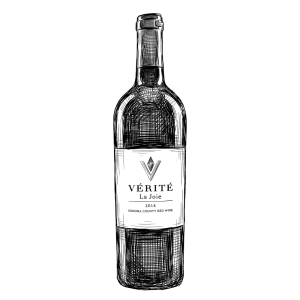
La Joie is a Cabernet Sauvignon-dominated blend from Verité, created in Sonoma County by French winemaker Pierre Seillan. The style references the Left Bank of Bordeaux, particularly Pauillac, but the fruit comes from Sonoma County's Alexander Valley, Knights Valley, Chalk Hill and Bennett Valley counties.
So does this wine claim to be a cabernet from Napa? It doesn't. Verité was founded with the express purpose of applying Bordeaux techniques to California fruit, and La Joie is more like a structured Medoc than a luxurious Napa Cab. Grown in Sonoma, it's blended as a Bordeaux and aged as a first growth.
It is this contradiction between place and philosophy that makes La Joie one of the most interesting Bordeaux-style wines from the United States.
About Verite
Verité is not a typical California winery: it was founded in 1998 to make wines from Bordeaux blends. La Joie is modeled after Pauillac, La Muse is Pomerol, and Le Desir is Saint-Emilion.
Why it matters. Because Pierre Seillan, winemaker from day one, came to Sonoma with decades of experience in Bordeaux, including at Château Lassègue in Saint-Emilion. His approach, which he calls "droit du sol," treats the soil as a decisive factor.
Best of Wines considers Verité one of the few U.S. producers who fulfill the promise of Bordeaux rather than borrowing grapes from Bordeaux.
History & Heritage
The starting point was friendship. Jess Jackson, the driving force behind Kendall-Jackson, met Pierre Seillan in the mid-1990s and convinced him to come to California; by 1998 they had founded Verité together, and by the late 1990s they had established their own winery in California.
What changed with that move? Seillan brought the idea of blending Bordeaux to the region, which at the time was dominated by single varietal cabernet. He followed the "micro cru" method, which involves dozens of separately vinified sites.
Jackson passed away in 2011. Today, Verité is part of Jackson Family Wines, and Seillan still oversees wine production with his daughter Hélène, who trained in Bordeaux.
Terroir & Climate
La Joie harvests grapes from four Sonoma appellations: the Alexander Valley, Knights Valley, Chalk Hill and Bennett Valley. Alexander Mountain, located on the western slopes of the Mayacamas, is the most important source of Cabernet Sauvignon for La Joie.
Why the variegation? Sonoma County has more than 40 different soil types, and elevations range from 60 meters above sea level on Chalk Hill to nearly 700 meters in parts of Alexander Valley. This allows Seillan to find structured Cabernet Sauvignon at higher elevations and more ripe fruit at lower elevations.
The 2019 crop benefited from a cool, even growing season and harvest was completed before the Kincade Fire in late October.
Grape Varieties
La Joie is of the Pauillac type with a predominance of Cabernet Sauvignon. Past blends have been approximately:
- 70-80% Cabernet Sauvignon, structure, cassis, graphite.
- Merlot: gives fleshiness and weight in the middle of the palate.
- Cabernet Franc: to enhance aromatics and give pencil shavings nuances.
- Sometimes Petit Verdot is added for color and spiciness.
So why this particular blend in Sonoma? Seillan is looking for firm tannins, as in Left Bank wines, and Alexander Valley Cabernet Sauvignon provides them without becoming "jammy."
Winemaking
The decisive choice for Verité was the micro-cru system: each of the 50-plus sites is harvested, fermented and aged separately, allowing Seillan to handle hundreds of elements in blending.
Why? Because La Joie is not a wine created from the individuality of a single vineyard. It is harvested from the best batches of the year, like Cru Classe in Bordeaux.
The wine is aged in French oak for about 20 months, using almost 100% new oak. The amount of oak is high, but the concentration supports this. Harvesting is determined by taste and intuition, and lab analysis is used for confirmation rather than definition.
Tasting Notes
First impressions are unusually restrained for a cabernet from Sonoma. The nose echoes black currant and blackberry, cedar, graphite, tobacco leaf and floral notes from the Cabernet Franc. There is ripe fruit here, but elegant.
On the palate, the tannins are firm and more refined than Napa, while cocoa and dark plums fill out the middle of the palate. The new oak feels like cedar and sweet spices rather than vanilla.
The finish is long and savory, with notes of iron and graphite. Younger vintages need aeration, while older vintages evolve patiently in the glass.
Food Pairing
La Joie has the tannins and structure to handle serious red meat. There are several combinations available:
- Grilled ribs or côte de boeuf
- the fat softens the tannins.
- Roast lamb with rosemary.
- Braised short ribs: the sweetness of the sauce combines with the dark fruitiness of the wine.
- Aged hard cheeses such as Comte and Gouda, with umami flavors blending with the tannins.
Serve at 17°C. Avoid with delicacies.
Serving Suggestions
At 16-18°C. Most American living rooms are too warm, so should be taken out of the cellar rather than left in place. Decant young wines for at least 90 minutes and wines over 15 years old for 30 minutes. Use a large Bordeaux glass to bring out the flavors.
Vintages
La Joie is fairly uniform in style, but the character of the vintage is clearly evident. Warmer years in Sonoma lean toward black currant and dark plum, while cooler, more even seasons like 2019 yield a denser, Bordeaux-like profile with firmer tannins and a savory edge. Sonoma's 2017 vintage was affected by wildfires, but 2018 is a more classic and balanced style.
Look to older vintages like 2014 for immediate consumption. In the cellar, 2018 and 2019 will be rewarded with a decade of patience. Older bottles are often better value for money, as new vintages tend to cost more.
Cellaring Potential
La Joie has the structure to age for 20 years or more after a strong vintage; for the 2018 and 2019 vintages, expect to start opening bottles around 2028 and drinking through 2040. The firm tannins, concentration and acidity of cool-climate fruit are the driving force behind Cabernet stored horizontally at 12-14°C. Expect cedar and graphite notes to emerge as the underlying fruitiness recedes.
