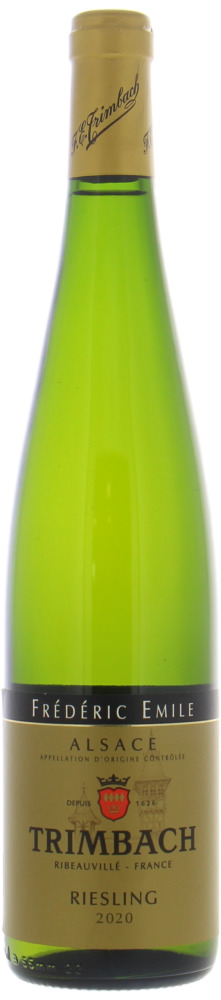
Diese Cuvée besteht aus Trauben von Weinbergen, die an Hanglagen liegen. Ein Drittel stammt vom Geisberg, zwei Drittel vom Osterberg. Dies ist der Jahrgang 2020 des Riesling Cuvée Frédéric Emile.
Riesling Cuvée Frédéric Emile von Trimbach im Elsass. Das Alter der Rebstöcke reicht von 40 bis 80 Jahren. Sie wachsen auf komplexen Bodenschichten aus Kalkstein, Muschelkalk, Mergel, Sandstein (Vogesen) und Migmatit (Gneis und Granit).
2020 war ein heißes, trockenes Jahr. Während in Colmar 424 mm Niederschlag gemessen wurden, lagen die Werte in Lothringen bei 758 mm und der nationale Durchschnitt bei 778 mm; diese klimatischen Merkmale spiegeln sich im Wein wider.
Anne-Catherine ist die Kellermeisterin, und im Keller befinden sich alte Fässer sowie Edelstahltanks. Nach dem Aufmaischen werden die weißen Trauben mit vier pneumatischen Pressen schonend gepresst.
Es wird empfohlen, den Wein mindestens eine Stunde vor dem Servieren zu dekantieren. Dieser Wein lässt sich am besten zwischen 2026 und 2044 genießen.
Robert Parker (92)
The 2020 Riesling Frédéric Emile has blended the fruit of the Geisberg (one-third) and Osterberg (two-thirds) for decades. The wine opens with a fine and flinty, deep and elegant nose that is beautifully pure and stony. Succulent and supple on the palate, with savory acidity and still-grippy tannins, this is a powerful Riesling with ripe and sweet fruit (4.6 grams per liter) carried by fine-grained acidity, and it has a still-astringent finish. Luckily, this still-embryonic wine won't be released before 2026 or even 2027. 13.7% stated alcohol. Tasted at the domaine in May 2022.
James Suckling (96)
Shy, cool and tightly wound on the nose, the aromas of stone fruit, citrus and fresh nuts opening slowly as it aerates in the glass. Very impressive structure on the straight and linear palate, the fruit expanding again at the long, concentrated finish. From 40 to 80-year-old vines in the Grand Cru sites Kirchberg and Osterberg. Long-term stuff!
Vinous (96)
The 2020 Riesling Frédéric Emile is from the Geisberg and Osterberg Grand Crus and, exceptionally, also the Kirchberg. It opens with chamomile and dried yarrow, showcasing a very subtle but aromatic nose. It is on the palate that the beautiful aromatics come through, almost with a floral quality of hawthorn blossom. There is a chalkiness in the texture, a lovely depth and verticality. This is serenity itself: the year may have been hot, but this has kept its cool. It shrugs off any hint of heat and presents us with its essential nature. Long and indestructible. Wow. (Bone-dry)