Professionelle Bewertungen
Robert Parker (95)
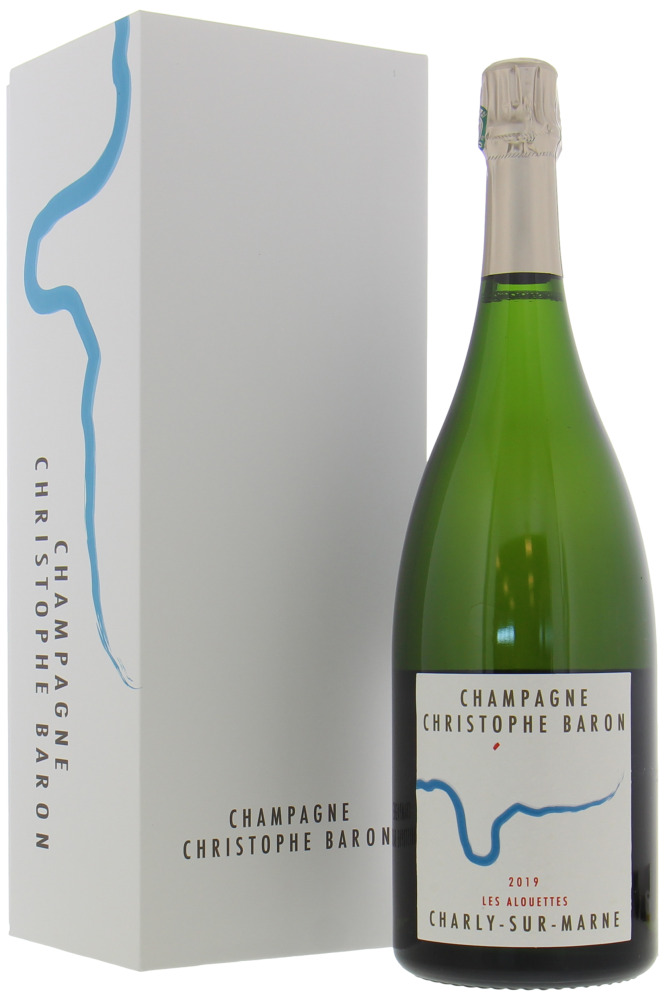
Disgorged in May 2023, Christophe Baron's 2019 Brut Nature Les Alouettes is performing beautifully, offering a complex aromatic range of dried apricot, cranberry and mandarin, mingling with crisp peach. On the palate, it is medium- to full-bodied and impressively concentrated, underpinned by considerable tension. Its expansive core of fruit is balanced by bright acidity, and it culminates in a long, precise finish. Those familiar with Baron's work will recognize its origins in a southeast-facing parcel in Charly-sur-Marne—a breezy site that ripens up to 10 days later than the Les Closeaux vineyard.
James Suckling (97)
This is a supremely poised and elegant Champagne. Lots of grapefruit, honeycomb, white tea, citron peel, white apricots and salted almonds here, yet it’s linear and racy, with tight bubbles and a cool yet intense and very long finish. 100% pinot meunier from a vineyard planted in 1968. From organically grown grapes. In magnums only. Zero dosage. Disgorged May 2023.
Vinous (96)
The 2019 Brut Nature Les Alouettes displays a decidedly more exotic flavor profile than in previous vintages, with notes of Asian pear, ginger, tangerine oil and hazelnut. A weightier and richer expression of Meunier than is typical, the Les Alouettes is intense, pliant, creamy and resonant to the core. Zero dosage. Disgorged: May, 2023.
BOW (8.75)
Christophe Baron grew up in the Champagne region and studied viticulture and oenology in Bonn, before moving to the United States in the 1990s, where he has since built his career as a winemaker in Walla Walla, Washington. In 2014, with the help of his cousins, he turned his attention back to France, starting to produce champagne from grapes grown in vineyards inherited from his family. His range includes just four blends from a single vineyard, made entirely from old mass-selected Pinot Meunier in the western Marne Valley, in the villages of Crot sur Marne and Charley sur Marne. Of the four hectares he owns, just over half goes into his own production, with the rest going to family members who bottle wine under the Baron Albert label.
The vineyards have been organically farmed from the outset, albeit without official certification. Baron spends most of his time in the United States, but his family strictly follows his protocols. He prefers to harvest early to preserve freshness.
Pressing, fermentation and vinification are carried out at the family winery. Baron uses both cuvées and premier tailles, ageing the wines in 600-litre barrels, a quarter of which are replaced each year, while the rest are between five and six years old. Fermentation takes place using local yeasts, and malolactic fermentation occurs naturally. He stirs the lees about once a week until the end of January — in his opinion, this reduces the need for dosage — after which the wines are aged for about eight months on the lees in barrels.
All four wines are vintage dated, bottled exclusively in magnums and disgorged without dosage, which Baron considers necessary to express the individuality and character of each plot.
The result is a set of remarkable, complex champagnes — serious in structure and tension — that are well worth trying.