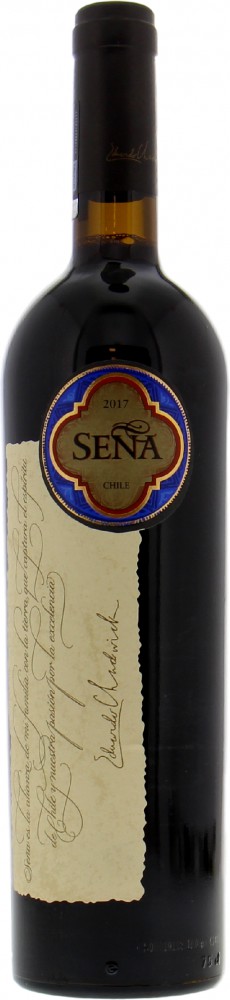
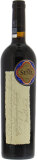
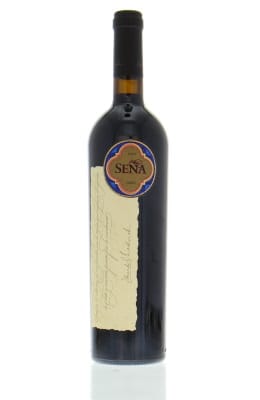
| Classification | Cru Classe |
| Type | Red |
| Producer | Vina Sena |
| Vintage | 2017 |
| Country | Chile |
| Region | Aconcagua |
| Grape | Cabernet Sauvignon, Merlot, Carmenere |
| Alcohol % | 13.5% |
| Volume | 0,75 |
| Condition | Perfect |
| Label | Perfect |
| Drinkable | -2036 |
| Stock | 7 |
The 2017 growing season on Aconcagua was marked by hot and dry weather. Central Chile experienced drought and major wildfires in January, causing the harvest in Ocoa to begin earlier than usual. For Seña, this meant they were able to harvest small berries with concentrated fruit flavors before the heat became excessive. The 2017 vintage ranks among Seña's most mature and powerful wines, yet thanks to the influence of the Pacific Ocean, located just 40 kilometers from the vineyards, its acidity is moderately balanced.
They explained how the 2017 Seña was produced with "grapes that were handpicked in the morning and transported to the winery in 12-kilogram boxes for a careful inspection on a double sorting table. The grapes fermented in stainless steel tanks at 25 to 31 degrees Celsius (77 to 88 degrees Fahrenheit), depending on the variety and the level of extraction desired. Three pump-overs were carried out daily during fermentation to rotate the volume of the tank 0.5 to 1.5 times. Total maceration time ranged from 15 to 30 days for the Cabernet Sauvignon, Merlot, Malbec and Carmenère and eight to 12 days for the Petit Verdot, according to the development of each block vinified. The final blend was racked to French oak barrels (67% new) and aged for 22 months, during which time malolactic fermentation and stabilization occurred naturally." They harvested early and managed to keep the same alcohol level as the 2016. This has less aromatic exuberance and is a more serious vintage with good concentration and weight, not as aerial as the 2016. They increased the amount of wine matured in larger 2,500-liter foudres instead of barrique. This is more powerful, structured and concentrated, like a drier version of the 2015, with some grainy tannins, more acidity, more austerity and less primary fruit. The tannins have some grip (the earlier harvest perhaps?) and might need a little bit of time in bottle, and the wine seems to have what it takes to develop nicely in bottle. They produced 120,000 bottles of this. It was bottled in February and March 2019. Just for the record, the varietal breakdown is 52% Cabernet Sauvignon, 15% Malbec, 15% Carmenère, 10% Cabernet Franc and 8% Petit Verdot, reflecting a good year for Carmenère and Cabernet Franc.
The aromas of blackberries, cedar, sandalwood and black tea are compelling. Black olives. Rosemary and sage undertones. Full-bodied, rich and powerful Seña with impressive and powerful tannins, yet harmony and balance. Fruit-forward. Lightly chewy. Fresh and energetic wine in a hot year. Broad-shouldered.
First impressions: notes of black currant and ripe plum. The aromas of graphite and cedar, resulting from 22 months of aging in French oak barrels, are complemented by rich flavor nuances of tobacco and dark chocolate, reminiscent of the Carmenère variety. The palate is rich and full-bodied, yet not heavy. The tannins are dense and refined, while the acidity, brought by the cool nights of Aconcagua, lends the wine a sense of lightness. The finish is long, with subtle hints of iron. If you plan to open the bottle right away, we recommend letting the wine “breathe” for about an hour.
The blend of grape varieties in the 2017 vintage is approximately as follows:
Five Bordeaux varieties grown on the granite hills of Aconcagua. In this region, Cabernet retains its freshness compared to the warmer Maipo region, while on the northern slopes, Carmenère ripens to its full potential.
The wine is perfect now and can be enjoyed without any issues until 2036. Store at a temperature of 12–14 °C. As it matures, the blackcurrant aroma is expected to gradually give way to notes of leather, tobacco, and cedar.
The history of “Seña” began in 1991, when Eduardo Chadwick accompanied Robert Mondavi on a road trip through various regions of Chile. Mondavi’s advice was clear: “If you want Chile to appear on the world wine map, make wines in the Bordeaux style.” Over the next four years, a search for the optimal plots was conducted, and the first vintage was released in 1995. At the 2004 Berlin Wine Tasting, the 2001 “Seña” came second, beaten only by the 2000 Château Lafite Rothschild and finishing ahead of Château Margaux and Château Latour, which cemented its reputation once and for all. Since no other Chilean winery has achieved such success, our store continues to include wines from this winery in its selection.
The “Seña” vineyards are located in the hilly terrain above Ocoa, about 40 kilometers inland from the coast. Thanks to their relatively close proximity to the coast, every afternoon the vineyards are swept by cool air from the Pacific Ocean, carried by the Humboldt Current, which lowers the temperature. Without this breeze, the valley would be too hot to produce high-quality wine. The soil is a mixture of weathered granite, colluvial deposits, and volcanic rock; it is well-drained, which encourages the grapevines’ roots to penetrate deeply. It is precisely this stress that gives the wine its structure and freshness. Since 2005, biodynamic farming methods have been used here.
The grapes are harvested by hand, after which they are sorted and destemmed. Fermentation takes place mainly in stainless steel tanks, while a portion of the grapes is fermented in concrete tanks. Stainless steel preserves the pure flavor of the berries, while concrete imparts a moderate texture to the wine without the influence of oak. Aging lasts 18 to 22 months in French oak barrels. New barriques (225-liter Bordeaux barrels) are primarily used, while some of the wine is aged in foudres (large oak barrels). The use of foudres is a wise decision in this case. It gives the wine structure without overpowering the fruity notes with aromas of vanilla or toasted bread.
Tannins require fats and proteins to balance them out. Here are a few dishes that pair well with this wine:
Serve at 17 °C. Decant the wine one hour before serving. Allow extra time for this, especially with the 2022 vintage.
With track & trace code