
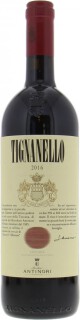
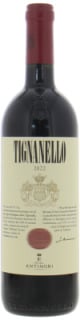
Tignanello
Tignanello has always been in a class of its own. From its first vintage in 1971, it was primarily a wine for connoisseurs: a vino di tavola that everyone knew was anything but a table wine. After it was awarded IGT status in the 1990s and the designation Super Tuscan , the popularity of this wine exploded.
Tignanello is therefore one of the most influential and iconic wines from Italy. The wine is produced by Marchesi Antinori in the heart of Chianti in Tuscany. But it is not a Chianti, and that is a conscious choice: the wine does not contain the required DOC grape varieties (Sangiovese) but typical Bordeaux grape varieties such as Cabernet Sauvignon and Cabernet Franc. And so Tignanello was classified as a Vino di Tavola.
So why is Tignanello so special, given that there are several Super Tuscans?
There are several reasons, including:
- It was one of the first Italian wines to combine typical French grape varieties with Sangiovese.
- The wine was aged in barriques, small French oak barrels, which was revolutionary in Italy in the 1970s.
- Tignanello broke with the tradition of Chianti winemaking with white grapes.
- It proved that Italy could produce world-class wines, even outside the DOC legislation.
- Tignanello was the driving force behind the Super Tuscans: terroir, vision and quality are more important than strict regulations. Ultimately, it is the consumer who decides what is good and what is not so good.
The positioning of Tignanello among the Super Tuscans
In the 2010s, there are many so-called Super Tuscans. But the best-known Super Tuscans are Masseto, Sassicaia, Ornellaia and Solaia. The wines differ mainly in their blends. Masseto is 100% Merlot, Sassicaia more Cabernet Sauvignon, Tignanello more Sangiovese.
The History of Tignanello
The first vintage of Tignanello was 1971 and was released in 1974. It was the result of the collaboration and ideas of Piero Antinori and the famous oenologist Giacomo Tachis. Tachis was also involved in Sassicaia, which had its first vintage in 1968.
Their goal was revolutionary:
- No white grapes were used in Chianti wines
- The yield was low by Chianti standards
- Barriques were used for ageing
- The focus was on ripeness and concentration
- The first blend consisted of 80% Sangiovese and 20% Cabernet Sauvignon, deliberately keeping the wine outside the DOC rules.
The role of Piero Antinori
Piero Antinori is considered one of the architects of modern Italian viticulture. His vision was that tradition should be a foundation, not a limitation. He went against traditional rules, invested in modern and new cellar techniques, and travelled extensively to Bordeaux to expand his knowledge and exchange ideas with other winemakers.
His influence extends far beyond Tignanello alone, as he changed the image of Italian wine worldwide.
The Tignanello producer : Antinori
The Antinori family is one of the oldest wine families in the world, dating back to 1385, when Giovanni di Piero Antinori gained access to the Florentine winemakers' guild. In 1506, the Antinori family was able to purchase the Palazzo Antinori in Florence. In the 18th century, the family acquired the noble title of Marchese (Marquis) from the House of Habsburg-Lorraine and began exporting their wines internationally.
The family has been making wine for 26 generations and the wine estate has always remained in the family.
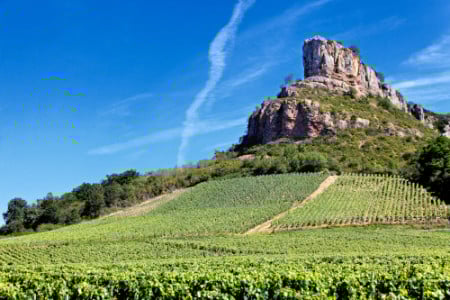
The location of the Tignanello vineyards
The Tignanello vineyards are located in the Tenuta Tignanello in San Casciano Val di Pesa in Chianti. The estate covers 127 hectares, 57 of which are vineyards.
Tenuta Tignanello is located between the Pesa and Greve rivers and contains one of the best terroirs in Tuscany. The soil consists of calcareous clay, galestro (slate) and alberese. The soil is very well-drained, which ensures good drainage and stimulates the root growth of the vines. This produces high-quality, complex and aromatic grapes with a specific signature.
The climate of Tenuta Tignanello is Mediterranean, with the desired (greater) temperature differences between day and night. The cool nights preserve the acids, while the warm days shape the ripeness and structure.
The vineyards are located at an altitude of 350–400 metres with a south-western exposure. This means optimal zone exposure.
The grape varieties and blends
Over the years, the composition of Tignanello has evolved. In the early days (1971–1975), the wines consisted exclusively of Sangiovese and Cabernet Sauvignon. In the 1980s, Cabernet Franc was added. Since the 1990s, Tignanello has consisted of approximately
- 70–80% Sangiovese
- 15–20% Cabernet Sauvignon
- 3–5% Cabernet Franc
This varies slightly depending on the harvest year.
Vinification and ageing
The Tignanello harvest is entirely manual, with strict manual selection of the grapes in the vineyard and before vinification.
Conical stainless steel and wooden vats are used for vinification, which are temperature-controlled.
Maceration takes 15–20 days, followed by ageing in French oak barrels (50–60% new) for 14–16 months.
Minimal filtering takes place during bottling, and bottle ageing takes another 12 months or so.
What are the best vintages of Tignanello?
Tignanello scores very consistently over the years, which is a clear sign of a high-quality wine.
Since 2015 in particular, professional wine reviewers have increasingly given it better reviews with higher scores. At Best of Wines, we consider the years after 2000 to be very strong, with a few possible exceptions such as 2003, 2011 and 2012.
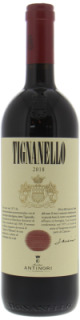
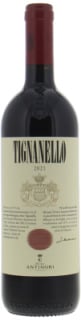
Nevertheless, there are a few vintages that are undoubtedly exceptional in quality. These are: 1990, 1997, 2007, 2013, 2016, 2018 and 2021.
Food-wine pairing: which dishes go well with Tignanello
There are various, with a particular focus on Sangiovese and Cabernet Sauvignon. But the typical terroir of Tenuta Tignanello makes for a wonderful combination with classic (and local) dishes such as Bistecca alla Fiorentina, wild boar ragout and Ossobuco.
For more exotic and luxurious combinations, consider truffle dishes, dry-aged ribeye, game such as venison or roe deer and, of course, aged Parmesan.
Do not serve Tignanello too warm, preferably around 18°C. Depending on the year, decanting is appropriate, especially for Tignanello younger than 5 years.
Visiting Tenuta Tignanello
If you are in Tuscany, a visit to Tenuta Tignanello is always worthwhile. Especially because you can immediately get acquainted with the other Super Tuscan that is also made there, the Solaia.
At Tenuta Tignanello, you can enjoy vertical tastings and, of course, vineyard tours. As an extra tip: book in advance via the website or through a tour operator, as it is a private estate.
Frequently Asked Questions (FAQ)
Is Tignanello a Chianti Classico?
No, deliberately not.
Is Tignanello a Vino di Tavola?
It was, a regular table wine, until the 1990s. But the price was anything but that of a table wine. That is why the IGT classification was created and the Super Tuscans were born.
How long can Tignanello age?
Yes, definitely 20 to 30 years if stored properly.
Is Tignanello an investment wine?
Yes, as a Super Tuscan, experience shows that it always increases in price, especially in very good years.
