

Monfortino
Monfortino is the wine that fans of traditional Barolo consider the benchmark. Produced by Giacomo Conterno in Serralunga d'Alba, it has been the family's flagship since the early 1920s, and the way it is made has changed little in over 100 years. Long maceration, fermentation with natural yeasts, and aging in large Slavonian oak. No barrique or reduction.
So what makes Monfortino different from other estate Barolos? It is only produced in years that Roberto Conterno deems worthy. In less successful years, the fruit is sent to produce Cascina Francia Barolo. This selectivity, combined with seven or more years of barrel aging before bottling, is what makes this Piedmontese Barolo so highly regarded.
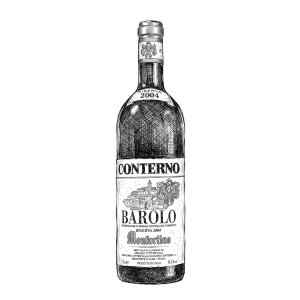
About Giacomo Conterno
Most Barolo producers changed their policies in the 1980s. Shorter maceration, French barriques, riper fruit. Giacomo Conterno did not. Why it matters. While the modernists chased softer, more precocious wines, the Conterno family continued to do what it had always done, and now its wines are more relevant than ever.
Today, the estate is run by Roberto Conterno. After the death of his father Giovanni, he took over the domaine in 2004 and has carefully expanded it, adding Cerretta and Arione to Serralunga. Best of Wine considers Giacomo Conterno to be one of the few estates where you can buy any vintage with confidence.
History & Heritage
The story hinges on one decision. After World War I, Giacomo Conterno returned to Monforte d'Alba and refused to continue selling bulk Nebbiolo; in 1924, he produced the first Barolo Riserva Monfortino under the family name. That was the beginning of the foundation of the company.
Another turning point came in 1969, when Giacomo's son Aldo spun off and founded Poderi Aldo Conterno. Giovanni stayed on and continued to follow the traditionalist line, purchasing the Cascina Francia vineyard in 1974. Since then, everything at Monfortino has come down to these two decisions: stick to tradition and own the fruit.
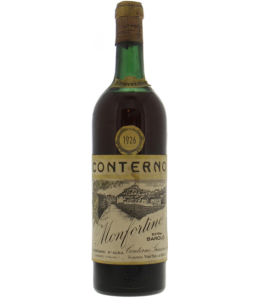
Terroir & Climate
Serralunga d'Alba is located at the eastern end of the Barolo zone and its soils are the most difficult in the appellation. It consists of calcareous marl from the Helvetian period mixed with sandstone, locally known as the Lecchio Formation. The soils are well-drained, nutrient-poor, and lean.
Why is this important for Monfortino? Because Nebbiolo from these soils yields small grapes with good concentration and firm tannins. Serralunga wines close young and need years to open up. Monfortino is built on these soils. Cascina Francia, the historical source vineyard, is located at about 400 meters above sea level and faces southwest. Limestone in the basement, west facing slopes, no irrigation, light aging.
Grape Varieties
Monfortino is made from a single grape variety:
100% Nebbiolo
In any case, purity is everything in Monfortino, although it is not a prerequisite for Barolo DOCG. Nebbiolo is late ripening (often harvested in mid-October), has thin skins, and is very sensitive to site. The soils of Serralunga yield the resin, dried roses, cherries, and truffles that characterize classic Barolo. The grapes for blending are not hidden at all. There is no hiding place.
Winemaking
Maceration is key. Monfortino uses indigenous yeasts in large tanks and long periods of contact with the skins, historically 50 days, sometimes longer. No rotary fermenters are used, and no temperature tricks are used to exceed natural cellar conditions. This extraction creates the tannin backbone.
Next comes aging. The wine is aged in large Slavonian oak barrels for a minimum of seven years before bottling. These large barrels (botti grandi) breathe slowly and add little to the oak flavor. You can taste the flavors of Nebbiolo and Serralunga, not vanilla or toast. Usually the wines are only on the market eight years after the harvest. There is nothing fast here.
Tasting Notes
Pale garnet in color, often translucent at the rim. Do not be fooled by this color. Dried rose petals, tar, sour cherries, leather, dried herbs, and, with aging, Alba's characteristic truffles. On the palate, tannins play an important role. Firmly structured, the wine is dry in its youth, but slowly becomes silky over 10 or 20 years. A high level of acidity gives the wine vitality.
Young Monfortino is almost austere; after 15 years, fruitiness returns and secondary notes of forest floor and dried mushrooms become dominant, with a long finish. This is a wine that rewards waiting more than any other.
Food Pairing
Tannins and acidity call for fat and umami. Some varietals that really work well:
- Tajarin with white truffles from Alba.
- Brazato al Barolo (beef braised for hours until it breaks down).
- Agnolotti del pleine, grilled in butter with sage.
- Aged Castelmagno or Alpine hard cheese.
Roasted pheasant, venison or wild boar ragout. Serve the wine at 16-18°C. Avoid spicy or acidic dishes: not suitable for tomato dishes.
Serving Suggestions
Serve at 16-18°C. Decant young Monfortino for at least 3-4 hours; for bottles older than 20 years, first let it stand for 24 hours, then carefully decant the sediment 30 minutes before drinking. Use a large Burgundy-shaped glass. Aromas need space.
Vintages
Monfortino is only made in vintages that Roberto Conterno deems worthy, so the differences from release to release tend to be personality rather than quality; warm years like 2019 bring more fruit and accessibility early in the wine's life. Classic, well-structured years like 2006 require cellaring, but are rewarding; older bottlings like 1982 are now in a full force with truffles and forest floor, while the 1969 wines are an entirely different chapter.
The best vintages of Monfortino
The level and quality of this wine is very high, regardless of vintage, However, some exceptional vintages are: 1961, 1971, 1978, 1990, 1999, 2004, 2010, 2014, 2019.
Giacomo Conterno
2006
€ 1.099,00 (ex Vat) € 1.329,79 (in Vat) more info
Giacomo Conterno
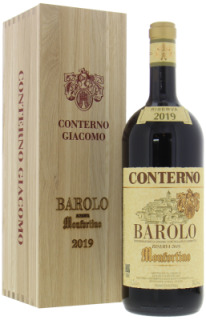
2019
(Magnum) € 1.595,00 (ex Vat) € 1.929,95 (in Vat) more info
Giacomo Conterno
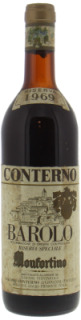
1969
€ 995,00 (ex Vat) € 1.203,95 (in Vat) more info
Giacomo Conterno
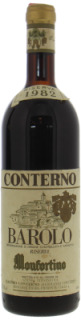
1982
€ 1.895,00 (ex Vat) € 2.292,95 (in Vat) more info
Cellaring Potential
Aging time depends on the vintage, but Monfortino is usually kept in the cellar for 30 to 50 years; a wine like the 2019 will begin to show good expression by around 2030 and may last until 2060 or later. The combination of high tannin content, high acidity, and 7 years of barrel aging makes this take off; store horizontally, away from light, at a stable temperature of 12-14°C.
FAQ
Is Monfortino produced every year?
No, only in the harvests that Roberto Conterno considers worthy. In bad harvest years, the fruit is used to produce Cascina Francia Barolo.
How is Monfortino different from Cascina Francia Barolo?
In most years the vineyards are the same, but Monfortino undergoes a longer maceration and is aged for at least seven years in large Slavonian oak barrels before release.
Is Monfortino suitable for an investment wine?
Yes, it is. The production volume is small, the demand is global and good vintages are always highly prized.
When should the wine of recent years be opened?
Wait at least 10 years after harvest; 15-20 years is better. At a younger age, the tannins are still dominant.
