
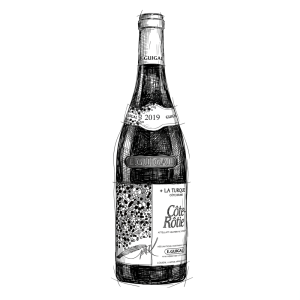
La Turque
La Turque is one of the three single vineyard Côte-Rôtie "La Las" wines that made E. Guigal famous among collectors. The other two wines are La Mouline and La Landonne. La Turque is somewhere in the middle, both geographically and stylistically, and its in-between position makes it an interesting wine.
So what does La Turque represent? It is a Syrah-dominated red wine from a small plot of Côte Brune on the iron-rich side of Côte-Rôtie in the northern Rhône. Guigal replanted this vineyard in the 1980s and released the first vintage in 1985. Since then, this wine has been followed by critics such as Robert Parker, Jancis Robinson and James Suckling, and supply has never been able to keep up with demand.
About E.Guigal
Ampuis is a small village on the right bank of the Rhône, and Etienne Guigal turned it into the reference point for Côte-Rôtie. Étienne Guigal started the estate there in 1946 after fifteen years working at Vidal-Fleurie, and the family bought that company outright in 1984 (a neat reversal). Today the estate owns around 45 hectares, roughly half in Côte-Rôtie, the rest spread across Condrieu, Saint-Joseph, Hermitage and Crozes-Hermitage. But Guigal is also the valley's leading merchant, handling about 40 per cent of all Côte-Rôtie and around 45 per cent of Condrieu, with total production near seven million bottles a year. Marcel Guigal runs it with his son Philippe, chief winemaker since 1997. Late harvesting is the house habit. They usually pick among the last in the appellation.
History & Heritage
La Turque has a backstory that many great wines don't have. When Guigal acquired this vineyard, it had been neglected for decades. In the 1980s, they replanted the vines one by one on the steep terraces above Ampuis. The debut harvest was in 1985.
Why it matters. Because La Turque is, to put it in modern terms, a young vineyard with an ancient pedigree. The site itself has been cultivated since Roman times, but the current vines were planted under the direction of Marcel Guigal. La Turque is thus not an inheritance but a purposeful creation, which is reflected in the precision of the wines.
Terroir & Climate
La Turque is located on the Côte Brune, in the northern half of the Côte-Rôtie. The soil here is shale mixed with iron-rich brown clay, and it is this iron content that locals point to when explaining why wines from Côte Brune are darker and more structured than those from Côte Blonde, a few hundred meters to the south.
Why is this soil so important? Iron and schist weathered quickly, but the terraces on the steep south-facing slopes remain warm enough to bring Syrah to full ripeness. The addition of the local north wind, the bise, allows the grapes to achieve concentration without being overcooked.
Grape Varieties
La Turque is co-fermented from red and white grapes together. The blend is approx.
- 93% Syrah, which provides a base of dark fruit, pepper and tannins.
- 7% Viognier, a white grape that softens the tannins and lifts the flavors.
So why add Viognier to red wines? Viognier stabilizes color and evens out texture. La Mouline has considerably more of it (about 11%), while La Landonne has none at all. La Turque is somewhere in the middle and is where this wine lives stylistically.
Winemaking
The decisive choice for La Turque is oak. The wine is aged for 38-42 months in 100% new French barriques. That's about twice as long as most of the top Bordeaux wines, and all the barrels are new. On paper, this should suppress the fruit. But it doesn't.
Why? The concentration from this stretch of Côte Brune is so great that Guigal coopers the barrels in-house. The result is a wine in which the oak does not dominate, but rather supports. Fermentation takes place in stainless steel for about three weeks with pump-overs, followed by a lengthy élevage.
What are the best vintages of La Turque.
La Turque is a very consistent scoring wine. Exceptional vintages are (last 4 decades): 1985, 1991, 1995, 1998, 1999, 2003, 2005, 2010, 2019.
Tasting Notes
The first sensations are the aromas. Violets, olives, smoked meats and pure graphite Côte Brune. The fruit is dark, blackberry, blueberry and ripe cherry, but enveloped by nuances of pepper, cured bacon and tapenade that deepen with age.
On the palate, La Turque is dense but not heavy. The tannins are fine-grained, the acidity is uplifting, and the new oak shows up as cedar and spice rather than vanilla. The finish lasts more than a minute. In its youth, this wine is tightly packed. Give it time.
Food Pairing
La Turque's savory, peppery side favors game and meats cooked over low heat. There are several combinations that go well with it:
- Roast duck breast with black pepper, where the wine answers to the spiciness.
- Saddle of venison or braised wild boar, where the iron in the wine meets the iron in the meat.
- Grilled lamb chops with herbs of Provence
- Aged Comté or mature Saint-Marcellin with a cheese course.
Serve at 16-18°C. Frankly, a wine like this deserves attention. Don't let it be buried under complex sauces.
Serving Suggestions
Serve at 16-18°C. Decant young wines at least two hours before serving; for wines older than 15 years, 30-45 minutes is sufficient. Old bottles can fade quickly in the decanter, so keep a close eye on them. Large Burgundy-shaped glasses hold flavors better than Bordeaux-shaped glasses.
Vintages
La Turque is remarkably consistent from year to year, but the style varies with the weather: warmer vintages, such as 2018 and 2020, yield riper fruit, generosity and early availability; cooler, classier years, such as 2016, yield structure, pepper and a tendency to lift that rewards patience.
If you're going to drink the wine in a few years, look to warmer vintages. If opened young, they are more forgiving. If you age it in the cellar, structured vintages tend to age longer and develop the savory, fatty complexity characteristic of a mature Côte-Rôtie. And the 2021 is a cool vintage, firmly in the second camp.
E.Guigal
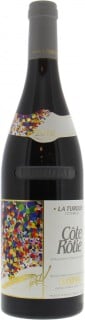
2016
€ 279,00 (ex Vat) € 337,59 (in Vat) more info
E.Guigal
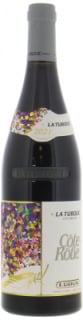
2021
€ 329,00 (ex Vat) € 398,09 (in Vat) more info
E.Guigal
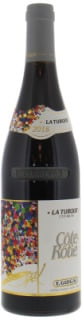
2018
€ 289,00 (ex Vat) € 349,69 (in Vat) more info
E.Guigal
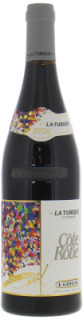
2020
€ 329,00 (ex Vat) € 398,09 (in Vat) more info
Cellaring Potential
La Turque rewards patience. Most vintages are best drunk between 8 and 25 years after harvest. Firm tannins from 100% new oak, the natural acidity of northern Rhône Syrah and concentrated fruitiness are the reasons why: store at 12-14°C, protected from light. With aging, the pepper turns to leather and the fruit to truffles.
FAQ
Is La Turque a Grand Cru?
There is no Grand Cru classification for Côte-Rôtie. However, La Turque is considered the best single vineyard wine in the appellation, along with La Mouline and La Landonne.
What makes La Turque different from La Mouline and La Landonne?
La Mouline is the most aromatic and floral (it has more Viognier). La Landonne is the most structured (pure Syrah). La Turque is somewhere in the middle.
Is La Turque suitable for investment wines?
Yes, it is a good investment wine. The production volume is small (6,000-8,000 bottles per year) and the demand from collectors is stable. Prices for the best vintages tend to be stable and rising.
Can La Turque be drunk young?
It can be drunk, but you have to wait. We age it for at least 8-10 years after harvest to allow the new oak to acclimatize its aromas.
