

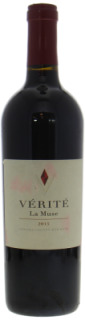
La Muse
Verité La Muse is a merlot-dominated trio wine that Pierre Seillan began producing in Sonoma County in 1998. The other two wines, La Joie (cabernet sauvignon-dominated) and Le Désir (cabernet franc-dominated), together make up the entire Verité project, a venture of Healdsburg-based Jackson Family Wines.
So what's behind the idea behind La Muse? Coming to California after several years working in Bordeaux, including at Château Lassègue in St. Emilion, Seillan wanted to make Right Bank-style wines using grapes from Sonoma. The wines are not imitations of Pomerol, but are made based on the same instincts. He calls his approach "droit du sol" (right of the soil). La Muse is a wine that meets this philosophy with merlot grown on volcanic slopes rather than Bordeaux clay.
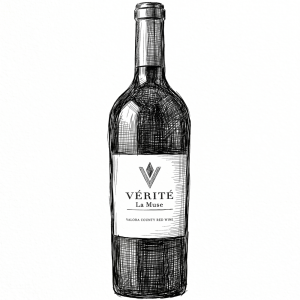
About Verite
What makes Vérité stand out among Napa's leading wines is the winemaker behind it. Pierre Seillan is originally from Gascony and has decades of experience in Bordeaux, including a stint in St. Emilion. He has coined the term "microcrus" for his approach. This means that each grape variety is adapted to the specific soil suited to it and fermented and aged separately before being blended.
Verite was founded in 1998 as a partnership between Pierre Seillan and Jess Jackson. It is now part of Jackson Family Wines, where Pierre's daughter Hélène works with him. We believe this continuity makes a difference. The hand at the helm has not changed.
History & Heritage
Most interesting is not the founding date, but the meeting. Jess Jackson wanted a Bordeaux-style program in Sonoma, not Napa, and wanted a French winemaker who knew the Right Bank well. Seillan was a perfect fit. He had already been making Cabernet Franc and Merlot in French clay and limestone for decades, including at Château Lassègue in St. Emilion.
Why does this matter to the wine in the glass? Because La Muse was never an "experiment in California Merlot." From the first vintage, it was created as a blend using Sonoma fruit with a touch of Pomerol. This philosophy has not changed in over 20 years and the consistency is evident in the bottle.
Terroir & Climate
La Muse uses merlot from vineyards scattered across four Sonoma County appellations: Chalk Hill, Alexander Valley, Bennett Valley and Knights Valley. Why it's important. Because Sonoma County Merlot is grown on volcanic and sedimentary soils on the hillsides, which is very different from the easy-drinking, fuller-bodied Merlot grown on the valley floor.
Chalk Hill is white volcanic ash soils and coastal fog. Knights Valley is warmer and higher elevation, with volcanic soils at the foot of Mount St. Helena. Bennett Valley is cooler and located in the east. Seillan uses more than 50 microplots in these areas and vinifies each one separately. The result is a dense, robust wine that is typically associated with the St. Emilion plateau rather than Pomerol.
Grape Varieties
La Muse is made primarily from merlot, usually 80-90% merlot, with the remainder filled with:
- Cabernet Sauvignon provides structure and dark fruit.
- Cabernet Franc has floral, perfumed top notes.
- Depending on the vintage, a small amount of Malbec is added to provide color and spice notes.
So why not just bottle Merlot? Because, like the winemakers of Pomerol, Seillan uses auxiliary grape varieties in small quantities to excellent effect. In particular, the cabernet franc keeps La Muse from feeling too heavy.
Winemaking
A crucial choice for Verité is scale. Seillan ferments dozens of small batches, parcel by parcel, sometimes row by row, separately. This means that hundreds of components are sampled when compiling the final La Muse blend. Nothing is averaged.
And then there's the oak. La Muse is aged in French barriques (225-liter barrels from Bordeaux) for 20-22 months, usually in 100% new oak. It sounds aggressive, and for lighter fruit it probably is. However, Merlot from this volcanic hills region has a concentration that absorbs the flavor of new oak. The level of toasting varies from barrel to barrel to match the character of each batch.
Tasting Notes
The first impression is depth, not weight. Black plum, blueberry compote and crushed violets come to the fore, with a savory layer of graphite, cedar and dried tobacco leaf underneath. On the palate, La Muse is lush, as a Merlot should be, but the tannins are tighter and thinner than expected and the finish is a bit chalky. Sonoma Hills fruit speaks to this structure.
Harvests like 2018, which had a long and cool growing season, show La Muse at its most established. This wine will drink well from its eighth year and beyond, and a good bottle will last 20 years or more.
Food Pairing
La Muse has the fat-loving tannin character of a true Right Bank wine, so imagine a rich protein with a burnt finish. Pairings:
- Grilled prime rib roast with bone marrow.
- Duck breast with black cherries or figs.
- Short ribs cooked over low heat in red wine.
- Aged hard cheeses (such as Comte or sharp cheddar).
Serve at 16-18°C. Decant for at least 1 hour for young wines and longer for wines aged up to 10 years.
Serving Suggestions
Serve at 16-18°C. Remove bottles from the cooler 20 minutes before serving as most rooms are much warmer. Decant young wines for at least 90 minutes. Allow older wines to sit for 30-45 minutes without compromising secondary aromas. Prepare standard Bordeaux glasses.
Vintages
La Muse is a vintage-sensitive wine. Warmer Sonoma years produce a dense, lush style with dark fruit and soft tannins; cooler years with a longer growing season, such as 2018, produce a savory, structured style more akin to classic right bank Bordeaux; the 2015 wine was produced in a warm, early year and is now more immediate and drinkable with generosity.
Tip: If you want to bring La Muse to the table in the next few years, look for vintages that are 8 to 10 years old. When kept in the cellar, cooler, slower aging years tend to reward patience the most. Older vintages are harder to find and prices reflect this.
Cellaring Potential
La Muse can be drunk well from about 8 years after harvest, and in good years it can be aged for 20 to 25 years. New oak, mature tannins, and natural concentration give it the structure for long-term storage. 12-14°C and stable humidity. Over time, the primary fruit aromas recede and tertiary aromas (leather, truffles, dried flowers) come to the fore.
