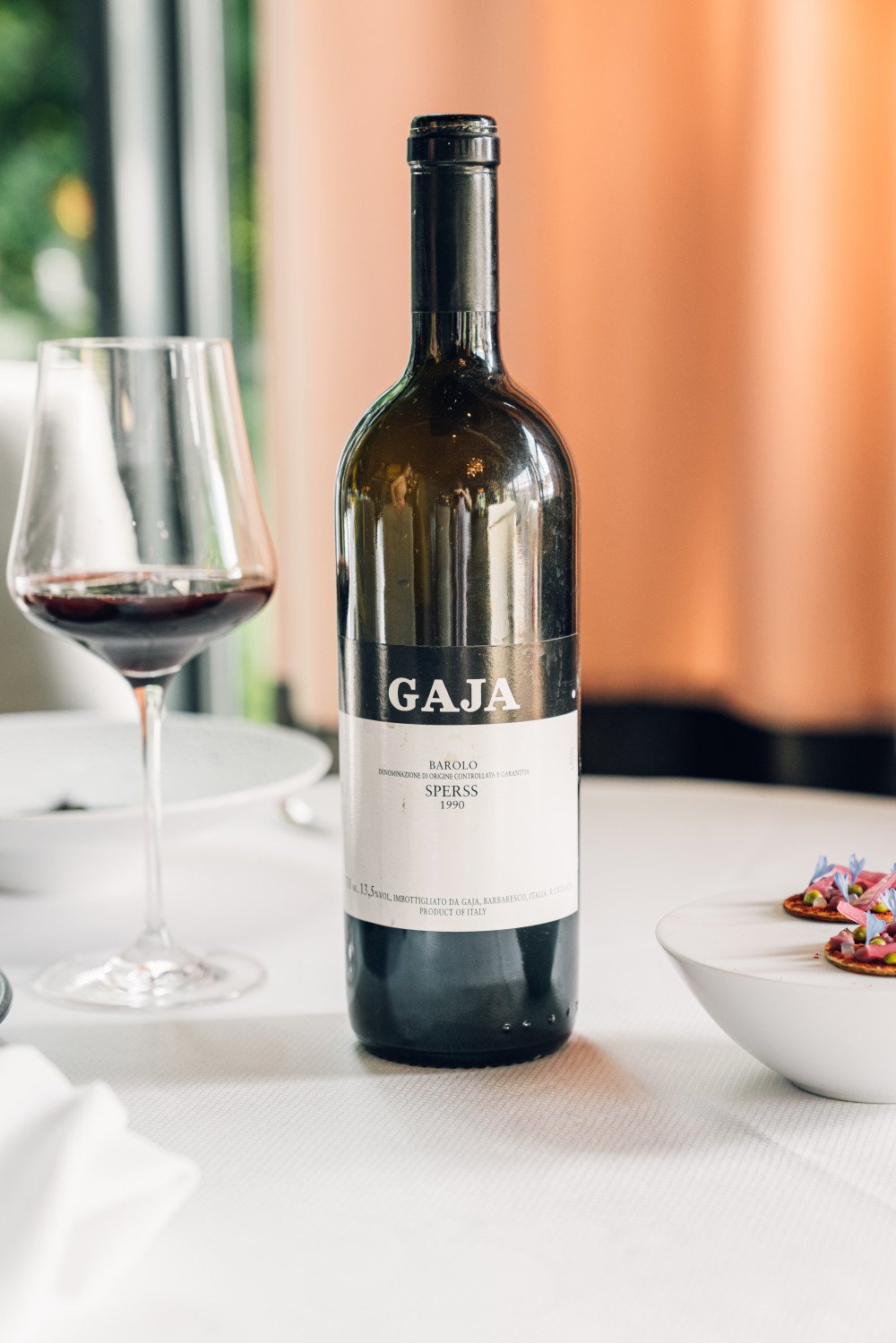
Barolo
A red wine giant from Piemonte: the powerful and complex Barolo from Piemonte was a favourite of the royal House of Savoy. Today, this red wine is still one of the great Italian stars of the wine world.
The best wines from Barolo
A red wine giant from Piemonte: the powerful and complex Barolo from Piemonte was a favourite of the royal House of Savoy. Today, this red wine is still one of the great Italian stars of the wine world.
Where does Barolo come from?
When a wine is named after the area in which it thrives, wine lovers know that origin matters here. This is precisely the case with Barolo. The area in Piemonte, in north-eastern Italy, which covers just 1,800 hectares, was named after the town of Barolo, which is the epicentre of winemaking. In addition to Barolo itself, the zone includes nine other villages. The best sites, however, extend across the municipalities of Serralunga d'Alba, Monforte d'Alba, Castigione Falletto, La Mora and, of course, Barolo.
The landscape here, a UNESCO World Heritage Site since 2014, is characterised by hills, with vineyards nestled at an altitude of between 300 and 450 metres. When the sea retreated from what is now the Langhe region 16 million years ago, it left behind a substrate of clay, limestone, marl, tuff and chalk – in different layers. The soils of the cultivation zones vary between limestone-marl soils around La Morra and Barolo and higher proportions of sandstone around Monforte, Serralunga and Castiglione.
What grapes are in a Barolo?
One grape variety in particular thrives in these very diverse soils. Namely, the red Nebbiolo grape. It is in fact the only authorised grape variety for Barolo. This has been the case for centuries, before Barolo received DOC status in 1966, and with it its protected designation of origin. In 1980, Italy then ennobled the prestigious area with DOCG status. You can't get more wine quality with stricter statutes than that.
And even though Nebbiolo officially became the only grape variety for a Barolo under the protected designation of origin, nothing changed for the winemakers. They simply continued their tradition. But that doesn't mean that the taste has remained the same over the centuries. That was not the case.
What did Barolo used to taste like?
In 1730, the red wine was first referred to as Barolo in a letter between English merchants. This also consisted exclusively of Nebbiolo. However, the Barolo of that time still had a great deal of residual sweetness. Due to the late ripening of the Nebbiolo, fermentation took place during the cold winter months. The low temperatures in the wine cellars often caused the alcoholic fermentation to come to a halt, and the resulting wine was not fully fermented.
Today's Barolo was created in the 19th century with the help of the French oenologist Louis Oudart. He was called to the municipality of Barolo around 1850 by Marchesa Giulia Falletti di Barolo to support her in an advisory capacity at her winery. Not without reason! Thanks to his extensive experience in Champagne, Oudart was very familiar with such a delayed fermentation process – and knew what could be done about it. So he moved the fermentation process to the newly built underground cellar, ensured constant temperatures and improved hygiene. The result was a Barolo very similar to today's. The Savoy royal family quickly took a liking to this new Barolo. This was the beginning of the triumphal march of this unique wine around the world.
What does a Barolo taste like today?
Until the 1980s, this question was easy to answer. Until then, a Barolo was not only strong and spicy, with intense notes of berries, tar, truffles, cloves and nutmeg, but also had very present, if not harsh, tannins. This was precisely the reason why a Barolo still has to mature in wooden barrels for at least two years. And why it is so long-lasting. At that time, a young Barolo was hardly drinkable due to its dominant tannins. In the 1980s, sales figures even dropped because of this. Fortunately, however, 1986 marked the beginning of the Barolo Boys, led by Elio Altare.
Legend has it that Altare, after a trip to Burgundy, went down into his father's cellar with a circular saw and cut up the large old wooden barrels made of Slavonian oak. After all, they were using barriques in Burgundy, and that's what he wanted too. His father saw it – and bequeathed the winery to his daughters. Altare, however, wanted nothing less than to revolutionise Barolo with his group of wine enthusiasts and make it the best wine in the world. Among the boys were Luciano Sandrone, Giorgio Rivetti, Enrico Scavino and the only girl, Chiara Boschi. They were all united by the vision of producing elegant Barolo that could be drunk earlier. To achieve this, they experimented with techniques that Altare had brought back from his travels. Since then, there is not only the traditional Barolo style, but also the modern one, which is accessible earlier and generally more elegant and refined.
How do you drink a Barolo?
However, the longevity of a Barolo has not changed. Whether modern or traditional style, Both types can age beautifully in the bottle and promise great enjoyment even in old age. If you have a mature Barolo that is ten, twenty years or even older, we recommend decanting the wine in advance. This will prevent you from accidentally pouring the sediment that has settled over the years of storage into the glass. Our tip: Before you carefully pour the wine from the bottle into a carafe to separate it from the sediment, please stand it upright for at least 24 hours or place it in a decanting basket. Wine is usually stored lying down. This allows the sediment to settle to the bottom of the bottle.
If, on the other hand, you wish to enjoy a young Barolo, we recommend that you decant it in a large decanter at least five hours beforehand. The oxygen supplied in this way softens the tannins. Generally speaking, it is said that one hour in the decanter compensates for a year's maturation.
Wine producers
What food goes well with a Barolo?
There is a culinary saying in English: What grows together, goes together. And in Piemonte, that means truffles. A Barolo goes well with every imaginable truffle dish. The aged varieties in particular cut an excellent figure here with their tertiary aromas of undergrowth and dried mushrooms. In fact, the combination is a culinary delight!
However, this also applies to braised venison or beef. Here you can also enjoy a young Barolo that has been decanted beforehand. And if the red wine also comes from legendary producers such as Altare, Sandrone, Conterno, Giacosa, Burlotto, Ceretto, Bussolo or Gaja, then you really can't go wrong when it comes to great flavour. Discover fascinating and high-quality Barolo wines now at Best of Wines.
Other Appellations