

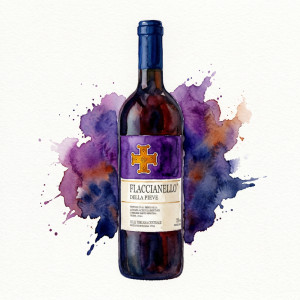
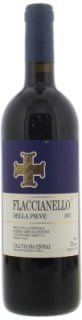
Flaccianello della Pieve
Flaccianello della Pieve is 100% Sangiovese and is produced by Fontodi from grapes from a single vineyard in the Conca d'Oro amphitheater in Panzano, Chianti. This wine is categorized as IGT Toscana rather than Chianti Classico, which is a conscious choice: when Manetti made the first vintage in 1981, the appellation rules were too strict for what he wanted to do.
So is this wine super Tuscan? Yes, but not in the sense of a Bordeaux blend. This wine belongs to a much smaller club. In other words, it is a pure Sangiovese wine that decided to go beyond DOCG to be taken more seriously. Think of Cepparello, Percarlo and Le Pergole Torte. Flaccianello is in that echelon and has done so consistently for 40 years.
About Fontodi
Fontodi is run by Giovanni Manetti, who succeeded his father Dino in 1980. The Manetti family is not a wine family. They produced (and still produce) terracotta around Impruneta.
So why does Fontodi stand out in Chianti Classico? There are two reasons: firstly, the location. Almost the entire estate is in the Conca d'Oro, a natural amphitheater facing south into Panzano; the second reason is the farming methods: certified organic since 2009, using home-made compost and intercropped cover crops. Best of Wines considers Giovanni one of the region's most thoughtful winemakers, and his role as president of the Chianti Classico Consortium is a testament to that, as other winemakers agree.
History & Heritage
Interestingly, Giovanni started making Flaccianello not in 1968 (when the estate was bought by Dino Manetti) but in 1981. By then, the first Super Tuscans had shown that Tuscan winemakers could break the rules and be rewarded for it. Most of the early wines were made from cabernet and merlot. Giovanni did the opposite. Pure Sangiovese, single vineyard, French oak.
Why is that important today? Because Flaccianello proved that Sangiovese could compete with Bordeaux blends. Since then, the wine has been listed among the world's great red wines, and its template (vineyard, 100% Sangiovese, IGT) is copied throughout Tuscany.
Terroir & Climate
Conca d'Oro is a key site. A south-facing amphitheater at 400-450 meters above sea level, it sounds contradictory (high altitude, warmth) but everything works as it should. The slopes are sunlit all day long. The nights are cool because of the high altitude. Sangiovese retains its acidity and flavors and does not become jammy.
The soil is galestro, a layer of calcareous shale typical of Panzano, often mixed with alberese (harder limestone). It is stony, well drained and not fertile. Why is this important for Sangiovese? Because on rich soils, Sangiovese overgrows and loses its structure. On stony, thin soils, it produces the concentrated, flavorful and structured wines that Fraccianello is known for.
Winemaking
Giovanni ferments the Flaccianello fruit in stainless steel using indigenous yeasts, then transfers the wine into French oak barriques (225-liter Bordeaux-type barrels) for aging for 18-24 months. The most important choice: a light level of toast.
Why it matters? The heavily toasted oak imparts mocha, burnt and sweet vanilla, drowning out the red cherry and herbal notes of the Sangiovese. The light toast gives structure, gives it room to breathe and doesn't overwhelm the wine. The flavors feel fruity and earthy rather than woody. This is what makes Fontodi so special and why Flaccianello, despite the aromas of new oak, doesn't taste like a barrel wine.
Tasting Notes
First impression is flavorful and not heavy. Sour cherry and dark plum, then dried herbs, tobacco leaf, some leather and a characteristic Sangiovese spiciness, somewhere between balsamic and crushed stone flavors. Oak is behind rather than ahead of the fruit, adding notes of cedar and sweet spices.
On the palate, structure is the deciding factor. Sangiovese is characterized by high acidity and firm, fine-grained tannins, while Flaccianello has plenty of them. The wine is concentrated but not heavy. The finish is long, savory and mineral. Strong vintages take time. Five to eight years after release, the wines begin to open up.
Food Pairing
Acidity and tannin are the driving forces behind this pairing. Both need fat and protein. The Tuscan tradition is largely responsible for this:
- Bistecca alla Fiorentina, rare, only with salt and olive oil.
- Pappardelle al cinghiale (wild boar stew).
- Peposo (beef stew with black pepper) from the Impruneta region, cooked over low heat.
- Aged Pecorino Toscano, the salty flavor emphasizes the fruitiness.
Serve at 16-18°C. Avoid sauces that are too sweet or thick: Flaccianello likes salty, savory dishes.
Serving Suggestions
Serve at 16-18°C. Any warmer and the alcohol will start to dominate. Decant young wines for at least an hour, ideally two hours. Older bottles (15 years and older) should be carefully decanted within 30 minutes, leaving no sediment. A standard bowl shaped like a Burgundy glass will do. The flavors unfold more easily.
Vintages
Flaccianello has remarkable stability, but vintage style is still important: warmer years like 2015 and 2019 yield brighter fruit, more ripe tannins and earlier availability. Cooler, classic vintages (2016, 2021) offer fuller flavor and structure, sharper acidity, and longer cellaring time. Both styles can stand up to aging, but the paths are different.
If you're opening a bottle this year, look for one that has been aged for 10 years or more. If you're going to cellar wine for a long time, classic tasting vintages are a win-win. Older bottles tend to cost more, and for good reason.
Fontodi
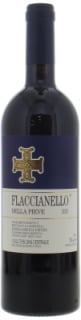
2021
€ 109,00 (ex Vat) € 131,89 (in Vat) more info
Fontodi
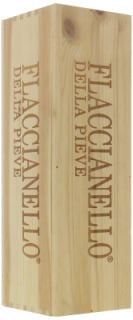
2017
(Magnum) € 209,00 € 252,89 (in Vat) more info
Fontodi
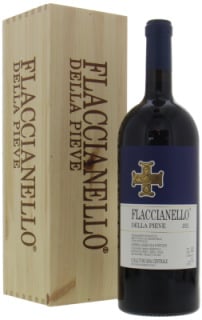
2021
(Magnum) € 219,00 € 264,99 (in Vat) more info
Fontodi
2003
€ 139,00 € 168,19 (in Vat) more info
Cellaring Potential
Most strong vintages of Flaccianello drink well from about the seventh year onward and keep well for 20 years or more. The driving force is the natural acidity of Sangiovese and firm tannins from old wood and new oak that need time to integrate. The wine is stored in a stable place at 12-14°C and moderate humidity. As the wine matures, the red fruit aromas darken, the tannins soften and the tertiary aromas (leather, dried flowers, forest floor) become dominant.
