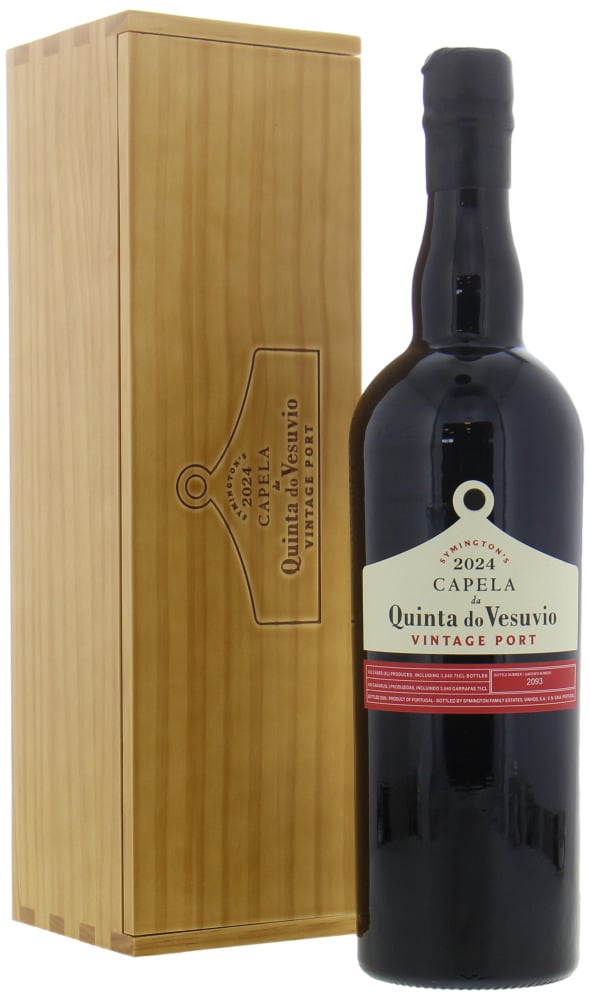
Der Capela Vintage Port 2024 ist eine Feldmischung aus über 100 Jahre alten Reben, die auf dem Douro-Weingut Quinta do Vesúvio im Norden von Portugal angebaut werden, und enthält Trauben aus weiteren Parzellen, darunter Touriga Franca. Insgesamt wurden nur 5.160 Flaschen produziert.
Die Wachstumsbedingungen im Jahr 2024 waren mild, und die Trauben reiften allmählich heran. Die Tagestemperaturen lagen im niedrigen bis mittleren 30er-Bereich (°C), während die Nachttemperaturen während der Erntezeit deutlich abkühlten, was das Aroma dieses Weins erklärt: ein erfrischendes Bouquet, das dunkle Beerenfrüchte, Lavendel, Kräuter und Kiefer vereint. Vollmundig und mit fester Struktur, balancieren seine trockenen und zurückhaltenden Aromen die Süße gut aus, mit körnigen Tanninen und einem prägnanten, aber lang anhaltenden Abgang am Gaumen.
Der Capela durchläuft eine längere Gärungsphase als die Quinta do Vesúvio-Abfüllung des Weinguts, gefolgt von einer 18-monatigen Reifung in Eichenfässern. Ein Teil des Touriga Franca stammt aus dem Weinberg Vale da Teja, dessen Rebstöcke über 50 Jahre alt sind.
Der Wein lässt sich am besten zwischen 2038 und 2078 genießen. Es ist üblich, den jungen Vintage Port-Wein zu dekantieren, dessen robuste Struktur das Warten lohnenswert macht.
Robert Parker (97)
The 2024 Capela da Quinta do Vesúvio Vintage Port, named after the Chapel Vineyard, which is the first to be replanted after phylloxera, is a field blend of centenary vines, and the wine also has grapes from other plots, including a younger one planted exclusively with Touriga Franca. It fermented with indigenous yeasts in stone lagars that were foot trodden and then matured in oak casks for 18 months. This somehow didn't have the energy and edge of the regular Vesúvio. It has notes of orange blossom, a hint of resin and rockrose, and it grew in the glass. It has lavender, notes of pine needles, the Vesúvio signature, and is explosive in the mouth, with well-armed tannins. It's a big wine but has balance. It has 20% alcohol, a pH of 3.65 and 101 grams of sugar. 5,160 bottles produced. It was bottled in 2026.
James Suckling (96)
Graphite and blackberries, very aromatic and absorbing. Full-bodied and chiselled, with an engaging austerity that complements a sense of restrained sweetness. Grainy and sharp on the finish. Vines from Vinha da Capela co-fermented with alicante bouschet from Vinha dos Castelos; touriga nacional from Vinha da Escola co-fermented with sousão from Vale da Teja and touriga franca (50+ years) from Vale da Teja.
Jancis Robinson (19)
Only the sixth vintage in almost 20 years. Vinha da Capela field blend/old vines plus Vinha dos Castelos Alicante Bouschet (co-fermentation); Vinha da Escola Touriga Nacional plus Vale da Teja Sousão (co-fermentation); Vale da Teja Touriga Franca (50+ years). This has a longer fermentation than the Quinta do Vesúvio and a drier profile. TA 4.6 g/l, RS 101 g/l. Bottled May 2026 without filtration. 430 cases, ie 1% of the vineyard’s production in 2024.
Black core. Extremely intense aroma of black fruit with a hint of lavender and a herbal impression. Drier than Vesúvio. A big punch of compact tannins and yet remarkably silky. Slides across the palate like a heavyweight boxer floats across the ring. Deep and rich and yet lifted by that herbal freshness. A powerful beauty that finishes dry. Julia Harding MW
Vinous (96)
The 2024 Capela da Quinta do Vesuvio Vintage Port is the sixth time this cuvée has been released, a selection of parcels populated by century-old vines at the namesake quinta. It has a perfumed nose that is more floral than Vesuvio's regular bottling, more open, with scents of black plum, bay leaf and, again, that touch of Japanese nori. The palate is silky smooth on the entry with impressive depth. Plush and saturated tannins, very well judged acidity, there is impressive weight on the finish with a liberal sprinkling of black pepper. Quite a forthright Vintage Port, give this a few years in the cellar.