Madeira: The Almost Indestructible Wine from an Atlantic Island

Madeira: The Almost Indestructible Wine from an Atlantic Island

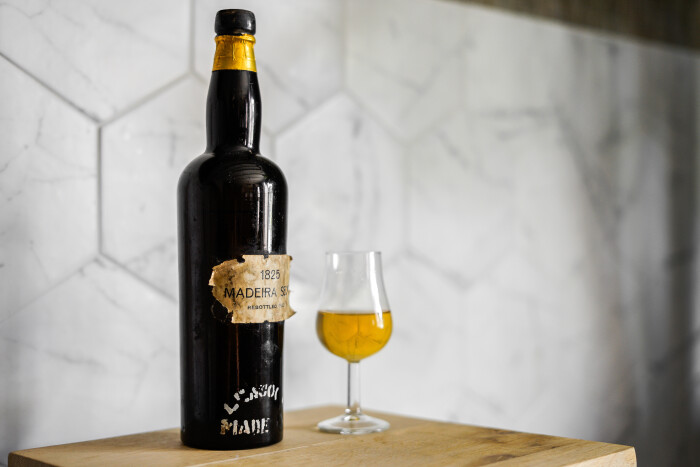
Somewhere in the North Atlantic, about 500 kilometres west of Morocco and 1,000 kilometres from Lisbon, there's a small Portuguese island that gave the world one of the most unusual wines ever made. It's fortified, heat-aged, oxidised and practically impossible to kill. Open a bottle, re-cork it, leave it for three months, and it'll still taste fine. Leave a bottle sealed in a cellar for 200 years, and there's a reasonable chance it'll still be good.

Madeira was for long a forgotten wine, producing too much cheap, indifferent bottles from inferior grapes while the famous old bottles gathered dust in cellars nobody was looking in. Winelovers however knew, that the finest wines were always there, waiting. A handful of dedicated producers, a gradual quality revival, and a new generation of wine lovers discovering that a 50-year-old bottle of Bual can still be extraordinary, all of this has been quietly rebuilding Madeira's reputation. On an island that produces one of the world's most long-lived wines, patience is not in short supply.

That's Madeira. And the story of how it got that way is as strange as the wine itself.

A History Born at Sea

Madeira was conquered by Portugal at the start of the 15th century, and within 25 years, the island's wine was already being exported. The location of Madeira within the Atlantic was perfect as a harbour to collect food and water for ships heading to the New World, the East Indies, or Africa. Every vessel that passed through took on supplies: food, water, and wine.

The problem was the wine didn't travel well. To stop it from spoiling on long voyages, producers began adding grape spirit to stabilise it. That worked. But something else happened too: the heat of the ship's hold, the barrels were often used as ballast, stowed deep below deck,  seemed to transform the wine. Ships that returned to Madeira with unsold barrels brought back wine that was richer, more complex, and more stable than when it left. Winemakers took note.

By the 18th century, the island's producers were deliberately sending barrels on long sea voyages, sometimes as far as India and back, purely to improve the wine. This practice, known as vinho da roda or "round-trip wine", became a mark of quality. Eventually, producers found ways to replicate the effect on land, using heat instead of tropical sea journeys. The heating process, known as estufagem, became one of Madeira's defining characteristics.

The wine reached its golden age in the 18th and early 19th centuries, when it was the most fashionable fortified wine in Britain and the most popular wine in the American colonies. Then came disaster: powdery mildew in 1851, followed by phylloxera in 1872. By the end of the 19th century, most of the island's classic vineyards had been destroyed, many were replanted with inferior American hybrid varieties, and a century of slow decline followed. Since the 1980's Madeira is slowly getting back.

The Wines

Madeira is not one wine. It's a family of wines, ranging from bone-dry aperitifs to intensely sweet after-dinner drinks, all sharing the same volcanic island origin and the same heat-aged character.

The classic range is built around four noble white grape varieties, each associated with a distinct style. At the dry end, Sercial makes a light, high-acid wine with citrus and almond notes, ideal before a meal. Verdelho produces medium-dry wines with a smoky, slightly spiced character. Bual (or Boal) is medium-sweet, with roasted nuts, ripe fruit, and a dark golden colour. Malmsey (from the Malvasia grape) is the sweetest of the four, full-bodied, richly fragrant, with dried fruit, caramel, and molasses, balanced by the acidity that runs through all Madeira wines.

Beyond these four, Terrantez is a rare and highly prized white variety found mainly in very old vintages, capable of producing wines of extraordinary complexity. And then there's Tinta Negra, the island's most planted grape — a red variety that can be made in any style from dry to sweet and accounts for the vast majority of everyday Madeira production.

Aged categories range from three-year blends (the most accessible entry point) to ten-year and fifteen-year blends, up to single-harvest Colheita wines (aged at least five years in cask) and the most prestigious category of all: Vintage Madeira (called Frasqueira), which must spend a minimum of 20 years in cask before bottling, followed by at least two more in bottle. These are among the longest-lived wines in the world.

The Style

What sets Madeira apart from any other wine, fortified or otherwise, is the combination of oxidation, heat, and acidity. Most wines are damaged by oxygen and warmth. Madeira is made by them. The heat-ageing process caramelises sugars, deepens colour, and creates complex flavours of dried fruit, nuts, coffee, and a distinctive tangy, almost salty edge that comes from the island's maritime climate.

The high natural acidity of the grapes, particularly Sercial and Verdelho, means the wines never taste heavy or cloying, even in the sweetest styles. There's always a lift, a sharpness, that keeps things fresh. This is what makes a rich, sweet Malmsey still feel alive and food-friendly rather than syrupy.

And unlike virtually any other wine, Madeira is essentially impervious to deterioration once opened. The oxidative ageing process has already done its work. An opened bottle can be recorked and if you store it for months and open it again you won't notice a big change.

The Vineyards

The island of Madeira is small, steep, and volcanic, rising sharply from the Atlantic. Most of its roughly 500 hectares of planted vineyards cling to terraced slopes, stone-walled platforms called poios, that were built by hand over centuries to create flat growing surfaces on near-vertical hillsides. These terraces are one of the defining images of the island.

Viticulture here is physically demanding. Machines can't access most plots. Vines are trained on low trellises called latada,  a canopy system that lifts the foliage off the ground to improve airflow and reduce the constant threat of fungal disease in the island's humid, tropical climate.
Elevations range from sea level to around 700 metres, and altitude plays a big role in what gets planted where. Sercial, the most acid-prone variety, thrives in the coolest sites at the highest elevations, often on the north of the island. Malmsey prefers the warmth of the south-facing coastal slopes around Câmara de Lobos, west of the capital Funchal.

The total vineyard area is tiny, around 500 hectares spread among small individual farmers.

The Terroir

The island is volcanic, it emerged from the sea some 14 million years ago, and the soils reflect that origin. They are dark, rich in basalt and other volcanic minerals, and highly fertile. The Rare Wine Co., one of the most respected Madeira specialists, describes vines "nourished by the ashes of a primeval forest consumed by fire five centuries ago, rooted in rock that exploded from the sea."

The climate is subtropical oceanic: warm year-round, rarely cold, with high humidity and significant rainfall. This makes fungal disease a constant challenge, which is why the latada trellis system was developed, keeping the vine canopy raised improves air circulation and reduces disease pressure. The island's position in the Atlantic means sea breezes moderate temperatures, and the mountainous interior creates a patchwork of microclimates at different exposures and altitudes.

The Grapes

Six varieties are at the heart of serious Madeira production:

- Sercial is grown at the highest, coolest sites and produces the driest, most austere style, high in acidity, light in colour, with citrus and almond character. It's sometimes compared to a fino sherry in its freshness and salty edge.
- Verdelho was once the most widely planted variety on the island and for centuries formed the backbone of exports. It makes medium-dry wines with a smoky, golden character.
- Bual (Boal) is a rich, medium-sweet variety producing wines with dark golden colour, roasted nut flavours, and impressive aging potential.
- Malmsey (Malvasia) is believed to have originally come from Crete, making it the first variety planted on the island. It produces the island's richest, most perfumed sweet wines.
- Terrantez is rare and nearly extinct in the vineyards, but highly prized in old vintages. It produces wines of great complexity, somewhere between sweet and medium-sweet, with a distinctive bitter finish.
- Tinta Negra dominates production in terms of volume. It's the everyday workhorse, a red grape capable of being made in any style, from dry to sweet, depending on how it's vinified.

How the Wine Is Made

The first part of winemaking is similar to most other winemaking: the grapes are harvested, sorted, selected, crushed, and fermented. In Madeira when making a dryer style wine, the juice is first separated from the skins before the fermentation starts. For sweeter ones, skin contact is used to extract more texture and phenols to balance the sweetness.

Fermentation is then stopped at a calculated point by adding neutral grape spirit at 96% alcohol. The earlier the fortification, the more residual sugar remains in the wine, and the sweeter the final product. Sweet Malmsey is fortified after roughly 24 hours; dry Sercial ferments for around seven days before the spirit is added.

After fortification comes the step that makes Madeira unique: the heat ageing. Estufagem is the modern, faster method, used primarily for younger wines made from Tinta Negra. The fortified wine is heated in temperature-controlled tanks to around 45°C for approximately three to four months, then cooled and left to stabilise in large wooden vats for another two years. The whole process was invented in 1794 by a local physician and has been used ever since for producing accessible, affordable Madeira.

Canteiro is the traditional method, used for the finest wines. After fortification, barrels are placed on wooden beams (canteiros) in the attics of the wine lodges in Funchal, where natural warmth from the subtropical climate and the heat of the sun on the roof, gradually warms the wine over years or decades. Temperatures in these attics can reach over 30°C. The slow, gentle heat produces wines of far greater complexity than estufagem. As the wine ages, evaporation reduces the contents. This loss, around 4–5% per year, is known as the "angel's share." Vintage Madeira must be matured for at least 20 years in wooden casks under the canteiro system.

Famous Madeira Wines and Producers

The last 200 years hundreds of companies that have produced and shipped Madeira. However, only four wine companies are still owned by their original founding families: Blandy's, Borges, D'Oliveira, and Barbeito. It gives a good indication how the industry's 20th-century collapse really was.

Blandy's is the biggest name on the island and the most widely distributed Madeira brand internationally. Founded in 1811 by Englishman John Blandy, who arrived on Madeira reportedly for his health, it has been producing wine ever since and today operates as part of a partnership with the Symington family of Porto. Blandy's accounts for a significant share of all Madeira production through its stake in the Madeira Wine Company, which also markets the historic labels Cossart Gordon and Leacock's. For everyday drinking, their 5-year, 10-year, and 15-year aged ranges across all four noble grape varieties are the most accessible entry points into serious Madeira. Their vintage bottles, particularly old Malmseys and Buals from the early 20th century, appear regularly at auction and are considered benchmark examples of the classic style.

D'Oliveira is the treasure chest of the Madeira world. Founded in 1820 and still housed in cellars dating from 1619, it is the only producer on the island that can offer commercially available wines going back to its founding year. Their current list includes Verdelho vintages from 1850, 1890, 1900, 1905, and 1912: wines that are now well over 100 years old and still being bottled from cask to order. They also have Terrantez wines from 1880 and 1899, Bastardo from 1927, and Moscatel from 1875. When Blandy's and other producers were running low on old stock in the 1970s and 1980s, it was D'Oliveira they turned to. The house style is powerful and concentrated, with intense aromatics and great viscosity, wines that feel like they have been quietly accumulating depth for decades, because they have been.

Henriques & Henriques is the largest independent producer on the island, founded in 1850 and still based in Câmara de Lobos, the village west of Funchal that is home to some of the finest Malmsey vineyards. Their Solera wines, blended from multiple vintages over many decades, including a Verdelho Solera dating to 1898, are among the most distinctive Madeiras available. Henriques & Henriques is also known for pushing the dry style forward, with clean, precisely made Sercials and Verdelhos that reflect the island's volcanic character clearly.

Barbeito is the newest of the four family houses, founded only in 1946 by an accountant named Mário Barbeito who had the foresight to buy up old vintages from across the island when prices were low. His daughter Manuela, and then his grandson Ricardo Freitas, built the company into what Jancis Robinson has called the "Lafite of Madeira." Barbeito's hallmark is precision, wines of unusual clarity and finesse compared to the more traditionally rich and powerful style of the other houses. Ricardo Freitas introduced single-cask and single-harvest bottlings, recovered the nearly extinct Bastardo grape, and partnered with the American specialist Rare Wine Co. to create the Historic Series, wines named after early American cities (Charleston Sercial, Boston Bual, New York Malmsey, Savannah Verdelho) that have done much to rebuild Madeira's audience in the United States. Among their most celebrated old releases are a 1795 Terrantez, a 1863 Bual, and a 1875 Malvasia, wines of extraordinary age that have appeared at major London auctions to considerable attention.

Justino's deserves a mention as the island's largest single producer by volume, founded in 1870 and today the main supplier to many export markets, particularly France. While not as focused on old vintages as D'Oliveira or Barbeito, Justino's produces reliable, well-made Madeiras at accessible prices and is an important part of what keeps the island's wine economy functioning.

One final name that collectors should know: Rare Wine Co., based in the United States. It's not a producer but a specialist importer and Madeira advocate, and its Historic Series project with Barbeito has arguably done more than anything else in the past 30 years to reintroduce American wine drinkers to a wine that was once their national favourite.


Three Fun Facts

1. Shakespeare wrote about it. Madeira wine appears in several of Shakespeare's plays, most memorably in Henry IV, where the character Falstaff is accused of having sold his soul to the devil in exchange for a chicken leg and a cup of Madeira. The reference reflects how well-known the wine was in Elizabethan England. It needed no explanation for an audience.

2. It's the wine that toasted American independence. When the Declaration of Independence was signed in 1776, Thomas Jefferson and the Founding Fathers raised their glasses not with Champagne, but with Madeira,  their wine of choice. And it wasn't just a one-off: John Adams reported that delegates to the First Continental Congress spent their evenings drinking Madeira after long days of debate. George Washington ordered at least 1,900 bottles' worth for his army headquarters during the war. For most of the 18th century, Madeira was the most popular wine in the American colonies, accounting for a quarter of all the island's exports. At a diplomatic dinner celebrating the Louisiana Purchase in 1803, each nation's wine was used for the toast: France with Champagne, Spain with Malaga, and the United States with Madeira.

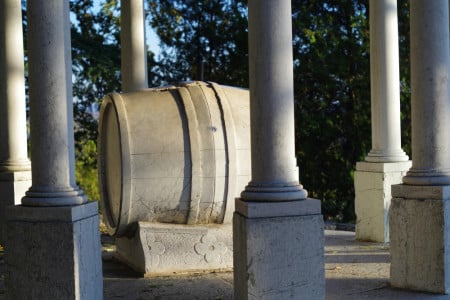
3. A nobleman chose to be drowned in it. George, Duke of Clarence, brother of King Edward IV of England, was condemned to death in 1478. Given the choice of his execution method, legend has it he asked to be drowned in a barrel of Malmsey, Malvasia Madeira wine. Whether or not the story is entirely true, it was recorded by contemporaries and has been repeated ever since. It's not a bad way to be remembered, as far as wine anecdotes go.

Added to favorites.