
| Classification | Cru Classe |
| Type | White |
| Producer | Didier Dagueneau |
| Vintage | 2018 |
| Country | France |
| Region | Loire |
| Appellation | Pouilly-Fume |
| Grape | Sauvignon Blanc |
| Volume | 0,75 |
| Condition | Perfect |
| Label | Perfect |
| Drinkable | -2036 |
| Stock | 0 |
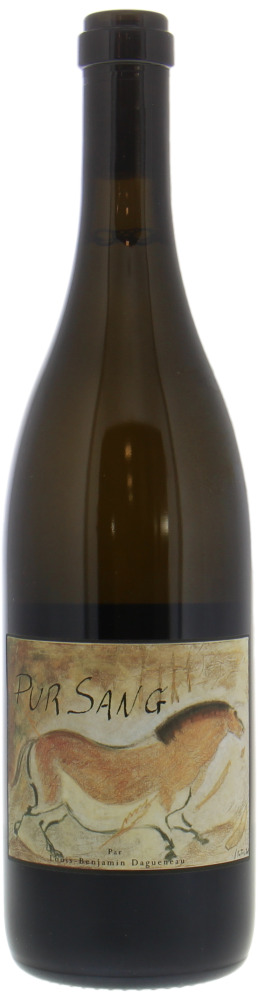
The 2018 growing season in Pouilly-Fumé started with rain and ended warm and dry. A long, sunny summer brought ripe, concentrated fruit and a healthy harvest for Louis-Benjamin Dagueneau. For Pur Sang, this was a deep and generous vintage, but still retained a crystalline structure. Without losing the tension that Dagueneau is known for, the wines should be more ripe and meaty than in cooler years such as 2014 and 2016.
here's a charming linen texture to this: semi-transparent, yet with loads of persistence and floral complexity. Long and haunting in length. Turning into its earthier phase, yet with fruit intact. Does Sauvignon get any better? But this is Dagueneau first, Pouilly-Fumé second … and Sauvignon last.
The first thing you notice is the tension. There are notes of lemon zest, white peach and a distinctive flinty, smoky, almost percussive note - such is the character of Pouilly. Aging in oak barrels (mostly 320-liter cigar-shaped barrels) imparts a creamy weight without vanilla. The palate is broad for Pur Sang, as befits the 2018 vintage, but the acidity keeps everything upright. Salty, savory finish; serve around 10-12°C.
Pur Sang is 100% Sauvignon Blanc and is made primarily from the deep clay section of La Folie, mixed with limestone. So why is it not similar in flavor to New Zealand Sauvignon? Soil and restraint. Low yields, hand harvesting and indigenous yeasts mean the grapes show savory, smoky, mineral notes instead of tropical fruit. The clay-limestone backbone gives the wine a roundness not found in pure Silex plots.
Best drunk between 2024 and 2035; the 2018 can be approached earlier than, say, the 2016, as the grapes are more mature and the acidity a little softer. But there's no rush. The lees work and structure will remain after 10 years; store horizontally at 12-14°C, away from light.
Didier Dagueneau spent 25 years turning Pouilly-Fumé upside down and applying the Burgundian technique to Sauvignon Blanc. After he died in a plane crash in 2008, his son Louis-Benjamin took over the farm at age 26. And the results speak for themselves. Louis-Benjamin inherited his father's uncompromising approach: yields 50-75% lower than neighboring estates, multiple hand-picking and oak fermentation of his controversial Sauvignon Blanc In 2018, he reclassified the estate's wines as Vin de France, another provocative move, abandoning the appellation system altogether. This estate is integral to understanding what Sauvignon Blanc can achieve.
La Folie sits on deep clay soils mixed with limestone, not at all like the famous silex flint soils responsible for Pouilly-Fumé's smoky reputation. Why it matters. In the Loire's continental climate, the clay soils retain moisture even during dry periods, so the vines don't close up during the summer heat. This gives the wines a richer texture and less pungent minerality than with pure flint. The diversity of soil types in Saint-Andelain is also why Dagueneau treats each plot as a stand-alone wine, rather than blending raw materials. The Loire River moderates the region's temperature and creates a morning mist that extends the ripening period.
Dagueneau was a pioneer in fermenting Sauvignon Blanc in oak barrels on the Loire. However, there is a fundamental difference here. They use barrels for texture and leach contact, not for flavor. Only wild yeast is used, with no acidification or added sugar. Fermentation takes place in different sized barrels, including the distinctive cigar-shaped 320-liter barrels and larger 600-liter foudres (large wooden vats). The wine is aged on the lees for 12 months without stirring, which gives it an immediately recognizable creamy texture. It is then aged in tanks for several months before bottling to allow all the components to integrate. Louis-Benjamin continues to experiment with packaging, such as ceramic or glass, but the basic philosophy remains the same.
The mineral backbone and bright acidity of this wine make it an ideal pairing for Loire river fish - pike, perch (simply grilled with herbs). But the classic combination is the following: local goat cheese, Crottin de Chavignol. The texture of the wine matches the creaminess of the cheese, and the acidity cuts through the fat. The wine's subtle smoky flavor matches the brine. If you want to cook something more authentic, try baked chicken with tarragon or asparagus with hollandaise sauce. The key is to make a dish that won't lose out to the elegant mineral backbone of the wine. Chill to 10-12°C to preserve freshness, or serve at room temperature to open up the flavors.
With track & trace code