
| Classification | Cru Classe |
| Type | White |
| Producer | Didier Dagueneau |
| Vintage | 2018 |
| Country | France |
| Region | Jurancon |
| Grape | Sauvignon Blanc |
| Volume | 0,75 |
| Condition | Perfect |
| Label | Perfect |
| Drinkable | -2022 |
| Stock | 0 |
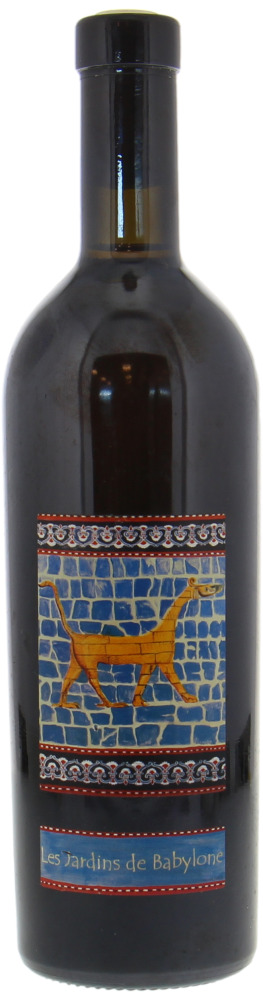
The 2018 growing season in Jurançon was warm and generous in the foothills of the Pyrenees; for Les Jardins de Babylonee in 2018, that meant a healthy Petit Manseng on the terraced slopes around Aubertin, and the föhn's autumn winds dried the grapes (passé), allowing for concentration without heaviness. This year's Dagueneau family's sweet Jurançon leans toward richness but has good acidity. Expect a fuller, more ripe fruit style than in the cooler vintages.
Dried apricot and candied citrus zest lead the way, with more savory notes like quince, honey, ginger and pineapple underneath. The flavor is rich but not enveloping. The acidity shines through the sweetness and the finish is long, spicy and surprisingly dry. Drink now with the right food or wait and see. Les Jardins de Babylone 2018 will become increasingly complex over the next decade.
Petit Manseng does the heavy lifting in Les Jardins de Babylon. It's thick-skinned, small and has high acidity that doesn't drop as sugar levels rise. So why this particular grape? Because you want a variety that can be left hanging on the vine until November and still retain enough firmness to balance its sweetness when the vines wilt. Few grape varieties allow you to do this. Petit Manseng can do it.
Drink between 2025 and 2040. The balance of sugar and acidity in Jurançon Moelleux makes it suitable for long aging, while Petit Manseng retains its freshness for decades when stored at 12-14°C. Over time, the fruitiness changes from fresh apricot to dried fig, saffron and orange marmalade.
Twelve hectares in Pouilly-Fumé. Didier Dagueneau built the estate from scratch in 1982, starting with 1.2 hectares in En-Chaille, and he was among the first in the region to ferment and age Sauvignon Blanc in oak, using it for texture rather than aroma. Yields sit at 50 to 75 per cent of what neighbours pick. Soils are still sometimes ploughed by horse, and harvesting is done by hand in several passes. Since his death in 2008, son Louis-Benjamin and daughter Charlotte have run things, and in 2018 they dropped the appellation and labelled the wines Vin de France. Plot by plot: Silex, Pur Sang, Buisson Renard, Astéroïde. But the Jurançon sweet wine Les Jardins de Babylone is the exception, made from Petit Manseng.
Forget the Loire for a while. Les Jardins de Babylone is produced in Jurançon, at the foot of the Pyrenees Mountains in southwestern France. Why is location so important? The climate is shaped by terraced vineyards on steep slopes at high altitude, clay-calcium soils containing galets (round stones), the humidity of the Atlantic Ocean and the warm fall föhn winds blowing from the mountains. This wind is key. This wind allows the Petit Manseng to dry on the vine, concentrating sugar and not rotting. Without this wind, Jurançon Moelleux would not have been born.
Harvested by hand many times, only those berries that are sufficiently wrinkled on the vine. The cellar uses the Dagueneau approach inherited from Pouilly-Fumé. No native yeast, no chaptalization (finishing), no acidity adjustment. Fermentation and aging takes place in barrels, with prolonged contact with the lees to create texture without dominating the fruit. Oak is used with care to impart flavor, not aroma. This is why it has a sense of apricot rather than vanilla.
Foie gras is a classic combination in Jurançon. The acidity of the wine cuts through the fat. Other combinations include.
Serve at 8-10°C. Chill to emphasize acidity, warm slightly to intensify flavors.
With track & trace code