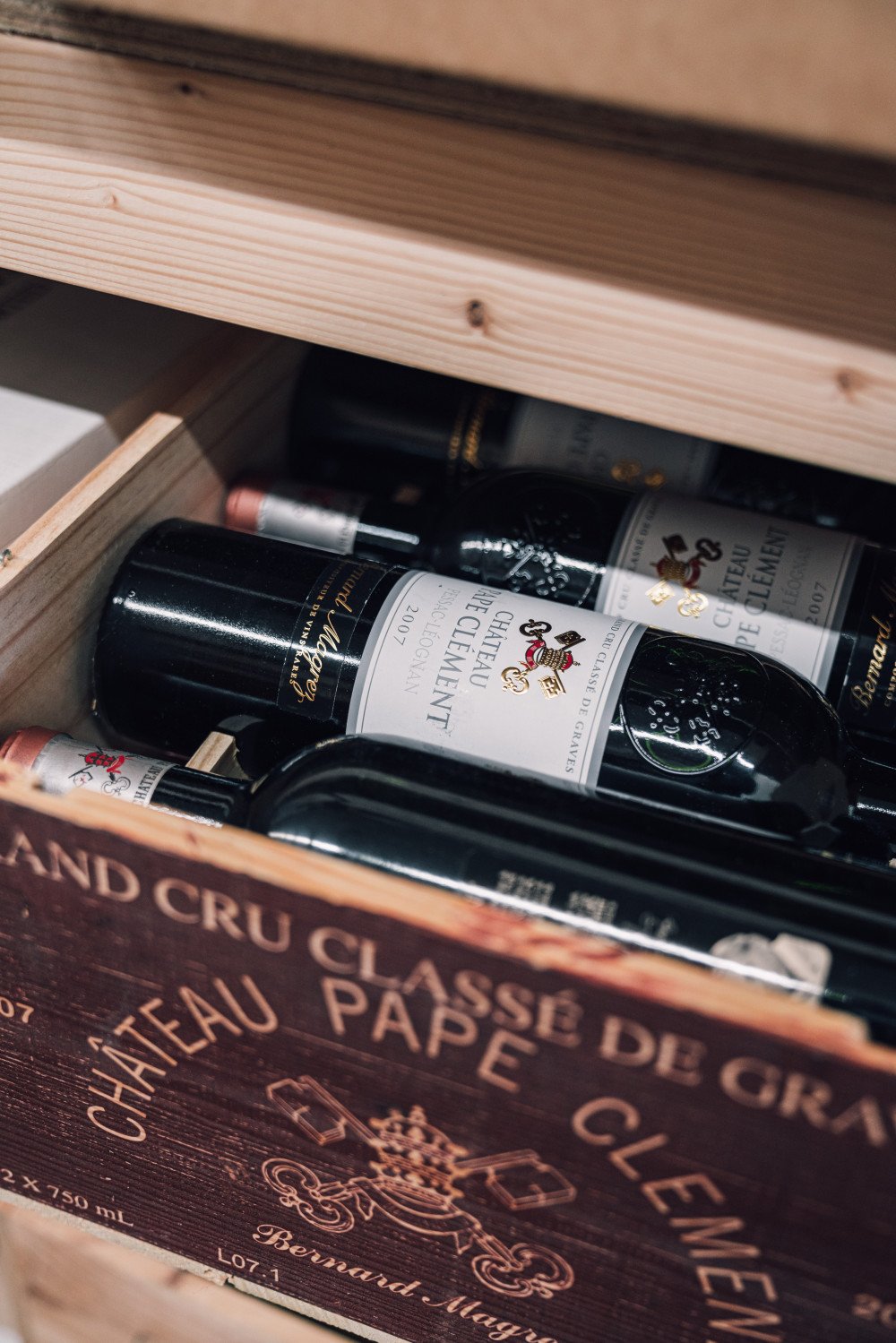

Chateau Pape Clement
Pessac is a suburban area of Bordeaux and right in the middle of it all lies Château Pape Clément, a Grand Cru Classé de Graves vineyard where the vines extend right up to the city limits. Named after the Pope, this vineyard has a history of winemaking spanning approximately seven centuries; it is one of the oldest active vineyards in Bordeaux and maybe even the best-known vineyard of its current owner, Bernard Magrez. While red wine accounts for the majority of production, the dry white wine also has its own dedicated following.
Work in the vineyards and winery is deliberately slow and primarily done by hand. The harvest is gathered into small crates, with manual harvest into small crates.
Visitors are welcome year-round, a practice not common among all Grand Cru (classified growth) estates.
A pope gave it the name
The estate claims its first harvest in 1252, which puts the vineyard here well before most of Bordeaux's famous addresses existed. The name arrived later. The Archbishop of Bordeaux was elected pope in 1305 under Philip the Fair and took the name Clement V, and the property carried his title from then on.
After that it stayed church property for five straight centuries, held by the archbishops of Bordeaux. Few Bordeaux estates can point to that kind of unbroken institutional ownership.
Bernard Magrez bought Château Pape Clément in the 1980s. It was his first vineyard, bought with money made in spirits and branded wine before he sold those businesses off and started buying estates instead.
He kept going. Magrez is sole owner of four Bordeaux classified growths, one in each of four appellations: Pape Clément in Graves, Château La Tour Carnet in the Haut-Médoc, Château Fombrauge in Saint-Émilion and Clos Haut-Peyraguey in Sauternes.
Beyond Bordeaux, the collection runs to 42 vineyards across ten countries.
The vineyards
Château Pape Clément cultivates 75 hectares of vineyard in Pessac, of which 65 hectares are planted with blue grape varieties and 10 hectares with white grape varieties. As urban Bordeaux expanded around the farm, the vineyard has effectively become enclosed on all sides, with a spacious garden and the chateau itself situated between the rows of vines.
All work is meticulously managed on a plot-by-plot basis. Grass is allowed to grow between the rows of vines, and the soil is plowed rather than tilled with a cultivator; much of this plowing is done using the power of livestock, such as oxen and horses, instead of tractors.
The rest of the vineyard management schedule is likewise carried out by hand: examples include suckering, lateral shoot removal, green harvesting to reduce yield, and integrated pest management instead of routine pesticide application. The vigor of the vines is regulated directly in the vineyard, rather than being corrected later at the winery.
Harvesting is done by hand, with the grapes placed in small crates and undergoing an initial sorting right among the vines. White grapes are harvested in two stages to ensure that each plot is picked only when it has actually reached optimal ripeness. This winery holds both Terra Vitis certification and HVE3 certification, the highest level under France's High Environmental Value system.
Cabernet leads, but not by much
The red wine consists of a typical Pessac-Léognan blend, usually dominated by Cabernet Sauvignon, with Merlot close behind. The typical blend ratios for Château Pape Clément are as follows:
- 56% Cabernet Sauvignon
- 40% Merlot
- 4% Cabernet Franc
These proportions vary from year to year and can sometimes change significantly, with the two main varieties coming close to parity in some vintages. Additionally, Petit Verdot is also cultivated in red wine vineyards.
For white wines, three varieties are used: Sauvignon, Sémillon, and Muscadelle. Production volumes are lower than for red wines, and Muscadelle, in particular, is a rare variety found in top-tier Pessac-Léognan white wines.
The winemaking
Château Pape Clément's sorting process is very precise. After the initial sorting in the vineyard, the grapes are destemmed by hand, one by one, and then inspected once more on the sorting table. Although this is a time-consuming and costly process, it is also the hallmark of this winery.
The grapes are transferred to wooden vats with a capacity of 30 to 70 hectoliters using gravity rather than pumps. After undergoing cold maceration before fermentation begins, the cap is punched down by hand, and the skins are kept in contact with the wine for 30 to 40 days.
The wine then flows directly into French oak barrels, again using gravity. Malolactic fermentation, the secondary fermentation that softens the sharp malic acid, takes place in the same barrels, and the red wine is subsequently aged in oak barrels for 18 months.
White wine undergoes a different process. Whole berries are manually loaded into a pneumatic press and slowly pressed using gentle pressure to ensure the berries are not crushed or damaged. This method minimizes extraction while maximizing precision.
The range, red and white
There are two wines named after this château, both of which are considered the winery's top-tier products:
- Chateau Pape Clement, Red Wine Grand Cru Classé de Graves
- Chateau Pape Clement Blanc, dry white wine
Beside these wines, Château Pape Clément also bottles Clémentin, which is produced in two varieties, and the Le Prelat.
All of these wines bear the key mark affixed to every wine owned by Bernard Magrez (from Grand Cru to lower classifications).
Frequently asked questions
Is Château Pape Clément in Graves or Pessac-Léognan?
Both, in effect. The estate is a Cru Classé de Graves and sits in Pessac, inside the Pessac-Léognan appellation, which was carved out of the northern Graves.
What are the keys on the label?
They are Bernard Magrez's personal signature, used across all of his estates. He presents them as a mark of the same winemaking methods being applied to every property he owns, not just the classified growths.
Can you visit the estate?
Yes. Château Pape Clément runs tours and tastings through the year, offers overnight stays, and rents the property out for private events.