

Valbuena
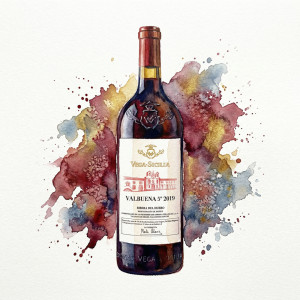
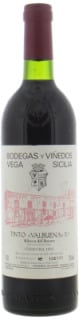
Valbuena has spent decades in the shadow of its famous sibling, Unico. But it is perhaps in this shadow that Valbuena finds its identity. Whereas Unico requires decades of patience before release, Valbuena offers something equally compelling: affordable excellence from Spain's most respected estate.
So what's so special about Valbuena? It represents Vega Sicilia's approach to second wines. It is dominated by Tempranillo with a higher proportion of Merlot than Unico, and is aged for five years before release. It is a wine that combines the tradition and precision of Ribera del Duero.
Valbuena, from an estate that has been producing wine since 1864, represents the more familiar face of a winery that has supplied wines to Spanish royalty and has been recognized by critics such as Robert Parker and James Suckling. Best of Wines considers this wine to be one of the best examples of Tempranillo and much more approachable than its legendary counterpart.
About Vega Sicilia
Vega Sicilia is an anomaly in Ribera del Duero: founded in 1864, it existed as an isolated experimental winery for more than a century before the region gained official status. It was a full-fledged winery in a region that did not yet officially exist.
But why is this story so important? Because it explains everything about how Vega Sicilia approaches winemaking today: while most producers rushed to establish their wineries after Ribera del Duero gained DO status in 1982, Vega Sicilia had already perfected its methods more than a century before that. The Alvarez family, who bought the estate that same year, inherited not only the vineyards but also the knowledge accumulated over the century.
This is most evident in their commitment to long aging. While other producers release their wines after the minimum required time, Vega Sicilia takes the opposite approach, giving the wine the time it needs regardless of market pressures.
History & Heritage
In 1864, Don Eloy Recanda decided to plant French varieties alongside the local Tempranillo. This decision was not an easy one, as most Spanish winemakers stuck to local varieties. However, Recanda was trained in Bordeaux and brought his skills to Castile, along with cuttings of Cabernet Sauvignon and Merlot.
By 1876, just 12 years after its founding, the company was already supplying wines to the Spanish royal family. This was especially impressive at a time when means of communication and transportation were limited. What changed everything was the introduction of Bordeaux technology by the Herrero family in 1915, which subsequently enabled the creation of the first vintage of Unico wines.
The purchase of the estate by the Alvarez family in 1982 coincided perfectly with the official recognition of Ribera del Duero. They invested heavily in the estate while respecting the winemaking traditions that have made Vega Sicilia legendary. Today, the combination of historical knowledge and modern investment is evident in every bottle of Valbuena.
Terroir & Climate
The estate is located on a plateau in northern Castile, 700-900 meters above sea level, where the Duero River has shaped the soil for centuries. The plots by the river where Valbuena grapes are grown lie on the border between hills and alluvial plains, where thin alluvial soils lie over a sandy subsoil rich in quartz gravel.
But what makes this terroir so special to Tempranillo? The continental climate is perfect for what grapes need: cold winters and hot summers, as well as diurnal temperature fluctuations during ripening. These diurnal fluctuations ensure phenolic ripeness while maintaining acidity, which is why Tempranillo from Ribera del Duero has such depth and structure.
Another important element is the limestone fragments scattered throughout the topsoil. Drainage is very important in this region where the summer heat stresses the vines. Combined with the cool influence of altitude, this creates the conditions for Tempranillo to fully mature without losing the acidity that allows the wine to age gracefully.
Grape Varieties
Blending varies from vintage to vintage, but Valbuena typically includes:
- 90-95% Tempranillo (locally called Tinto Fino)
- 5-10% Merlot
- Sometimes a small amount of Cabernet Sauvignon is added.
The proportion of Tempranillo gives Valbuena its Spanish character - the structured tannins, concentration of dark fruit and aging potential that characterizes the great Ribera del Duero. However, this is where it differs from neighboring estates. The constant element of Merlot softens the sometimes harsh tannins of Tempranillo and gives it smoothness and accessibility.
Why does Vega Sicilia use Merlot in Valbuena? The answer lies in the vineyard plots. Valbuena uses fruit from slightly younger vines, where the rounded character of the Merlot complements the power of the Tempranillo without overpowering it. This blend makes the wine more approachable than Unico, while retaining the depth and complexity that characterizes the estate.
Winemaking
Fermentation takes place in wooden and concrete vats using indigenous yeasts. However, the real story begins after fermentation, when the wine undergoes extended aging.
Valbuena spends about three years in barrels, moving between French and American barrels of different ages and sizes. The wine is first aged in small barriques for flavor intensity, then moves to larger barrels for volume and cohesiveness. Each vintage receives the treatment that the winemaking team deems necessary.
After aging in oak, the wine is bottle aged for two years before release. This bottle aging is very important and often overlooked by other producers. It allows the wine to fully integrate and softens any roughness from the oak. By the time of release, Valbuena is aged for a full five years. Long enough to achieve harmony, but not so long that the wine loses its fruity charm.
Tasting Notes
Ripe blackberries and black currants are complemented by cedar, vanilla and a typical Spanish earthiness indicative of the terroir of Ribera del Duero. The Merlot component shows up in the accessible texture of the wine, softening the austere tannins of Tempranillo.
On the palate, Valbuena has concentrated dark fruit and structure showing good aging potential. The tannins are firm but refined, lending structure and integrating well enough to drink now; five years of aging is evident in the smooth integration of oak and fruit.
The finish reveals the wine's true character: persistent dark fruit with hints of tobacco, leather and spice. The wine has enough acidity to maintain freshness and enough concentration for long aging. One of Spain's most respected domaines, this is an authentic wine made with the patience characteristic of the great Ribera del Duero.
Food Pairing
The backbone of this wine - firm but approachable tannins - requires protein to show itself at its best. Lamb shoulder cooked slowly with rosemary and garlic softens the wine's tannins through its fat content, while the herbs enhance the wine's earthiness.
For a more elegant dish, try duck breast with cherry sauce or mature Manchego cheese. The richness of the duck matches the concentration of the Valbuena, while the mature cheese accentuates the savory complexity of the wine. Classic Spanish wines pair particularly well with this dish:
- Cordero asado (lamb roasted with herbs).
- Jamón Ibérico with aged cheese
- Braised beef cheeks
- Grilled rib roast with simple seasonings
Serve at 18°C, below room temperature but not chilled. The wine, especially from young vintages, should be decanted; leave for an hour or so to soften the tannins.
Serving Suggestions
Serve the wine at 18°C, which is below most people's room temperature. This will prevent the alcohol from becoming too strong and allow the structure of the wine to emerge clearly.
Decanting is essential, especially for wines under 10 years old. Young bottles should be decanted for at least an hour. For older wines, this time is shorter, about 30 minutes, but it is enough to separate the sediment and allow the wine to breathe.
If possible, use a large Bordeaux-style glass. The larger surface area allows the complex flavors to fully develop. Valbuena rewards patience at every stage.
Vintages
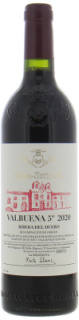
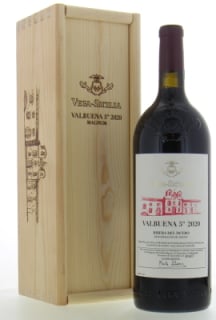
Valbuena shows remarkable consistency across years, although the character of each vintage is certainly important: warmer years like 2020 produce wines with more fruit concentration and lighter tannins. Cooler vintages tend to be more structured and require more aging time to reach their peak.
The beauty of Valbuena lies in this difference between vintages. Like many high quality wines. each vintage of Valbuena reflects the growing season. For everyday consumption, the latest releases offer excellent value and immediate pleasure while maintaining the depth that characterizes this estate.
And did you know that the grapes of Unico 2001 all went in the Valbuena blend? That was because there is no Unico 2001.
The best vintages of vega Sicilia Valbuena
The level and quality of this wine is high, regardless of vintage, However, some exceptional vintages are: 2003, 2010, 2011, 2013, 2014, 2015, 2016, 2018, 2021.
Cellaring Potential
Valbuena reaches drinking age 8-12 years after harvest, but remains in excellent condition for decades thereafter. The key aging elements, tempranillo tannins, balanced acidity and concentrated fruitiness, support long aging without loss of freshness.
Store in the dark at 12-14°C. The structure of this wine tolerates some temperature changes better than more delicate wines, but stable conditions give the best results.
With time, the main aromas of dark fruits give way to notes of dried fruits, leather and tobacco. Firm tannins gradually soften while maintaining structure, and after 15-20 years, well-stored bottles will begin to show the complex tertiary flavors that make mature Ribera del Duero so appealing.
