
Bordeaux 2025: a small harvest, but exceptional quality
The 2025 Bordeaux wines are eagerly anticipated ahead of the ‘premier’ week, which took place from 13 to 16 April 2026, but they are also facing the most severe harvest shortfall ever recorded.
Although this season’s harvest proved insufficient, this appears to have been offset by remarkable intensity and balance, thanks to consistently high temperatures, timely late rains and vineyards pushed to their limits.
A non-stop growing season
The 2025 harvest schedule closely mirrors that of 2022: approximately ten days earlier than average. A warmer and drier than usual winter led to early budbreak, around 27 March, followed by rapid and uniform flowering on 13–14 May.
The growing season then accelerated sharply in the summer, when temperatures exceeded 35 °C for ten consecutive days. The risk of disease remained low, and there were virtually no frosts.
Heat, drought and the trials of August
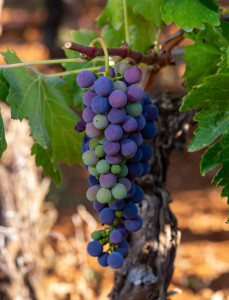
The defining event of 2025 was the prolonged summer drought. The lack of rainfall until the end of August led to a severe drought lasting almost six weeks, which stunted fruit growth, sugar accumulation and the formation of phenolic compounds, particularly in soils lacking water reserves. Throughout August, fruit size decreased significantly; in many cases, the fruit was even smaller and more concentrated than in 2022. Clay and limestone soils withstood these conditions best, whilst sandy and gravelly plots suffered more severely.
Relief came just in time. From 28 August through to September, timely rains fell, with precipitation ranging from 90 to 100 mm across most of the Left Bank, which not only relieved stress on the vineyards but also allowed the fruit to complete ripening, and, thanks to the well-drained terroirs, stabilise the alcohol potential whilst avoiding the dilution effect. During this period, acidity remained high, a sharp contrast to the acidity levels of 2022.
Harvest dates and key events by appellation
Harvest dates broke records. Château Lafleur, located in Pomerol, and Château Troplong Mondot, located in Saint-Émilion, harvested their first red grapes on 26 and 28 August respectively, for these two estates, this is the earliest harvest date in their history. Classified châteaux in Graves and Médoc, notably Château Smith Haut Lafitte and Château Margaux, began harvesting Sauvignon Blanc as early as 18 and 19 August. These were followed by most Cabernet varieties, with harvesting commencing on 15 September. In Sauternes and Barsac, the early onset of botrytis opened up promising prospects for the dessert wine harvest, and the harvest continued into October.
Quality forecasts
David Pernet, viticultural consultant at Sovivins, describes this year’s fruit characteristics as very encouraging, with quality forecasts comparable to all the great vintages ending in the number 5. Initial tastings suggest that the 2025 vintage combines maturity and structure whilst offering the precision and purity of modern wines, a vintage reminiscent of the finest wines Bordeaux can produce in hot years with low yields.
The only ‘downside’ concerns yield. The projected production volume in the Gironde region is around 3.6 million litres, the lowest since 1991, making 2025 one of the rarest vintages of this generation. For those who managed to secure a quota, these wines will undoubtedly reward their patience.
